A lot of people switch to sulfate-free shampoo, keep using the same conditioner and styling products, and find their hair gets progressively duller, heavier and drier over the following month.
They usually blame the new shampoo. The actual cause is an interaction nobody explains at the point of sale.
Many silicones are water-insoluble and need a sulfate detergent to remove. If you use silicone-containing conditioners, serums or heat protectants — which most people do — and then wash with a sulfate-free shampoo, the silicone doesn’t fully come off. It accumulates on the hair shaft, forms a barrier that blocks moisture getting in, and the result is hair that feels coated, limp and paradoxically dry.
Sulfate-free is genuinely better for some hair and genuinely worse for other hair. Which you are depends on what else is in your routine.
Here’s how the pieces fit together, and three shampoos solving three different problems.
The short version
Sulfate-free suits coloured, curly, dry and damaged hair. Sulfates suit oily scalps and anyone using silicone-heavy products.
If you go sulfate-free, go silicone-free too — or clarify regularly. Mixing the two is the most common cause of build-up.
Nizoral Anti-Dandruff (~$15) — the only one here that’s a treatment rather than a cosmetic.
Olaplex No.4 Bond Maintenance (~$30) — for chemically damaged and coloured hair.
K18 Peptide Prep Clarifying Detox (~$38–45) — the monthly reset.
And shampoo your scalp, not your hair. Condition the opposite way round.
Sulfates: what they actually do
Sodium lauryl sulfate (SLS) and sodium laureth sulfate (SLES) are detergents. They’re effective, cheap, and they produce the rich lather people associate with being clean.
They’re genuinely too harsh for some hair. They strip natural oils aggressively, which matters most for hair that’s already short on them — dry, curly, coily and damaged hair. They also accelerate colour fade, which is why colour-treated hair is the clearest case for sulfate-free.
They’re genuinely useful for other hair. An oily scalp needs real cleansing, and mild surfactants often don’t deliver it. And as above, they’re what removes water-insoluble silicone.
The practical guidance dermatologists give is to be wary when SLS or SLES appear among the first few ingredients — that indicates a high concentration. Further down the list, in a formula balanced with milder co-surfactants, they’re far less aggressive.
Milder alternatives you’ll see in sulfate-free formulas: coco-glucoside and decyl glucoside, sodium cocoyl isethionate, cocamidopropyl betaine, sodium lauroyl sarcosinate. These clean adequately with much less stripping — and much less lather, which is why people often think they aren’t working.
Choose sulfate-free | Keep sulfates | |
Colour-treated | Yes | — |
Curly, coily, dry | Yes | — |
Damaged, bleached | Yes | — |
Oily scalp | — | Yes |
Fine, limp hair | — | Often yes |
Uses silicone products | Only with regular clarifying | Yes |
Silicones: useful, and they accumulate
Silicones coat the hair shaft. That’s the whole mechanism, and it produces genuinely good results — instant smoothness, slip for detangling, shine, frizz control and a real degree of heat protection.
The problem is removal. Two categories:
Water-insoluble silicones — dimethicone, cyclopentasiloxane, and most ingredients ending in -cone, -conol or -xane without a prefix. These don’t rinse out with water or mild surfactants. They need a sulfate shampoo or a clarifying wash.
Water-soluble silicones — anything prefixed PEG- (PEG-dimethicone), plus dimethicone copolyol. These rinse out normally and don’t build up.
The build-up cycle goes like this: silicone coats the hair, hair feels great, silicone isn’t fully removed, more silicone layers on top, the coating thickens, moisture can no longer get in, hair becomes dry underneath while feeling coated on top, and you reach for more conditioning products — which contain more silicone.
Two ways out: go silicone-free in your conditioners and stylers, or keep using them and clarify every few weeks. Either works. Doing neither is what causes the problem.
One honest caveat about bond-building brands: reports differ on whether specific Olaplex products contain silicones — ingredient analyses of No.4 list it as silicone-free, while some users report silicone content elsewhere in the line. Formulations change and vary by product, so check the ingredient list of the specific item you’re buying rather than assuming a brand is uniformly one thing.
Clarifying is the reset button
A clarifying shampoo is a deliberately stronger wash designed to strip accumulated residue — product build-up, excess oil, hard water minerals, chlorine, and pollutants.
Hard water is the underrated one. Mineral deposits from hard water coat the hair over time, leaving it rough, dull and resistant to conditioning. If your hair behaves differently when you’re away from home, water is likely the variable. A chelating or clarifying shampoo addresses it.
How often: roughly every two to four weeks for most people. More if you use a lot of styling product, swim in chlorinated pools, or have hard water. Less if your hair is dry or you use few products.
Always follow with a conditioner or mask. Clarifying is stripping by design, and hair left bare afterwards feels rough.
Signs you need to clarify: hair feels coated or waxy, products have stopped working, your hair won’t hold a style, it looks dull in daylight, or your usual conditioner no longer seems to do anything.
Bond builders are not conditioners
This is a genuinely different product category that gets shelved alongside conditioners and confused with them.
Conditioner works on the outside of the hair — smoothing the cuticle, adding slip, coating the surface. The effect is immediate and washes out.
Bond builders work on the inside — repairing the internal structure of the hair shaft that bleaching, colouring, perming and heat have broken.
Olaplex and K18 both do this and do it differently. The analogy one user offers is useful: if the hair shaft is a ladder, one repairs the rungs and the other repairs what holds the rungs together. Olaplex targets disulfide bonds; K18 works on polypeptide chains.
You need both categories. A bond builder repairs structure but doesn’t smooth the cuticle; a conditioner smooths but doesn’t repair. They’re complementary, not alternatives.
And they only matter if your hair is actually damaged. If you don’t colour, bleach, perm or heat-style, a bond builder is solving a problem you don’t have.
Dandruff is usually not dryness
This is the most common misdiagnosis in haircare, and it leads people to the wrong aisle entirely.
Most dandruff is caused by Malassezia, a yeast that lives on everyone’s scalp and in some people triggers an inflammatory response — producing the flaking, itching and oiliness people experience. It’s a microbial issue, not a hydration issue.
Which is why moisturising shampoos don’t fix it, and why people cycle through hydrating products with no result.
The actives that do work are antifungals and anti-inflammatories: ketoconazole, zinc pyrithione, selenium sulfide, and salicylic acid for the flaking itself.
Genuine dry scalp does exist — it’s tight, itchy, with small dry flakes, usually alongside dry skin elsewhere, and it responds to gentler washing and moisture. The distinguishing sign is that dandruff flakes tend to be larger, oilier and yellowish, while dry-scalp flakes are small, white and powdery.
If an antifungal shampoo doesn’t help within a few weeks, see a doctor — psoriasis, seborrhoeic dermatitis and eczema all present similarly and need different treatment.
The three picks
Nizoral Anti-Dandruff | Olaplex No.4 Bond Maintenance | K18 Peptide Prep Clarifying Detox | |
Price | ~$15 | ~$30 (250ml) | ~$38–45 |
Purpose | Treats dandruff | Repairs damaged hair | Removes build-up |
Active | Ketoconazole | Bond Building Technology | BHA, peptides |
Sulfate-free | Yes (2% formula) | Yes | Yes |
Silicone-free | Yes | Per ingredient analyses, yes | Yes |
Frequency | 2× weekly, then maintenance | Regular use | Every 2–4 weeks |
Nizoral Anti-Dandruff 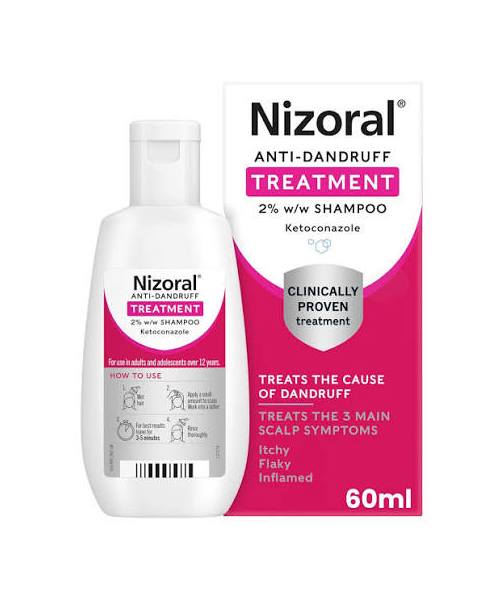
Around $15, and the only product here that’s a medicine rather than a cosmetic.
It contains ketoconazole, an antifungal that addresses the Malassezia yeast causing most dandruff rather than washing the flakes away. That distinction is why it works where hydrating shampoos don’t.
The formulation is notably minimal — the 2% version lists around nine ingredients, with no silicones, no parabens, no oils and no added fragrance in some formulations. For a scalp that’s already inflamed, fewer ingredients is a genuine advantage.
1% is available over the counter in most markets; 2% generally requires a prescription in some regions and is sold freely in others — check what’s available where you are.
How to use it properly: twice a week initially, leaving it on the scalp for three to five minutes before rinsing. That contact time is essential — rinsing immediately gives the active nothing to work with, and it’s why people conclude it doesn’t work. Once controlled, drop to once a week or fortnightly as maintenance.
The drawbacks: it’s a treatment shampoo, not a cosmetic one — it won’t make your hair feel luxurious and may dry the lengths. Use a conditioner on mid-lengths and ends afterwards. It can lighten some colour treatments. And it does nothing for hair that isn’t flaking.
Buy it if: you have persistent flaking and itching that moisturising hasn’t fixed.
Skip it if: your scalp is genuinely dry rather than flaking — gentler washing and moisture is the answer there.
Olaplex No.4 Bond Maintenance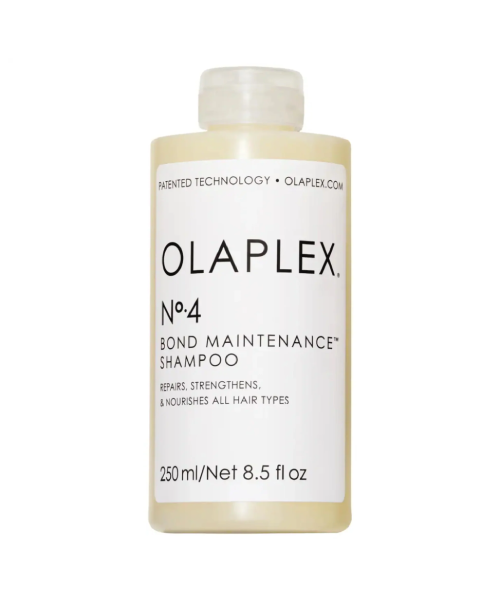
Around £25 to £30 for 250ml.
This is the shampoo for hair that’s been chemically processed — coloured, bleached, permed or heavily heat-styled. The bond-building technology works on the internal structure rather than coating the surface, and among people who colour and heat-style regularly it’s one of the most consistently credited products for actual improvement rather than temporary cosmetic effect.
It’s sulfate-free and pH balanced, which protects colour, and ingredient analyses list it as silicone-free — meaning it works within a sulfate-free routine without contributing to build-up.
There’s also a No.4C Clarifying version (~£30) using a broad-spectrum clarifying system that removes build-up, hard water minerals, chlorine and heavy metals while maintaining the bond-building action — effectively a clarifying shampoo for damaged hair, which is a useful combination.
The drawbacks: it’s expensive for shampoo. It’s genuinely only worth it if your hair is damaged — on healthy, unprocessed hair the bond technology has nothing to repair. The ingredient list is long (around 62 ingredients for No.4), which matters if you’re reactive. And some users report silicone content elsewhere in the Olaplex range, so check each product individually.
Buy it if: you colour or bleach your hair, or it’s damaged from heat.
Skip it if: your hair is virgin and healthy. You’re paying for repair you don’t need.
K18 Peptide Prep Clarifying Detox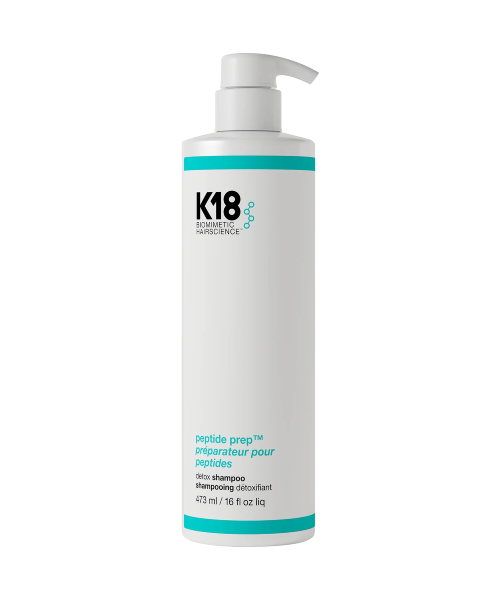
Around $38 to $45, and repeatedly named the best clarifying shampoo available.
It combines BHA (salicylic acid) exfoliation with peptides in a short 18-ingredient formula, removing build-up, oil and residue thoroughly while being gentler than a traditional harsh clarifying wash. The peptide content means it’s doing something constructive while stripping, which most clarifiers don’t.
Use it every two to four weeks as a reset, not as your regular shampoo.
The drawbacks: it’s expensive for a product you use fortnightly. Reviewers note it suits oily scalps best and that normal-to-dry hair types should use it sparingly or choose something gentler. And the salicylic acid means caution if your scalp is sensitive or you’re using other scalp actives.
Buy it if: you use a lot of styling product, have hard water, swim regularly, or your products have stopped working.
Skip it if: your hair is very dry — a gentler clarifier used less often is a better fit.
Cheaper clarifying alternatives: Paul Mitchell Clarifying Shampoo Two for oily hair, Bumble and bumble Sunday for fine hair, L’Oréal EverPure Sulfate Free Clarifying for colour-treated hair.
How to actually wash your hair
Shampoo the scalp, not the lengths. Oil, sweat and product build-up are at the roots. The ends are the oldest, driest, most damaged part of your hair and don’t need detergent — the runoff as you rinse is enough.
Condition the lengths, not the scalp. The reverse. Conditioner at the roots weighs hair down and can contribute to scalp issues.
Use your fingertips, not your nails. Massage for 30 to 60 seconds. Scratching irritates the scalp.
Two shampoos if you need them. The first lifts build-up, the second actually cleans. Common with very oily hair or heavy product use.
Rinse thoroughly, then rinse again. Residual shampoo is a common cause of dullness and irritation.
Lukewarm, not hot. Hot water strips oils and opens the cuticle, which fades colour faster.
Washing frequency is personal. There’s no correct number. Oily scalps may genuinely need daily washing; curly and coily hair often does best weekly or less. The “training your hair” idea has little behind it — your scalp produces oil at the rate it produces oil.
Mistakes worth avoiding
Going sulfate-free while using silicone products. Build-up is the result. Pick one.
Treating dandruff with moisturising shampoo. Most dandruff is fungal. Moisture doesn’t address it.
Rinsing medicated shampoo immediately. Ketoconazole needs three to five minutes of contact. Without it, you’ve wasted the product.
Shampooing the ends. They don’t need it and they’re the most fragile part of your hair.
Never clarifying. Build-up accumulates invisibly until products stop working.
Buying a bond builder for healthy hair. There’s nothing to repair.
Assuming a brand is uniformly silicone-free or sulfate-free. Formulations vary product to product. Check the label.
Ignoring your water. Hard water deposits minerals that no conditioner fixes. Clarify, or fit a filter.
Frequently asked questions
Is sulfate-free shampoo better?
Only for some hair. It suits coloured, curly, dry and damaged hair. Oily scalps and anyone using silicone products often need the cleansing power sulfates provide.
Why did my hair get worse after switching to sulfate-free?
Most likely silicone build-up. Water-insoluble silicones need a sulfate or clarifying wash to remove. Go silicone-free too, or clarify regularly.
Are silicones bad for hair?
No — they smooth, add shine and protect against heat. The issue is build-up from water-insoluble types. Look for PEG-prefixed silicones, which rinse out.
How often should I clarify?
Every two to four weeks for most people; more with heavy product use, hard water or chlorine exposure. Always condition afterwards.
What’s the difference between a bond builder and a conditioner?
A conditioner smooths the outside of the hair; a bond builder repairs internal structure damaged by chemicals and heat. They do different jobs and you want both.
Is my flaking dandruff or dry scalp?
Dandruff flakes tend to be larger, oilier and yellowish and come with itching; dry-scalp flakes are small, white and powdery. Dandruff responds to antifungals, not moisture.
How often should I wash my hair?
There’s no correct answer. Oily scalps may need daily; curly and coily hair often weekly or less. Go by how your scalp behaves.
The recommendation
Start by auditing what else is in your routine. If your conditioner and stylers contain water-insoluble silicones, either switch those out or commit to clarifying every few weeks. That single decision resolves most “my shampoo stopped working” complaints.
If you have persistent flaking, buy Nizoral and leave it on for three to five minutes. It’s a treatment, it’s cheap, and it addresses the actual cause.
If your hair is coloured, bleached or heat-damaged, buy Olaplex No.4 — it repairs structure rather than coating it, and it’s sulfate-free so it won’t strip colour.
And keep a clarifying shampoo — K18 Peptide Prep if your scalp runs oily, something gentler if it doesn’t — for a reset every few weeks.
Then shampoo the scalp, condition the ends, rinse properly, and stop washing in hot water. Those four habits do more than any upgrade in product.
Leave a comment