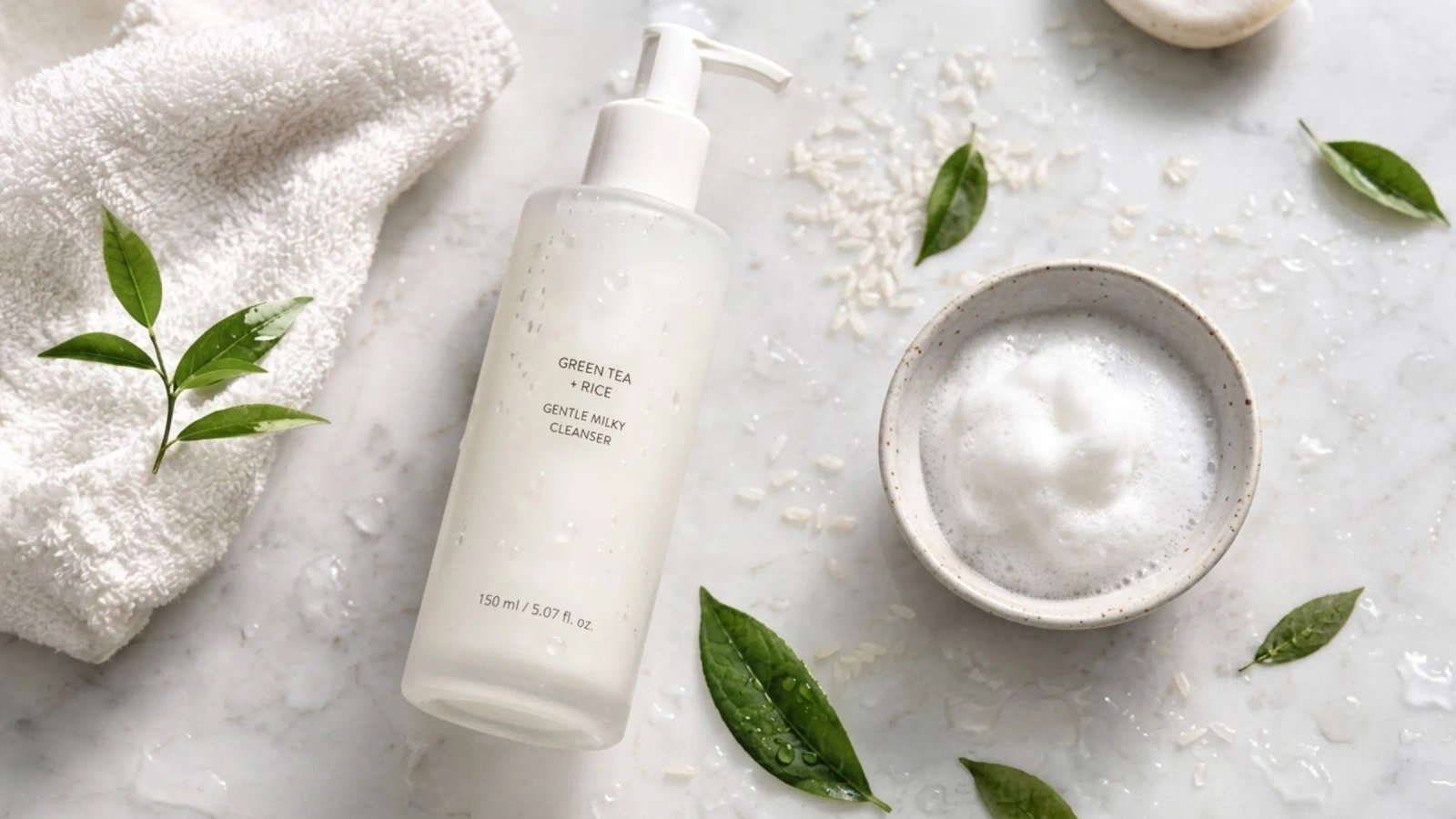
The tight, squeaky feeling after washing your face is widely taken as proof the cleanser worked.
It’s the opposite. That feeling is your skin barrier stripped of its lipids, and it’s the single most reliable sign you’re using the wrong cleanser.
Two specifications determine whether a cleanser does that: its pH, and the type of surfactant it uses to lift oil. Neither appears on most packaging, and neither is what cleansers are marketed on — which is foam, scent, and whatever active is bolted onto the front of the bottle.
Here’s what actually matters, and three cleansers for three different skins.
The short version
Skin’s natural pH is 4.5 to 5.5. A cleanser formulated near that pH cleans without disrupting the barrier. Traditional bar soap sits at pH 9 or above and shouldn’t go near your face.
CeraVe Hydrating Facial Cleanser (~$10–17) — the safe baseline. Non-stripping, ceramides, suits almost everyone.
La Roche-Posay Effaclar Purifying Foaming Gel — the oily and acne-prone answer, with zinc and salicylic acid.
The INKEY List Oat Cleansing Balm — the first step if you wear makeup or water-resistant sunscreen.
And foam is not cleaning. A cleanser that produces a huge lather usually contains harsher surfactants.
pH: the variable nobody prints
Your skin’s surface is mildly acidic — around pH 4.5 to 5.5 — and that acidity, the acid mantle, is functional. It supports the enzymes that build and maintain the barrier lipids, and it keeps the skin’s microbial balance in order.
Alkaline cleansers raise that pH. Traditional soap sits around pH 9 or higher, which disrupts the barrier, impairs the enzymes repairing it, and leaves skin dry, irritated and — counterintuitively — often more acne-prone. Skin can take hours to return to its normal pH after an alkaline wash.
So look for a cleanser formulated at or near skin pH. Around 5.5 is the target. CeraVe, Cetaphil and La Roche-Posay all formulate in this range and several state it.
The practical test if pH isn’t published: how does your skin feel 60 seconds after rinsing? Comfortable and soft means the pH and surfactants were appropriate. Tight, squeaky or stinging means they weren’t — regardless of what the bottle promised.
Bar soap is the main offender. Even “gentle” bars are usually alkaline by the chemistry of how soap is made. Syndet bars (synthetic detergent bars) are the exception and are formulated to skin pH.
Surfactants: what actually does the cleaning
Surfactants are the molecules that grip oil at one end and water at the other, letting grease rinse away. How harsh a cleanser is comes down to which ones it uses.
Harsh:
Sodium lauryl sulfate (SLS) — the harshest in common use. Effective, cheap, strips aggressively.
Sodium laureth sulfate (SLES) — milder than SLS but still notably stripping for facial use.
Mild:
Glucosides — coco-glucoside, decyl glucoside, lauryl glucoside. Plant-derived, gentle.
Amino-acid surfactants — sodium cocoyl glutamate, sodium cocoyl isethionate, sodium lauroyl sarcosinate. Very mild, used in better Korean and Japanese formulations.
Betaines — cocamidopropyl betaine. Mild, often used alongside others to soften a formula.
What to look for on the label: a cleanser built on glucosides or amino-acid surfactants will clean adequately with far less stripping. One explicitly labelled SLS/SLES-free — as the La Roche-Posay Toleriane line is — has made a deliberate choice.
On foam: lather is produced by surfactant type, not cleaning power. A low-foaming cream cleanser can remove just as much as a high-foaming gel. If you associate big lather with being clean, that association is doing you no favours.
The cleanser types
Type | Suits | Removes makeup/SPF | Notes |
Cream / lotion | Dry, sensitive | Partially | Low or no foam, most gentle |
Gel / foaming | Oily, combination | Partially | Check surfactants and pH |
Oil / balm | All, as first step | Yes, thoroughly | Dissolves oil-based residue |
Micellar water | Convenience, travel | Partially | Rinse after — residue can irritate |
Bar soap | Not the face | — | Usually alkaline |
Oil and balm cleansers work on a different principle: oil dissolves oil. That’s why they remove makeup, water-resistant sunscreen and excess sebum far more effectively than a water-based wash. They emulsify with water and rinse off.
Micellar water uses micelles — tiny surfactant spheres — to lift oil and dirt onto a cotton pad. It’s genuinely convenient, but it’s leaving surfactant on your skin unless you rinse afterwards, which most people don’t.
Double cleansing: when it’s necessary and when it isn’t
The method is simple: an oil or balm cleanser first to dissolve makeup, sunscreen and sebum, then a water-based cleanser to clean the skin itself.
You need it if you wear makeup, or water-resistant sunscreen, or both. Standard face washes do not fully remove either, and the residue left behind is a real cause of congestion that people then treat with stronger products.
You don’t need it if you wear neither. One gentle cleanse at night is sufficient, and double cleansing dry skin unnecessarily will dry it further.
How often to cleanse:
At night, always. That’s the wash that removes the day’s sunscreen, makeup, sweat and pollution.
In the morning, optional. Oily skin usually benefits. Dry and sensitive skin often does better rinsing with water only — you’re washing off a night’s worth of your own moisturiser, which isn’t necessary.
About active cleansers
Cleansers with salicylic acid, glycolic acid or benzoyl peroxide are popular and over-promised.
The limitation is contact time. A cleanser is on your face for perhaps 30 to 60 seconds, then rinsed. Leave-on products work for hours. An acid cleanser does meaningfully less than a serum or toner with the same ingredient.
They’re a reasonable adjunct, not a treatment. If you have acne, the work is done by what you leave on. The exception is benzoyl peroxide wash, which has reasonable evidence even as a short-contact product.
Don’t stack them. An acid cleanser plus an acid toner plus a retinoid is how people end up with a damaged barrier and worse skin than they started with.
The three picks
CeraVe Hydrating | LRP Effaclar Foaming Gel | INKEY List Oat Cleansing Balm | |
Type | Cream, low-foam | Foaming gel | Balm |
pH | ~5.5 | Skin pH | N/A — oil phase |
Key ingredients | 3 ceramides, hyaluronic acid | Zinc PCA, salicylic acid | Oat, oils |
Best for | Normal, dry, sensitive | Oily, acne-prone | First cleanse, dry skin |
Fragrance | Free | Free | Check label |
CeraVe Hydrating Facial Cleanser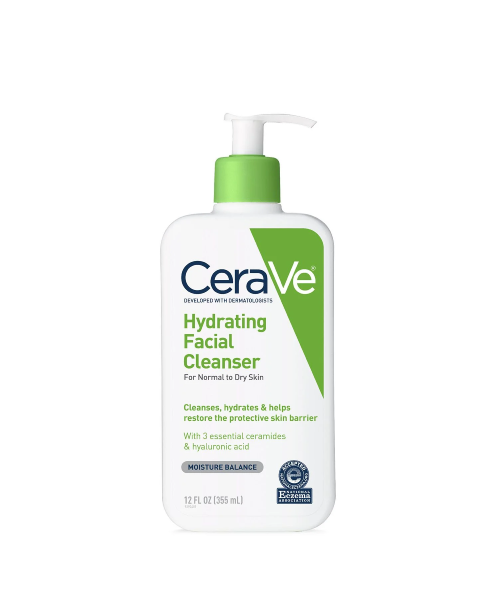
Around $10 to $17, and the cleanser to buy if you don’t know what your skin needs.
It’s soap-free, non-foaming to barely foaming, formulated at approximately skin pH, and built around three essential ceramides plus hyaluronic acid. The ceramides matter because cleansing inevitably removes some barrier lipids; a formula that replaces some of them as it goes is doing something useful rather than just doing less harm.
Fragrance-free, dermatologist-developed, and cheap enough that trying it costs nothing.
The drawbacks: it barely foams, which some people find unsatisfying and read as not working. It won’t fully remove makeup or water-resistant sunscreen on its own. And it’s slightly too hydrating for genuinely oily skin — fine, but not optimal.
Buy it if: your skin is normal, dry or sensitive, or you’re unsure and want a baseline that won’t cause problems.
Skip it if: you’re oily and want more cleansing, or you need something that removes makeup on its own.
A near-equivalent worth knowing: the La Roche-Posay Toleriane Hydrating Gentle Cleanser is formulated at pH 5.5 to 6.0, is explicitly SLS/SLES-free, and has one of the shortest ingredient lists among ceramide cleansers — which makes it the better pick for genuinely reactive skin.
La Roche-Posay Effaclar Purifying Foaming Gel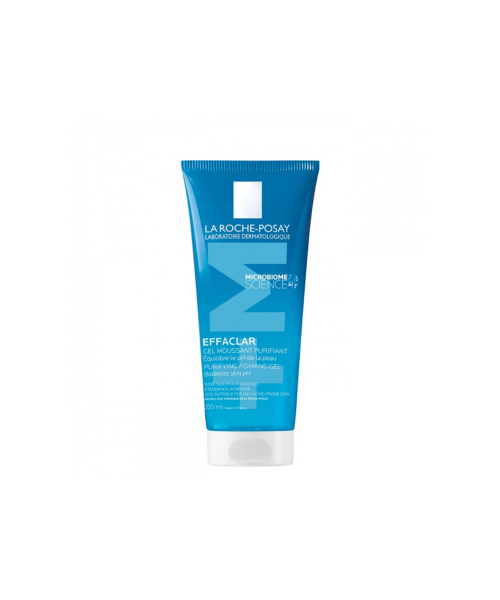
Widely regarded as the benchmark for oily and acne-prone skin.
Two ingredients do the work: zinc PCA, which helps regulate sebum production, and salicylic acid, which is oil-soluble and therefore able to work inside the pore rather than just on the surface. It foams properly, which oily skin generally wants, but it’s formulated at skin pH rather than being an aggressive degreaser.
The key quality is that it cleans without the rebound effect — stripping oily skin causes it to produce more oil, which is the cycle a lot of acne cleansers create.
The drawbacks: it’s too much for dry or sensitive skin. The salicylic acid means caution if you’re also using a leave-on exfoliant or retinoid. And as with any wash-off acid, the contact time limits what it achieves.
Buy it if: your skin is oily or acne-prone and you want a daily cleanser that addresses both.
Skip it if: your skin is dry, sensitive, or you’re already using strong leave-on actives.
The INKEY List Oat Cleansing Balm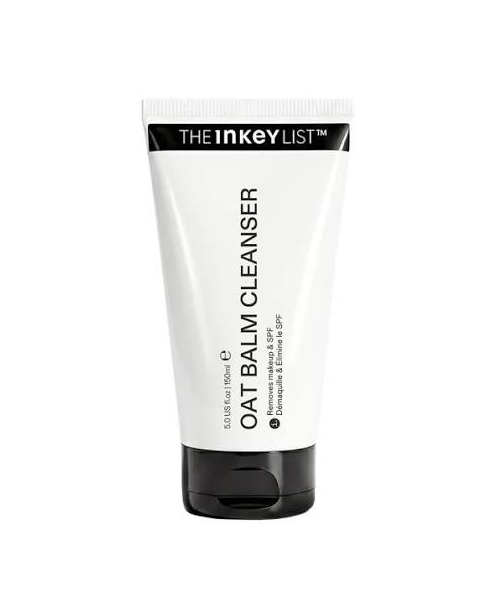
An inexpensive balm that’s become a frequently recommended first step, particularly among people with dry or eczema-prone skin.
Its job is to dissolve makeup, water-resistant sunscreen and excess sebum before your water-based cleanser touches your face. The oat content makes it notably non-irritating, and the texture is creamy rather than greasy.
If you wear sunscreen daily — which you should — a balm or oil cleanser is the most useful product you can add to a routine. Water-based cleansers don’t fully remove modern water-resistant SPF.
The drawbacks: it needs thorough emulsifying and rinsing, and if you skip that you’ll leave a film. It’s a second product and a second step. And some people with very oily skin dislike the texture regardless of its performance.
Buy it if: you wear makeup or water-resistant sunscreen, or your skin is dry and water-based cleansers leave it tight.
Skip it if: you wear neither, in which case you don’t need it.
Alternatives in the same role: Beauty of Joseon Ginseng Cleansing Oil and The Ordinary Squalane Cleanser are both frequently recommended and inexpensive.
Mistakes worth avoiding
Judging a cleanser by the squeaky feeling. That’s a stripped barrier, not clean skin.
Using bar soap on your face. Usually pH 9 or above against skin’s 4.5–5.5.
Equating foam with cleaning. Lather comes from surfactant type, not cleaning power.
Washing twice a day with a strong cleanser when your skin is dry. Water only in the morning is a legitimate routine.
Double cleansing when you wear nothing. It’s for removing makeup and water-resistant SPF, not a virtue in itself.
Using hot water. It strips lipids faster. Lukewarm.
Scrubbing. Fingertips, 30 to 60 seconds, light pressure. Cleansing brushes and grainy scrubs do more harm than good for most people.
Relying on an acid cleanser to treat acne. The contact time is too short. The work is done by leave-on products.
Not rinsing micellar water. Leaving surfactant on skin is the whole problem you’re trying to avoid.
Frequently asked questions
What pH should a face cleanser be?
Around 5.5, matching skin’s natural acidity of 4.5–5.5. Traditional soap at pH 9 or above disrupts the barrier.
Is the squeaky-clean feeling good?
No. It indicates the barrier lipids have been stripped. Skin should feel comfortable, not tight, after cleansing.
Are sulfates bad in a face wash?
SLS is harsh for facial use and SLES is better but still stripping. Glucoside and amino-acid surfactants clean adequately with far less disruption.
Do I need to double cleanse?
Only if you wear makeup or water-resistant sunscreen. Otherwise one gentle cleanse at night is enough.
Should I wash my face in the morning?
Oily skin usually benefits. Dry and sensitive skin often does better with water only.
Does a foaming cleanser clean better?
No. Foam is a function of surfactant type, not cleaning power.
Are salicylic acid cleansers effective for acne?
Somewhat, but contact time is short. Leave-on products do most of the work.
The recommendation
If you’re unsure, buy CeraVe Hydrating Facial Cleanser. It’s formulated at skin pH, replaces barrier lipids as it cleans, costs very little, and won’t cause problems for any skin type.
If your skin is oily or acne-prone, buy La Roche-Posay Effaclar Purifying Foaming Gel — zinc and salicylic acid, without the stripping that makes oily skin oilier.
If your skin is genuinely reactive, buy La Roche-Posay Toleriane Hydrating Gentle Cleanser instead: pH 5.5–6.0, SLS/SLES-free, and one of the shortest ingredient lists available.
And if you wear sunscreen daily, add The INKEY List Oat Cleansing Balm as a first cleanse at night. It’s the single most useful addition to most routines, because the thing you’re putting on every morning isn’t coming off with a water-based wash.
Then use lukewarm water, your fingertips, and sixty seconds. Most skin problems blamed on cleansers are caused by cleansing too hard, too hot, or too often.
Leave a comment