If you’ve ever used a hyaluronic acid product and found your skin felt tighter afterwards, there’s a specific reason, and it explains most of what goes wrong in this category.
Hyaluronic acid is a humectant. Humectants pull water toward the skin — including out of the deeper layers of your own skin. In humid air, that water comes from the environment. In dry air, with nothing sealing it in, it comes from you, and then evaporates. You end up drier than when you started.
That isn’t a flaw in hyaluronic acid. It’s what happens when you use one of three necessary ingredient types on its own.
A moisturiser that works contains humectants to attract water, emollients to smooth and soften, and occlusives to stop the water leaving. Most moisturiser disappointments are a missing third category.
The short version
Check for all three types, not for a single hero ingredient.
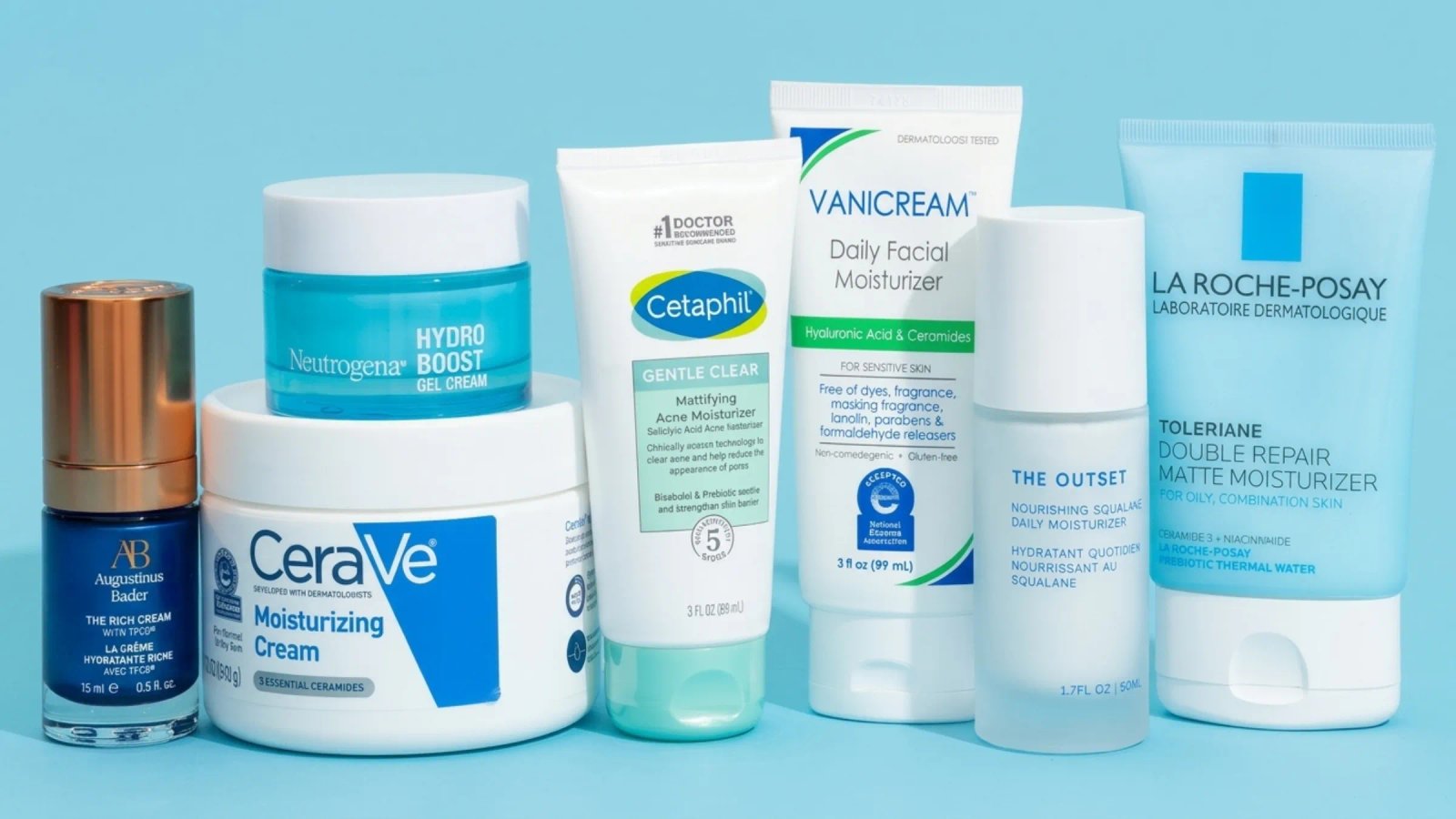
CeraVe Moisturizing Cream (~$15–19) — three ceramides, hyaluronic acid and petrolatum in one tub. The budget benchmark, and genuinely complete.
La Roche-Posay Toleriane Double Repair (~$20–25) — the lightweight option. Ceramide NP, niacinamide and glycerin, oil-free, fine under makeup.
Vanicream Moisturizing Cream — the one for reactive skin, formulated without the common irritants.
And treat “non-comedogenic” as a marketing word. There’s no standard behind it.
The three ingredient types
Humectants — they attract water
These molecules bind water and draw it toward the skin surface.
Common ones: glycerin, hyaluronic acid, urea, panthenol, sodium PCA, propylene glycol.
Glycerin is the workhorse. It’s cheap, exceptionally effective, and appears near the top of almost every good moisturiser’s ingredient list. Hyaluronic acid gets the marketing because it can hold many times its weight in water, but glycerin is doing more of the work in most formulations.
The catch, as above: humectants need something above them to seal the water in. Used alone in dry air, they can draw moisture out of the deeper skin and let it evaporate.
So a hyaluronic acid serum isn’t a moisturiser. It’s one third of one, and it needs a cream over it.
Emollients — they smooth and soften
These fill the microscopic gaps between skin cells, which is what makes skin feel soft rather than rough, and improves how it looks.
Common ones: squalane, jojoba oil, shea butter, fatty alcohols (cetyl, stearyl), and ceramides.
Squalane is worth singling out: it closely mimics the skin’s own sebum, is lightweight, and works for oily skin where heavier emollients don’t.
Ceramides deserve their reputation. They’re lipids that occur naturally in the skin barrier, and replenishing them genuinely supports barrier function. The best formulations include cholesterol and fatty acids alongside ceramides, because the barrier uses all three together — ceramides alone are an incomplete repair.
Occlusives — they stop water leaving
These form a physical film that slows transepidermal water loss. This is the category people skip, and it’s the one that makes the other two work.
Common ones: petrolatum, dimethicone, mineral oil, beeswax, lanolin.
Petrolatum is the most effective occlusive there is by a wide margin, which is why it appears in dermatologist-recommended creams despite having no marketing appeal whatsoever.
Dimethicone is lighter, non-greasy, and the reason so many moisturisers feel silky — a good occlusive for people who can’t tolerate heavy ones.
The rule: the drier your skin and the drier your air, the more occlusive you need.
Matching the balance to your skin
Skin type | Prioritise | Texture | Avoid |
Dry | All three, heavy on occlusives | Rich cream | Thin gels alone |
Oily | Humectants + light emollients | Gel-cream or lotion | Heavy petrolatum, thick butters |
Sensitive | Ceramides, niacinamide, short ingredient list | Cream | Fragrance, essential oils, drying alcohols |
Combination | Lightweight ceramide lotion | Lotion | Anything that feels heavy on the T-zone |
Acne-prone | Humectants + squalane/dimethicone | Gel-cream | Heavy oils, thick occlusives |
A note on oily skin: skipping moisturiser because your skin is oily is counterproductive. Dehydrated skin often produces more oil to compensate. What oily skin needs is a lighter texture, not an absence of moisture — gel-creams with glycerin, niacinamide and a light occlusive like dimethicone.
A note on seasons: your skin’s needs change. The lightweight lotion that’s perfect in July is often insufficient in January, when indoor heating drops humidity. Many people reasonably run two moisturisers.
“Non-comedogenic” means nothing specific
This appears on a huge proportion of skincare and there is no regulatory standard behind it, no required testing, and no agreed definition. A brand can print it on anything.
It’s not necessarily false — most products carrying it are reasonably light — but it’s not evidence.
What to do instead: if you’re acne-prone, judge by texture and ingredients. Heavy oils like coconut oil and thick butters are more likely to be a problem; squalane, dimethicone, glycerin and niacinamide generally aren’t. And give any new product six weeks before blaming it, since breakouts lag.
Other ingredients worth knowing
Niacinamide — strengthens barrier function, reduces water loss, evens tone, helps with redness. One of the best-supported ingredients in skincare and it appears in several of the products below.
Panthenol (pro-vitamin B5) — humectant that also soothes irritation. Common in barrier-repair formulations.
Colloidal oatmeal — genuinely soothing for redness and irritated patches, and recognised for eczema-prone skin.
Urea — a humectant that also gently exfoliates at higher concentrations. Excellent for very dry, rough skin.
Fragrance — the most common cause of contact reactions in skincare. If your skin is at all reactive, fragrance-free is the single easiest improvement to make. Note that “unscented” is not the same as “fragrance-free” — unscented products sometimes contain masking fragrance.
The three picks
CeraVe Moisturizing Cream | La Roche-Posay Toleriane Double Repair | Vanicream Moisturizing Cream | |
Price | ~$15–19 (large tub) | ~$20–25 | Budget |
Texture | Rich cream | Lightweight cream | Rich cream |
Humectant | Hyaluronic acid, glycerin | Glycerin | Glycerin |
Emollient | 3 ceramides | Ceramide NP | Ceramides |
Occlusive | Petrolatum | Light | Petrolatum |
Key extra | — | Niacinamide, thermal water | Free of common irritants |
Best for | Dry skin, value, face + body | Sensitive, combination, under makeup | Reactive, allergy-prone |
CeraVe Moisturizing Cream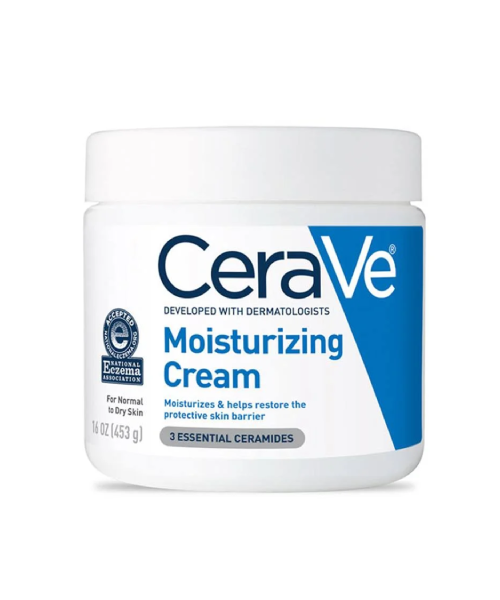
Around $15 to $19 for a large tub, and the most recommended drugstore moisturiser for good reason.
It contains all three ingredient types properly: hyaluronic acid and glycerin as humectants, three essential ceramides as barrier-supporting emollients, and petrolatum as an occlusive. That combination is what a moisturiser is supposed to be, and the formula is dermatologist-developed, fragrance-free and oil-free.
It works on face and body, comes in sizes up to 19 ounces, and carries the National Eczema Association seal.
The drawbacks: it’s thick. For oily or combination skin, or for daytime use under makeup, it can feel heavy. The tub packaging means fingers in the product, which isn’t ideal hygiene. And it’s dull — no actives beyond the basics.
Buy it if: you have dry or normal skin, you want value, or you want one product for face and body.
Skip it if: your skin is oily, or you want something that disappears under makeup.
La Roche-Posay Toleriane Double Repair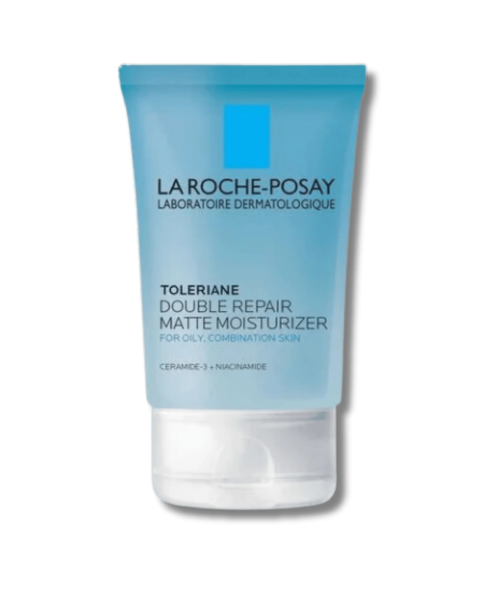
Around $20 to $25, and the one dermatologists tend to reach for as a daily face moisturiser.
It pairs ceramide NP with niacinamide and glycerin, plus the brand’s prebiotic thermal water, which supplies selenium. The result is barrier repair in a texture light enough to wear under makeup and oil-free enough for combination skin.
It has one of the shortest ingredient lists among ceramide moisturisers, which matters for reactive skin — fewer ingredients means fewer things to react to. Fragrance-free, and it suits essentially all skin types.
There’s also a Matte version formulated for oily skin, if shine is your concern.
The drawbacks: it’s less occlusive than a traditional cream, so for genuinely very dry skin or harsh winter conditions it may not be enough on its own. It’s more expensive than CeraVe for considerably less product. And the tube can waste product at the end.
Buy it if: you want one face moisturiser for daytime, your skin is sensitive or combination, or you wear makeup.
Skip it if: your skin is very dry — you’ll want something richer, at least at night.
Vanicream Moisturizing Cream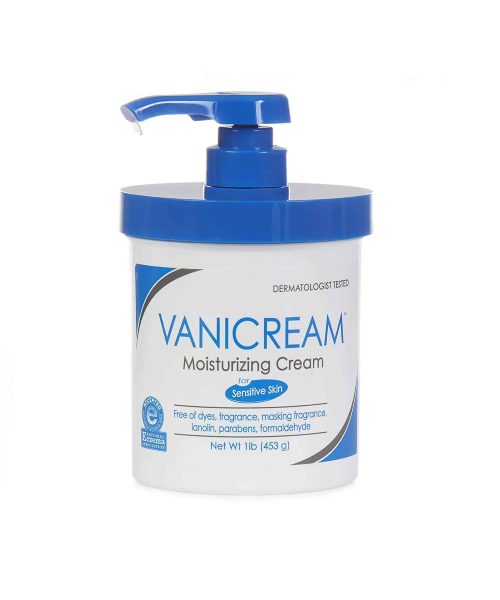
The budget option for anyone whose skin reacts to things.
Its selling point is what’s not in it: formulated without fragrance, dyes, parabens, lanolin, formaldehyde and other common irritants. For people with genuinely reactive skin, eczema, or a history of contact dermatitis, that absence is the feature.
It’s petrolatum-based, so it’s a proper occlusive, and it includes ceramides and hyaluronic acid in the facial version. People with inflamed, cracked skin frequently describe it as the thing that finally settles it.
The drawbacks: it’s heavy and greasy — effective rather than elegant. It’s not interesting; there are no actives to speak of. And the texture rules it out for daytime use under makeup for most people.
Buy it if: your skin reacts to things, you have eczema-prone or very dry skin, or you’ve been advised to avoid common irritants.
Skip it if: you want something light, or you want actives alongside hydration.
A few others worth knowing: Cetaphil Moisturizing Cream is the equivalent no-frills option and often recommended interchangeably with CeraVe. Byoma Moisturizing Rich Cream uses a tri-ceramide complex and is aimed at barrier repair for oilier skin. Neutrogena Hydro Boost Water Gel is a lightweight hyaluronic gel that suits oily skin — just don’t expect it to be a complete moisturiser on its own.
How to actually apply it
On damp skin, within a minute or two of cleansing. Humectants need water to work with, and applying to damp skin gives them something to bind.
Moisturiser goes last in a skincare routine, after serums and before sunscreen in the morning. It’s the occlusive layer, so anything applied over it penetrates less.
Don’t rub it in aggressively. Press and smooth.
More at night, less in the morning is a reasonable default — your skin loses more water overnight, and daytime products need to sit under sunscreen and makeup.
If you use retinoids, the sandwich method helps: moisturiser, retinoid, moisturiser. It reduces irritation significantly.
Give any new product four to six weeks before judging it, and change one thing at a time so you know what caused what.
Mistakes worth avoiding
Using hyaluronic acid alone in dry air. It needs an occlusive over it or it can leave you drier.
Skipping moisturiser because your skin is oily. Use a lighter texture instead — dehydrated skin often produces more oil.
Treating “non-comedogenic” as evidence. It’s unregulated and untested.
Buying for a single hero ingredient. A complete moisturiser needs humectants, emollients and occlusives together.
Using the same product year-round. Indoor heating in winter changes what your skin needs.
Assuming “unscented” means fragrance-free. Unscented products sometimes contain masking fragrance.
Applying to completely dry skin. Dampen first — humectants need water available.
Changing products constantly. Give each one six weeks before deciding.
Frequently asked questions
Can hyaluronic acid make my skin drier?
Yes, if used alone in dry air without an occlusive over it. It draws water toward the surface, including from deeper skin, and that water then evaporates.
What’s the difference between a humectant, emollient and occlusive?
Humectants attract water, emollients smooth and soften, occlusives stop water escaping. A proper moisturiser contains all three.
Do I need moisturiser if I have oily skin?
Yes — just a lighter texture. Gel-creams with glycerin and niacinamide work well. Skipping moisturiser can increase oil production.
Does “non-comedogenic” mean it won’t cause breakouts?
No. It’s an unregulated marketing term with no required testing behind it.
Are ceramides worth it?
Yes — they’re the lipids your skin barrier is made of. Formulas that also include cholesterol and fatty acids are better still.
Should I moisturise before or after serum?
After. Moisturiser is the sealing layer, so it goes on last before sunscreen.
Why does my moisturiser stop working in winter?
Lower humidity means more water loss. You need more occlusive content in cold months than in summer.
The recommendation
If your skin is dry or normal and you want value, buy CeraVe Moisturizing Cream. It contains all three ingredient types, it’s dermatologist-developed, and a large tub costs less than most 50ml face creams.
If you want one daily face moisturiser that works under makeup, buy La Roche-Posay Toleriane Double Repair — barrier repair in a texture light enough for combination skin, with one of the shortest ingredient lists in the category.
If your skin reacts to things, buy Vanicream. What’s missing from it is the point.
Then apply it to damp skin, use a richer one at night than in the morning, and give it six weeks. Most people don’t have a product problem — they have a missing-occlusive problem.
Leave a comment