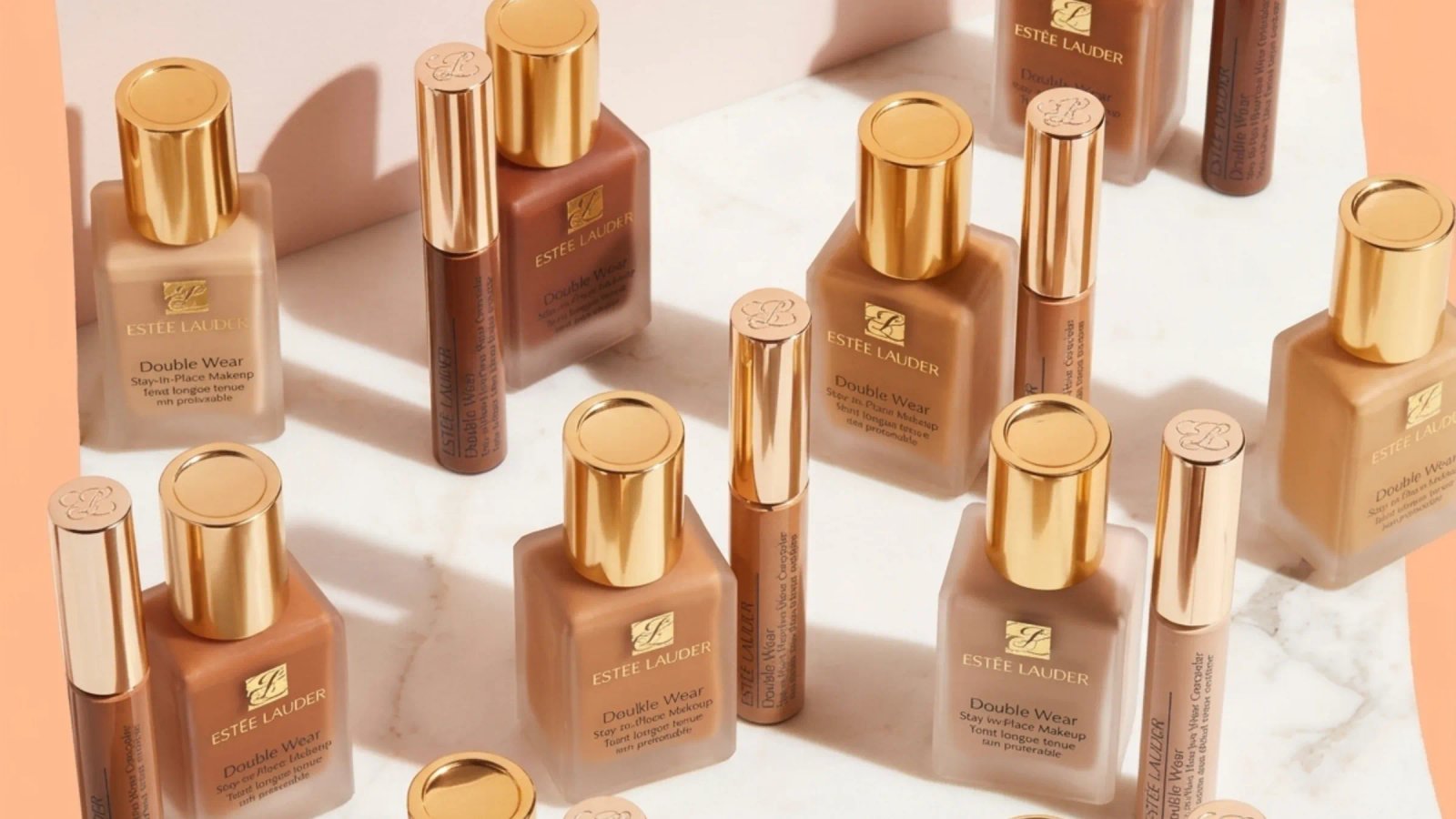
You match a foundation in the shop, it looks perfect, and by lunchtime it’s orange. Or it matched your hand in store and sits like a mask on your face. Or the depth is right but something is subtly off and you can’t say what.
Three things cause almost all of this, and none of them is the foundation being bad.
Undertone. Depth — how light or dark a shade is — is the easy half. The colour underneath it is what makes a foundation disappear or sit on top of your skin, and most people never identify theirs.
Oxidation. Foundations darken on the skin over fifteen to thirty minutes as they react with air and your sebum. A shade matched at the moment of application will frequently be a shade too dark an hour later.
Where you test. Your hand is not the colour of your face. Shop lighting is not daylight.
Get those three right and a $12 drugstore foundation will look better than a $60 one bought carelessly. Here’s how.
The short version
Identify your undertone before you shop. Cool, warm, neutral or olive — it’s the variable that decides whether a foundation looks like skin.
Test on the jawline, wait 20 minutes, check in daylight. That’s the only reliable method.
L’Oréal True Match (~$12–15) — the shade-matching benchmark, with undertone-coded shades across a wide range.
Estée Lauder Double Wear (~$48–55) — the long-wear, oil-controlling standard for oily skin.
NARS (~$47–52) — the luminous, skin-like option for dry and mature skin.
And coverage and finish are separate choices, not one slider.
Undertone: the half nobody identifies
Depth is how light or dark your skin is. Undertone is the colour beneath the surface, and it doesn’t change with a tan.
Cool — pink, red or bluish undertones.
Warm — yellow, golden or peachy undertones.
Neutral — a balance of both.
Olive — a green or grey cast, often mistaken for warm and frequently underserved by shade ranges.
Three tests that actually work:
Veins on your inner wrist. Blue or purple suggests cool. Green suggests warm. A mix of both, or hard to tell, suggests neutral.
Jewellery. If silver and platinum look better against your skin, you’re likely cool. If gold flatters more, likely warm. If both work, neutral.
White versus off-white. Hold a pure white piece of fabric and a cream one against your bare face in daylight. If pure white makes you look fresh and cream makes you look sallow, you’re cool. The reverse means warm.
Why it matters more than depth: a foundation that’s half a shade off in depth will still look like skin. A foundation that’s the right depth but the wrong undertone will look grey, ashy, orange or pink — and no amount of blending fixes it.
How to read shade codes
Most ranges encode undertone into the shade name, and once you can read it, shopping becomes dramatically easier.
L’Oréal True Match uses C, N and W — Cool, Neutral, Warm — followed by a number for depth. C3, N3 and W3 are the same depth in three different undertones. The brand’s range has expanded to around 50 shades with undertone-specific pigments, which is the most useful shade-matching system at drugstore prices.
Estée Lauder uses a format like 2C3 or 3W1. The first digit is the depth family (1 is lightest), the letter is the undertone — C cool, W warm, N neutral — and the second digit is the sub-shade within that family. Double Wear runs to around 55 to 60 shades.
Other brands vary: some use descriptive names with no code, which is why their shade finders exist.
The practical move: once you know your undertone letter, you only need to find your depth. That turns a 60-shade wall into a short list of three or four.
Oxidation: why it turns orange
This is the most under-explained phenomenon in foundation, and it causes a large share of returns.
Foundations darken on the skin after application — typically over fifteen to thirty minutes — as pigments react with air and with the oils your skin produces. The effect is most visible on oily skin and with certain pigment systems.
The consequence: a shade matched at the moment of application is frequently half a shade to a full shade too dark by the time it has settled. People then compensate by going lighter next time, and end up with a foundation that’s too pale in the morning and correct by afternoon.
The fix is simply to wait. Apply a stripe, leave it twenty minutes, then assess. That single habit prevents most mismatches.
Some formulas oxidise noticeably less than others — it’s a specific selling point for a handful of products and worth looking for in reviews if you have oily skin.
Primer helps, because it creates a barrier between your sebum and the pigment.
Where and how to test
On the jawline, blending down onto the neck. This is the only place that tells you whether the foundation bridges the face-to-neck transition — which is what makes a mask line.
Not on your hand or wrist. Your hands are a different colour from your face, usually more tanned and differently toned. Matching to your hand is the single most common testing error.
Three stripes side by side, one shade lighter, your guess, and one darker. The correct one disappears.
In natural daylight. Shop lighting is specified to flatter and routinely makes shades look warmer or cooler than they are. Apply inside, then walk to a window or outside.
With your usual skincare on. Foundation behaves differently over different moisturisers and primers.
If your face and neck differ in colour, match to your neck, not your face. You can adjust the face with bronzer; you can’t hide a visible jaw line.
Most people need two shades, a lighter one for winter and a darker one for summer, or one of each to mix. This is normal, not a failure of matching.
Coverage and finish are two different things
These get conflated constantly and they’re independent axes.
Coverage — how much of your skin’s natural tone and texture is concealed:
Sheer — evens tone slightly, skin visible
Light — softens redness and unevenness
Medium — covers most discolouration
Full — covers nearly everything
Finish — how the surface looks:
Matte — no shine
Natural / satin — slight sheen, the most skin-like
Dewy / radiant — visible glow
You can have any combination. Full coverage with a dewy finish exists. Sheer coverage with a matte finish exists. Deciding both separately is how you avoid buying a full-matte foundation when what you wanted was coverage that still looked alive.
Buildable is the useful word — a formula that goes on sheer and can be layered where you need more. It’s more flexible than a fixed full-coverage formula and more forgiving of application errors.
Match the formula to your skin type
Skin type | Look for | Avoid |
Oily | Oil-free, matte, long-wear, powder or liquid-matte | Heavy dewy formulas, oil-based |
Dry | Hydrating, luminous or satin, skin tints | Full-matte, powder, transfer-proof formulas |
Combination | Natural/satin finish, set T-zone only | Full-matte all over |
Mature | Luminous, lighter to medium coverage | Heavy full-matte, which settles into lines |
Acne-prone | Non-comedogenic claims, lighter textures, buildable | Very heavy occlusive formulas |
One point worth stressing for mature skin: heavy matte foundations emphasise fine lines and texture because they dry down into them. Luminous and lighter-coverage formulas are consistently more flattering, even when the instinct is to cover more.
Prep matters more than the foundation
This is the uncomfortable truth of the category: foundation sits on your skin, it doesn’t change it.
Dry or flaky patches show through everything. Gentle exfoliation a couple of times a week does more than switching foundation.
Moisturise and let it absorb fully — five to ten minutes. Applying foundation over wet moisturiser causes pilling and patchy coverage.
Primer is situational, not mandatory. A hydrating primer on dry skin; a mattifying or pore-blurring primer on oily skin. Using the wrong type makes things worse, which is why plenty of people conclude primer doesn’t work.
Application tool changes the result:
Damp sponge — sheerest, most skin-like, absorbs some product
Brush — most coverage, can leave streaks if rushed
Fingers — warmth helps blending, good for sheer application
Setting: powder only where you need it. Full-face powdering is what makes foundation look heavy.
The three picks
L’Oréal True Match | Estée Lauder Double Wear | NARS | |
Price | ~$12–15 | ~$48–55 | ~$47–52 |
Shades | ~50, undertone-coded | ~55–60, undertone-coded | Wide range |
Coverage | Medium | Medium to full, buildable | Medium, buildable |
Finish | Natural | Matte | Luminous, skin-like |
Wear | All day | 24 hours, waterproof | All day |
Best for | Shade matching, value | Oily skin, long wear | Dry and mature skin |
L’Oréal True Match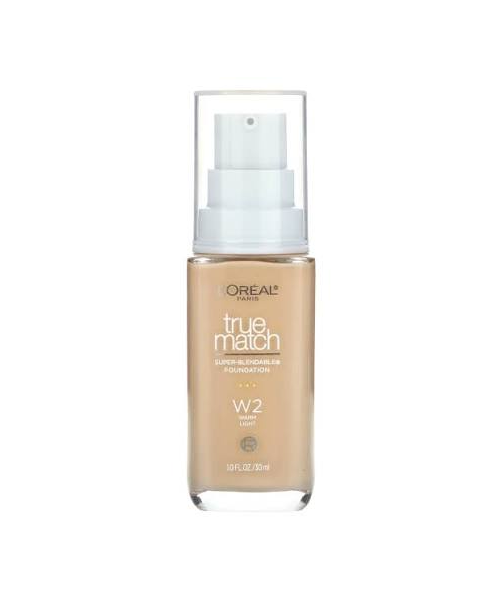
Around $12 to $15, and the best shade system available at any price.
The C/N/W undertone coding across roughly 50 shades is what makes it work. Rather than guessing from swatches, you identify your undertone once and then only need to find your depth — which turns foundation shopping from a lottery into a short decision.
The finish is natural and skin-like with medium, buildable coverage, and the formula suits most skin types. Reviewers with dry skin regularly report it works well for them, which isn’t true of most medium-coverage drugstore formulas.
The drawbacks: it won’t deliver the longevity of a dedicated long-wear formula on very oily skin — expect to touch up. The coverage won’t satisfy anyone wanting genuinely full coverage. And the packaging is basic.
Buy it if: you’ve struggled to find your shade, you want excellent value, or you’re buying a second shade for seasonal variation.
Skip it if: you need all-day wear on very oily skin or full coverage.
The same-brand alternative: L’Oréal Infallible 32HR Fresh Wear is the lightweight, longer-wearing option from the same house — buildable, humidity-resistant, and a frequent recommendation for oily skin at drugstore prices.
Estée Lauder Double Wear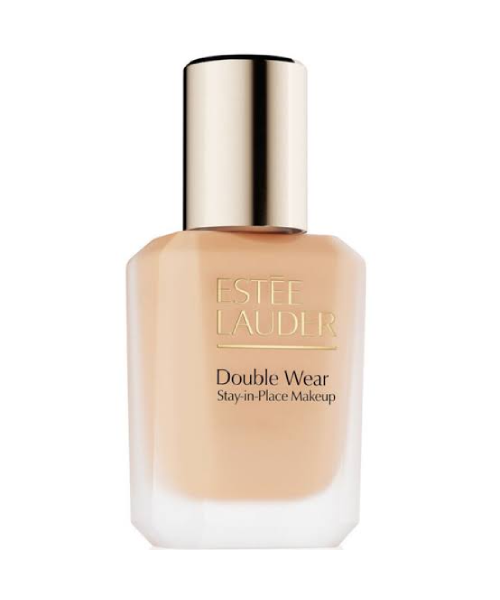
Around $48 to $55, and the most-recommended foundation in its category for a reason.
It’s oil-free and oil-controlling, waterproof, transfer-resistant, and rated for 24-hour wear with a matte finish and medium-to-full buildable coverage. The shade range runs to around 55 to 60, undertone-coded, with the brand’s own finder tool and virtual try-on to narrow it down.
What users consistently praise is the flexibility — it can be sheered out or built up from the same bottle — and that it genuinely doesn’t break down over a long day or under oil. For oily and acne-prone skin wanting real coverage that stays put, it’s the benchmark.
The drawbacks: on dry skin it requires meticulous skincare prep or it clings to texture and flakes. It sets fast, which means you have a short window to blend — work in sections. It can look mask-like if over-applied, so build rather than layering heavily. And several users note it’s drying enough that you should hydrate well first.
Buy it if: your skin is oily or combination, you need coverage that lasts a full day, or you want one foundation for events.
Skip it if: your skin is dry or mature — the matte finish will emphasise what you’d rather it didn’t.
NARS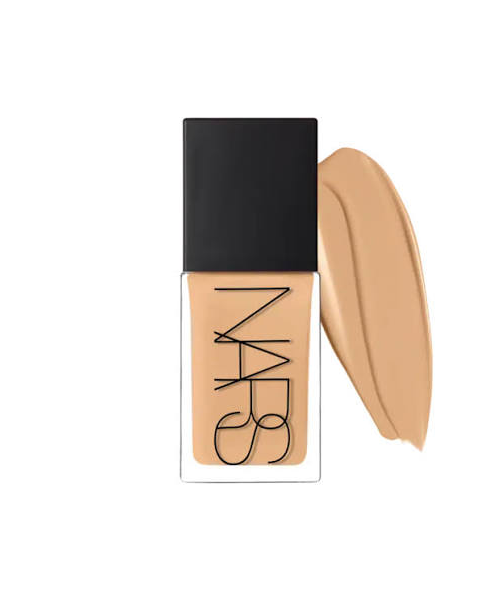
Around $47 to $52.
This is the counterpart to Double Wear: more luminous, more forgiving and more skin-like, described in comparisons as kinder to dry areas while still offering real coverage and all-day longevity. Against a soft-matte formula it reads as more natural; against a very sheer serum base it offers more coverage.
That balance — medium, buildable coverage with a radiant rather than matte finish — is what makes it the sensible choice for dry, mature or dehydrated skin, where matte formulas emphasise texture and fine lines.
The drawbacks: it offers less oil control than Double Wear, so very oily skin will need powder and touch-ups. The luminosity can read as shiny in photographs with flash. And it’s priced at the same level as the long-wear options without matching their durability.
Buy it if: your skin is dry, mature or dull, and you want coverage that still looks like skin.
Skip it if: your skin is very oily — you’ll be fighting it by midday.
Alternatives in the same space: Charlotte Tilbury Beautiful Skin is a lighter-coverage, radiant option with a fresh, BB-cream-like feel, and Giorgio Armani Luminous Silk is the long-standing luxury benchmark for a natural, luminous finish.
Mistakes worth avoiding
Matching on your hand. Your hands are a different colour from your face. Test on the jawline.
Not waiting for oxidation. Twenty minutes before you judge. Most mismatches are decided in that window.
Testing under shop lighting. Walk outside before you buy.
Ignoring undertone. Right depth, wrong undertone is the most common cause of a foundation that looks off without you being able to say why.
Buying full-matte for dry or mature skin. It dries into texture and lines and makes them more visible.
Applying over wet moisturiser. Causes pilling and patchiness. Wait five to ten minutes.
Powdering the whole face. Only where you need it. Full-face powder is what makes foundation look heavy.
Using one shade year-round. Most people genuinely need two, or need to mix.
Expecting foundation to fix texture. It sits on skin. Exfoliation and moisture do more.
Frequently asked questions
How do I find my undertone?
Check your wrist veins (blue/purple is cool, green is warm), which jewellery metal flatters you (silver cool, gold warm), and whether pure white or cream looks better against your face.
Why does my foundation turn orange?
Oxidation — pigments reacting with air and sebum over fifteen to thirty minutes. Test, wait twenty minutes, then judge the shade.
Where should I test foundation?
On the jawline, blending onto the neck, in natural daylight. Never on your hand.
What do shade codes like 2C3 mean?
The number is depth, the letter is undertone (C cool, W warm, N neutral), and the second number is the sub-shade. L’Oréal uses C/N/W plus a number the same way.
What’s the difference between coverage and finish?
Coverage is how much it conceals; finish is how the surface looks. They’re independent — you can have full coverage with a dewy finish.
What foundation is best for oily skin?
Oil-free, matte, long-wear formulas. Estée Lauder Double Wear is the standard; L’Oréal Infallible Fresh Wear is the affordable equivalent.
What foundation is best for dry or mature skin?
Luminous or satin finishes with medium, buildable coverage. Avoid full-matte, which settles into lines.
Do I need two shades?
Most people do — one for winter, one for summer, or one of each to mix as your tone changes.
The recommendation
Identify your undertone first. It takes two minutes and it eliminates most of the shade wall.
If you’ve never found a shade that works, start with L’Oréal True Match at around $13. The undertone coding is the best matching system in the category, and at that price you can buy two shades and mix.
If your skin is oily and you need coverage that survives the day, buy Estée Lauder Double Wear — but hydrate well first and build the coverage rather than applying it heavily.
If your skin is dry or mature, buy NARS or another luminous medium-coverage formula. Matte will work against you.
Then test on your jawline, wait twenty minutes, and look at it in daylight before you commit. That three-step habit matters more than which of these you choose.
Leave a comment