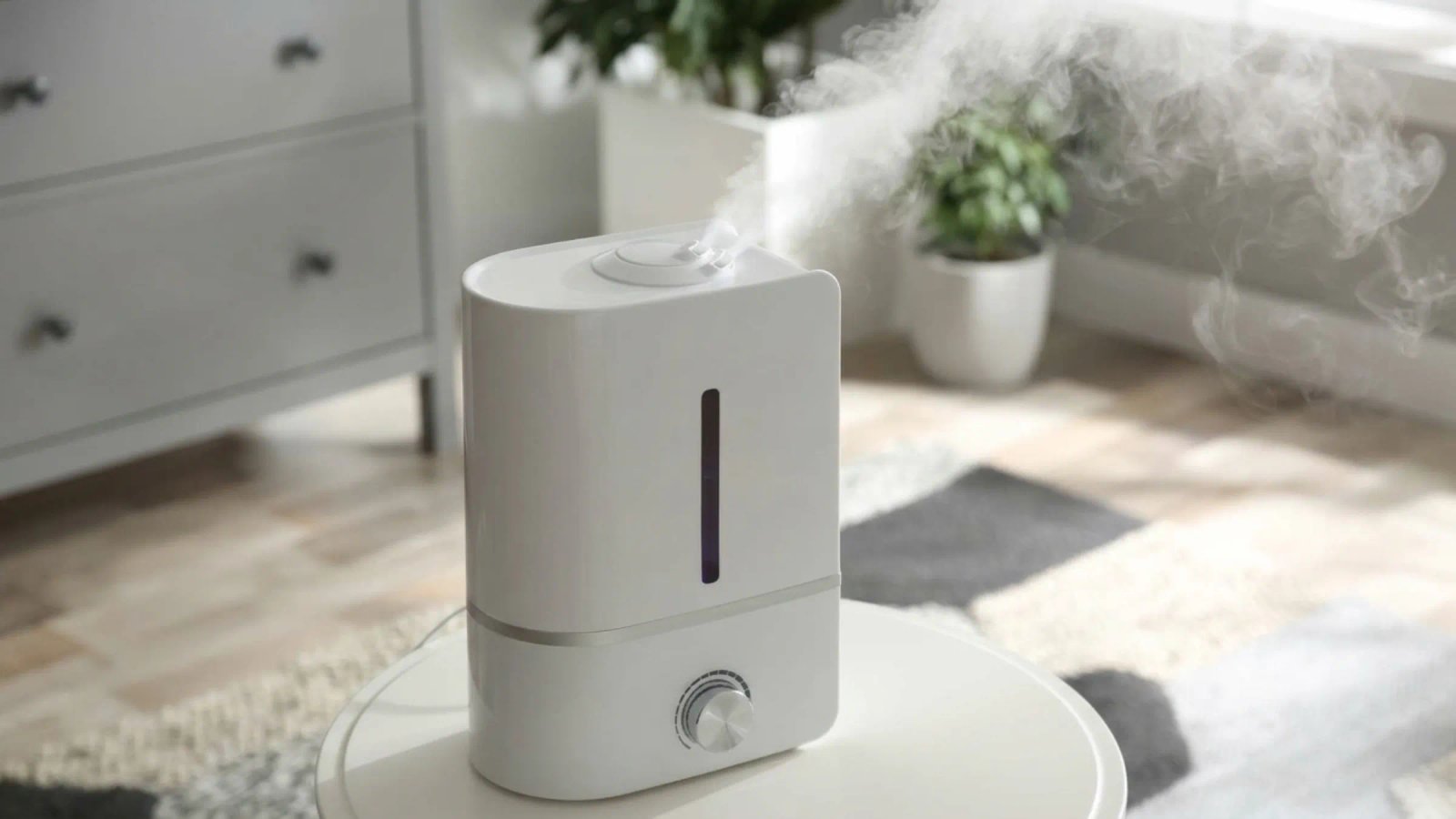
Choosing a humidifier looks like a comparison of mist technologies. It isn’t. It’s a decision about how much cleaning you’re realistically going to do.
That’s because the main types differ in one crucial respect: what happens to the contents of the tank. One type sprays whatever is in the water into the air you breathe. Another leaves the contaminants behind. If you are the sort of person who will rinse a tank every day and deep-clean weekly, either is fine. If you aren’t — and most people aren’t — the choice has already been made for you.
Here’s how the types actually differ, what humidity to target, and the maintenance that genuinely matters.
Get the target right first
The EPA recommends keeping indoor relative humidity between 30% and 50%, and specifically advises against humidifying above 50%, because higher levels encourage biological growth. Energy Star gives the same range.
The seasonal caveat most guides omit: in colder climates during the heating season, 30–40% is the better target. At 50% in winter, warm humid air hits cold window glass and condenses, and you get water running down the inside of your windows, which eventually means mould on the frames and sills. If you’re seeing condensation on your windows, your humidity is too high regardless of what the display says.
Buy a hygrometer. They cost under $10, and without one you’re guessing. Many humidifiers have a built-in humidistat, but it reads the air immediately around the unit, which is the most humid air in the room. A separate hygrometer placed across the room tells you what’s actually happening.
Signs you’re too dry (below 30%): static shocks, cracked lips, irritated sinuses, gaps opening in wood flooring and furniture.
Signs you’re too humid (above 50%): condensation on windows, a damp or musty smell, clammy air.
The three types
Ultrasonic — quiet, cheap, and the one that needs discipline
A ceramic plate vibrates at high frequency, flinging water off its surface as an extremely fine cool mist.
Advantages: very quiet, typically 25–35 dB, which makes it the obvious choice for bedrooms and nurseries. Compact, inexpensive, no filters to replace, and low power draw.
The problem: it aerosolises the tank water indiscriminately. Whatever is dissolved or living in that tank goes into the air.
With tap water, that means dissolved calcium and magnesium — the white dust that settles on furniture, electronics and dark surfaces near the unit. It’s a cleaning nuisance and, since you’re inhaling fine mineral particles, not something to be relaxed about.
More importantly, the same mechanism applies to anything microbial growing in the tank. The EPA warns that standing water in any humidifier can grow bacteria and mould. In an ultrasonic unit, those get dispersed into the room along with the mist.
If you buy ultrasonic, two rules are non-negotiable: use distilled or demineralised water, which eliminates white dust entirely, and clean it properly on schedule. Distilled water costs money and is a nuisance to keep buying, which is worth factoring into the purchase decision.
Evaporative (wick) — the low-maintenance choice
A fan draws air through a wet wick filter. Water evaporates off the wick into the air as invisible vapour.
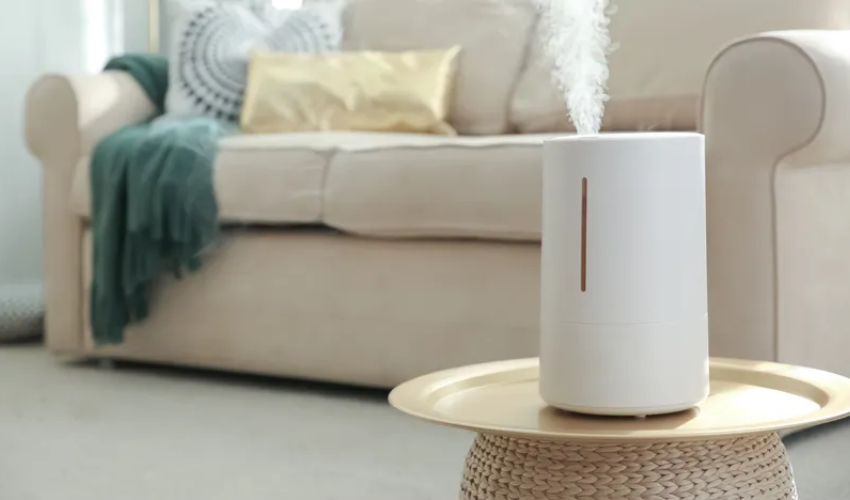
The key advantage: minerals stay in the wick. Nothing is aerosolised, so there’s no white dust whatever water you use, and the mechanism doesn’t spray tank contents into the room the way an ultrasonic unit does. Tap water is fine.
The second advantage is genuinely underrated: it self-regulates. Evaporation slows as the surrounding air gets more humid, and stops when the air is saturated. An evaporative humidifier physically cannot push a room much past comfortable, which removes the over-humidification risk — the fastest route to mould in a home — without needing an accurate humidistat.
The costs: the fan makes noise, which some people find bothersome in a bedroom and others find useful as white noise. Wick filters need replacing periodically — typically every one to three months depending on use and water hardness — which is an ongoing cost. And a wick left damp in a switched-off unit will grow mould itself, so it needs drying out when not in use.
Warm mist / steam — the hygienic one
Water is boiled and released as steam.
Advantage: boiling kills most microbes in the water, which makes this the most hygienic option in terms of what reaches the air. No white dust either, since minerals are left behind as scale.
Costs: boiling water uses substantially more electricity than the other types. There’s a burn risk from hot water and steam, which makes it a poor choice in a room with young children or pets. And mineral scale builds up on the heating element and needs descaling regularly.
The slight warmth it adds to a room is pleasant in winter and unwelcome otherwise.
Which one for you
Ultrasonic | Evaporative | Steam | |
Noise | Very quiet | Fan noise | Moderate |
White dust | Yes, unless distilled water | No | No |
Water | Distilled strongly preferred | Tap fine | Tap fine |
Consumables | None | Wick filters | None |
Over-humidify risk | Yes, needs humidistat | Self-limiting | Yes |
Energy use | Low | Low | High |
Safety | Cool | Cool | Hot — burn risk |
Maintenance demand | High | Moderate | Moderate |
Buy evaporative if you want the lowest-risk option, you’ll use tap water, and some fan noise is acceptable. For most households this is the right default, and it’s the one to buy if you suspect you won’t be diligent about cleaning.
Buy ultrasonic if silence genuinely matters — a light sleeper, a nursery — and you’re willing to commit to distilled water and a real cleaning routine. It is an excellent product for someone who maintains it and a liability for someone who doesn’t.
Buy steam if hygiene is your primary concern, you’re in a cold climate where the extra warmth is welcome, and there are no small children or pets in the room.
Sizing it
Humidifier output is published as gallons per day or millilitres per hour. Manufacturer room-size claims are generous, as in most appliance categories.
More important than maximum output is control. An oversized humidifier without a reliable humidistat will overshoot and push you past 50%, which is worse than being slightly too dry. An undersized one simply runs continuously and never quite gets there.
A single-room humidifier does not humidify a house. Humidity equalises slowly and leaks out through every door. Put it in the room you spend most time in — usually the bedroom — and close the door.
Placement: keep it a few feet from walls and furniture, on a hard surface rather than carpet or wood. Ultrasonic units in particular deposit fine mist on nearby surfaces, and a humidifier sitting directly on a wooden floor or table will eventually mark it. A waterproof mat underneath is cheap insurance.
The maintenance that actually matters
This is the part that determines whether a humidifier improves your air or degrades it.
Daily: empty the tank, rinse it, and refill with fresh water. Do not top up standing water — dump it. Water sitting in a tank for days is a culture medium, and this single habit prevents most problems.
Weekly: a vinegar soak. A diluted white vinegar solution, roughly one part vinegar to ten parts water, left for about 30 minutes, dissolves mineral scale and disinfects without damaging most coatings. Then rinse thoroughly — properly thoroughly, because residual vinegar will be smelled in the room. Check your model’s instructions first; some manufacturers specify different agents.
Pay attention to the parts you can’t see easily. Scale and biofilm build up in the base reservoir, around the ultrasonic plate, in the wick tray and in the mist outlet. A soft brush helps. Slipperiness on any internal surface is biofilm and needs removing.
When storing it: empty it completely, clean it, and let every component dry fully before putting it away. A humidifier put into a cupboard damp comes out in autumn with a problem.
Replace wicks on schedule. A wick that’s gone stiff, discoloured or smells is no longer doing its job and is now a reservoir itself.
If the room smells musty when the humidifier runs, turn it off. That smell is the unit dispersing something you don’t want to breathe. Clean it thoroughly before using it again.
A word on additives
Essential oils are a common addition and a common cause of broken humidifiers. Oils degrade the plastic in tanks and damage ultrasonic transducers, and most manufacturers void the warranty. If you want scent, use a separate diffuser.
Tap water additives sold to prevent white dust are generally unnecessary — using distilled water or buying an evaporative unit solves the problem properly.
Frequently asked questions
What humidity level should I keep my house at?
30–50%, per EPA and Energy Star guidance. In cold climates during winter, aim for 30–40% to avoid condensation on windows.
Why does my humidifier leave white dust?
It’s mineral residue — mostly calcium and magnesium — from tap water, aerosolised by an ultrasonic unit. Use distilled water, or switch to an evaporative humidifier, which traps minerals in the wick.
Can a humidifier cause mould?
Yes, in two ways: running above 50% relative humidity encourages mould in the room, and a dirty tank can disperse mould and bacteria into the air. Both are avoidable.
Is distilled water necessary?
For ultrasonic humidifiers, effectively yes. For evaporative and steam models, tap water is fine because minerals are left behind rather than dispersed.
How often should I clean it?
Rinse and refill daily with fresh water. Vinegar soak weekly. More often with hard water.
Can I put essential oils in it?
Not unless the manufacturer specifically permits it. Oils damage plastics and transducers and usually void the warranty.
Which type is best for a baby’s room?
Cool mist, so no burn risk — and evaporative over ultrasonic unless you’ll commit to distilled water and strict cleaning. Steam humidifiers are a poor choice around small children.
The recommendation
For most people, buy an evaporative humidifier. It doesn’t produce white dust, it runs on tap water, it can’t easily over-humidify a room, and it’s the forgiving choice if your cleaning routine slips. The trade-offs are fan noise and replacement wicks, and both are manageable.
Choose ultrasonic only if silence is genuinely the deciding factor, and then budget for distilled water and commit to the cleaning schedule.
Then buy a $10 hygrometer, put it across the room from the humidifier, and aim for 30–40% in winter. That combination does more for your air than spending more on the unit itself.


Leave a comment