Leather Grades Explained: What “Genuine Leather” Really Means
A label reading genuine leather is designed to reassure you, and it is the single least informative phrase in the entire category.
It confirms one thing: the product contains real animal hide rather than plastic. It tells you nothing about which part of the hide, how it was processed, or how long it will last. A wallet stamped genuine leather might be excellent. It is more often not.
Here’s the hierarchy that actually exists, how to inspect a piece yourself, and — the part most guides skip — when paying for the top grade is a waste of money.
The one honest fact about “genuine leather”
There’s a disagreement running through the internet on this, and it’s worth settling.
Most guides state flatly that genuine leather is a defined tier — third or fourth from the top, made from the lower layers of the hide after the good stuff has been split off. Some sources disagree, pointing out that the term has no enforced legal definition as a grade, and that a manufacturer could technically apply it to anything made of real hide, including full-grain.
Both are partly right, and the practical conclusion is the same either way: the phrase is uninformative, and you should treat it as a warning sign.
The reasoning is simple commercial logic. Full-grain and top-grain leather cost significantly more to produce. A brand using them says so, prominently, because the whole point of paying for better leather is being able to charge for it. A listing that says only genuine leather or real leather, with no grade named, is almost certainly not full-grain — because if it were, the listing would say so.
The rule: if the grade isn’t named, assume it’s a low one.
The actual hierarchy
A hide has layers. The outermost layer, where the hair was, has the tightest and strongest fibre structure. Everything below it is progressively looser and weaker. The grades map directly onto which layer you’re getting.
Full-grain — the top layer, untouched
The complete outer surface of the hide, with its natural grain left intact. Nothing is sanded away.
This is the strongest leather available, because the densest fibres are still present. It’s also the only grade that develops a proper patina — the deepening, darkening, slightly glossy surface that leather goods acquire over years of handling.
The trade-off is cosmetic. Full-grain shows the animal’s actual history: insect bites, scars, stretch marks, variation in tone. Many people now read these as marks of authenticity. If you want a perfectly uniform surface, this isn’t it.
Best for: boots, belts, wallets, bags, anything you’ll own for a decade.
Top-grain — the top layer, lightly sanded
Also from the outer layer, but the surface has been buffed to remove blemishes and then sealed with a finish coat.
The naming is genuinely confusing: “top grain” refers to where it came from, not to it being the top quality. Full-grain is better.
What you get is a more uniform appearance, better initial resistance to staining and surface scratches thanks to the finish, and a softer, more pliable hand. What you give up is long-term durability — removing the surface removes the strongest fibres — and patina development, because the finish coat sits between your hands and the leather.
Best for: sofas, jackets, bags where you want consistency and softness.
Corrected grain — heavily sanded, grain printed on
The surface has been aggressively sanded, then an artificial grain pattern is embossed and a pigmented coating applied.
This is where quality drops noticeably. It’s often sold under the genuine leather label. It looks fine when new, wears poorly, and the coating eventually cracks and flakes.
Tell: the grain pattern repeats perfectly. Real grain never does.
Split leather — the lower layers
When the hide is separated, the layers beneath the top are split off. These lack the tight surface fibres entirely and must be heavily finished or coated to be usable.
Suede comes from this layer, which is worth knowing: suede is split leather. Nubuck, confusingly similar in appearance, is sanded full-grain or top-grain, and is considerably more durable.
Bonded leather — not really leather
Leather scrap and dust, ground up, mixed with adhesive and polyurethane, and pressed onto a fabric backing. Typically only a minority of the material is leather at all.
It behaves like plastic because it mostly is. It peels, flakes, and fails — usually within a couple of years. It appears frequently on budget furniture, office chairs, and book covers.
Avoid entirely. There is no use case where bonded leather is the right choice over either real leather or a good synthetic.
How to inspect leather yourself
In a shop, you can usually determine the grade in under a minute.
Look at the edges. This is the quickest test. Cut full-grain leather shows a fibrous, slightly fuzzy edge where the natural structure is visible — often burnished smooth on good pieces, but still clearly leather all the way through. Bonded leather shows a uniform compressed core, often with a visible fabric backing. Lower grades are usually painted or sealed specifically to hide the edge.
Look at the surface closely. Natural grain is irregular. Pores vary in size and spacing, there are small imperfections, the tone shifts slightly across the piece. Embossed grain is regular — look for a pattern that repeats at a consistent interval.
Smell it. Full-grain and top-grain smell rich and earthy. Bonded and heavily coated leathers smell faintly chemical or of nothing at all. This is one of the more reliable quick tests.
Feel the weight. Full-grain has substance. Bonded and lower grades feel light and slightly hollow for their size.
Press and flex it. Press a thumb into the surface. Real leather creases and wrinkles around the pressure in a complex, organic way, then relaxes. Coated and bonded materials either stretch like plastic or show a sharp, simple fold line.
Check the water test, carefully. A drop of water on uncoated full-grain will slowly darken and absorb. On a heavily coated or bonded surface it will bead and sit. Don’t do this on a product you haven’t bought.
When the cheaper grade is the right choice
Most leather guides are written by leather brands, and they all conclude that you should buy full-grain. It’s worth being more specific than that.
Buy full-grain when the item takes abuse and you’ll keep it for years. Boots, belts, a daily-carry wallet, a work bag. These are items where the surface fibres are doing real structural work and where patina is a benefit rather than wear. Here the price premium genuinely pays back.
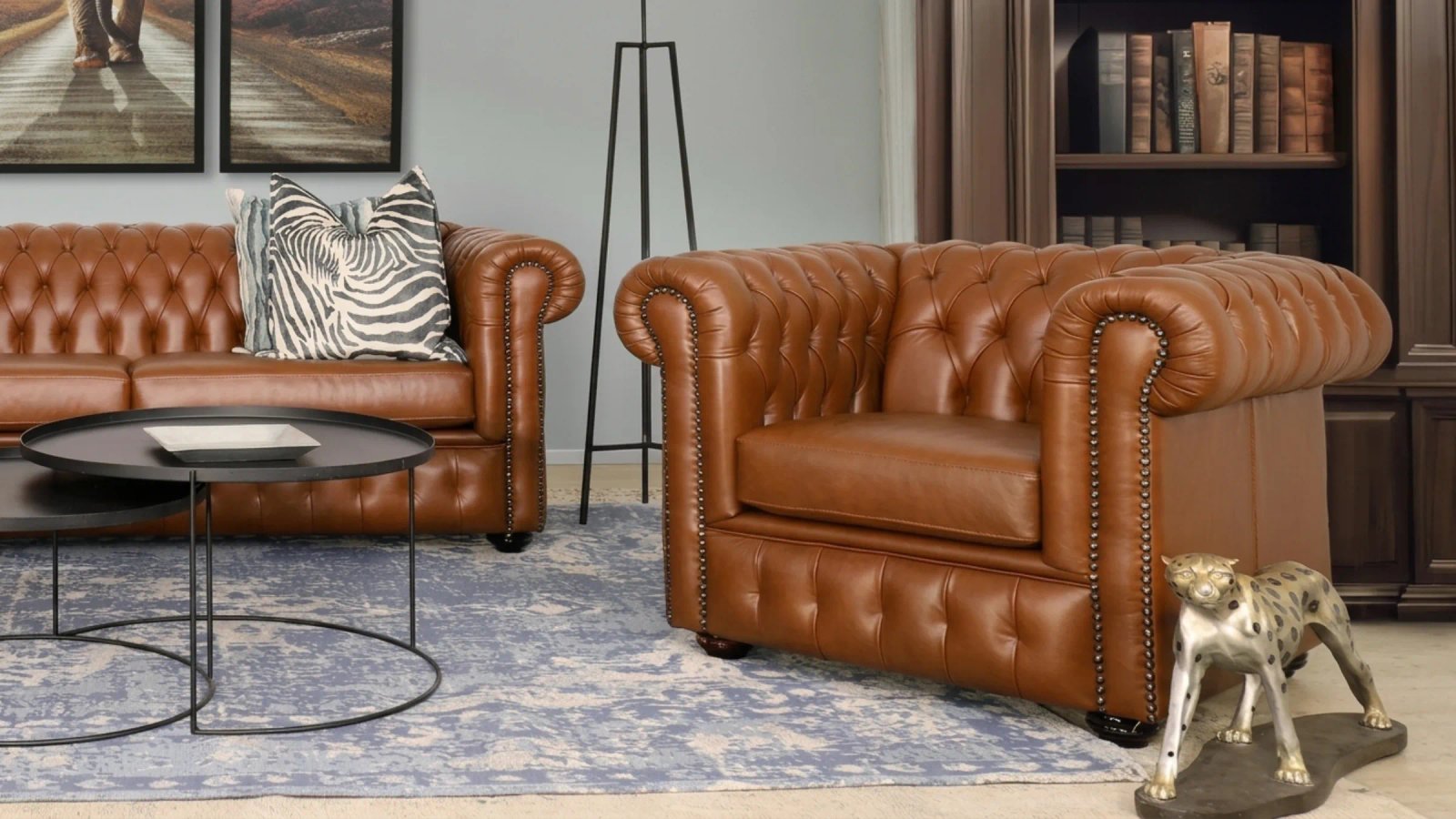
Top-grain is often the better choice for sofas and jackets. Full-grain on a sofa is stiff, expensive, and shows every mark including ones you didn’t make. The finish coat on top-grain resists spills and body oils, which matters more on furniture than maximum tensile strength does. For a leather jacket, the softness and drape of a good top-grain hide is frequently more pleasant to wear.
Consider a good synthetic for items you’ll replace anyway. A quality PU material in a fast-fashion bag will outperform bonded leather and costs less. The honest comparison isn’t synthetic versus leather — it’s synthetic versus the low-grade leather it’s actually competing with, and there the synthetic often wins.
Watch for the premium trap. Full-grain commands a higher price, which means the label gets applied to products where it adds nothing — a phone case, a luggage tag, a keyring. On items that will never see enough wear to benefit, you’re paying for a word.
What to check before buying
Check | Good sign | Bad sign |
Grade named | “Full-grain” or “top-grain” stated explicitly | Only “genuine leather” or “real leather” |
Edges | Fibrous or burnished, leather throughout | Painted, sealed, or fabric backing visible |
Grain | Irregular, varied pores, natural marks | Perfectly repeating pattern |
Smell | Earthy, rich | Chemical or absent |
Weight | Substantial | Light, hollow |
Stitching | Even, tight, reinforced at stress points | Loose, uneven, glued seams |
That last row matters more than people expect. A full-grain bag with bad stitching fails before a top-grain bag with good stitching. Construction quality and leather grade are separate variables, and brands that cut corners on one often cut corners on the other.
Looking after it
Full-grain and uncoated leather needs conditioning every few months — more in dry climates. Use a dedicated leather conditioner, applied thinly. Over-conditioning softens the fibres and causes sagging.
Top-grain and coated leather needs much less. The finish is doing the protecting. Wipe with a damp cloth; conditioner mostly sits on top of the coating rather than penetrating.
Never use heat to dry wet leather. A radiator or hairdryer will make it stiff and brittle permanently. Dry it slowly at room temperature, away from direct heat, stuffed with paper to hold its shape.
Scratches on full-grain often buff out. Rub gently with a clean finger — body heat and oils will frequently blend a light scratch back in. This doesn’t work on coated leather, where a scratch is through the finish.
Bonded leather can’t be repaired. Once it starts flaking, it continues.
Frequently asked questions
Is genuine leather real leather?
Yes — it’s made from animal hide. But the term confirms only that. It doesn’t indicate which part of the hide or how it was processed, and brands using better grades normally say so explicitly.
Is full-grain always better than top-grain?
More durable, yes. Better for your purpose, not always. Top-grain is softer, more stain-resistant and more uniform, which suits sofas and jackets well.
What’s the difference between suede and nubuck?
Suede comes from the lower split layers. Nubuck is sanded full-grain or top-grain. They look similar; nubuck is substantially more durable and more expensive.
Is bonded leather worth buying?
No. It’s leather scrap and adhesive on a backing, and it peels within a few years. A good synthetic performs better at the same price.
How can I tell leather grade from an online photo?
With difficulty. Look for visible edges and natural surface variation, and read the description for an explicitly named grade. If the listing avoids naming one, that’s your answer.
Does full-grain leather get scratched easily?
It scratches, but light scratches often buff out with a finger, and accumulated marks become the patina. Coated leather resists initial scratches better but can’t recover from deep ones.
The recommendation
Look for the grade named explicitly. Full-grain for things that take daily abuse and should last years. Top-grain for sofas, jackets, and anything where softness and stain resistance matter more than maximum strength.
Treat genuine leather with no further detail as an unanswered question, and treat bonded leather as a no.
And check the stitching before you check the hide. The best leather in the world comes apart at a badly sewn seam.
Leave a comment