The problem with buying for someone who cooks is that the obvious gifts are the bad ones. Gadgets that do one thing. Novelty sets. A knife, which is the most commonly given and most commonly regretted cooking present there is.
Meanwhile the tools that professional cooks actually reach for daily are cheap, unglamorous, and almost never given as gifts because they don’t look like much in a box.
Here’s what’s worth buying, roughly in order of how often it’ll get used, plus an honest list of what to avoid.
The one nearly every chef names
A bench scraper. Around $7–20.
Ask professional cooks what tool they’d keep if they could only keep a handful, and this flat rectangle of metal or plastic comes up with surprising consistency. Michael Symon has said his essential kit is four items, and the bench scraper is one of them — and he specifically prefers the cheap plastic version.
It originated as a baker’s tool for portioning and handling dough, but that’s not why cooks love it. It’s the fastest way to move chopped vegetables from board to pan without sliding them off the edge of a knife. It scrapes a cutting board clean in one pass. It portions butter, lifts pastry, and squares off the sides of a cake.
Most people who own one describe the same experience: they didn’t understand the appeal until they used one, and then it lived permanently next to the cutting board.
Why it’s a good gift: cheap enough to pair with something else, genuinely useful to a complete beginner and a serious cook alike, and almost nobody buys one for themselves.
Buying note: metal ones usually have measurement markings and a more comfortable handle. Plastic ones are gentler on non-wood surfaces and are what some chefs prefer. Either is fine; this is not a tool where spending more improves anything.
The one that gets used more than expected
A fish spatula. Around $15–40.
Thin, slotted, flexible, with a bevelled leading edge and usually a slight offset. It’s named for fish, which undersells it badly.
The thin bevelled edge slides under things without tearing them, which matters for fish but also for fried eggs, pancakes, crêpes, delicate fillets and anything with a crust you don’t want to leave behind in the pan. The flexibility lets it conform to the pan surface. The slots drain fat as you lift.
Chefs describe it as more versatile than a standard turner, and one is in the Smithsonian’s exhibit on American home cooking — which is a reasonable indicator of how embedded it is in how people actually cook.
Why it’s a good gift: it has a specific-sounding name, which means people rarely buy one speculatively, and then use it constantly once they have it.
Buying note: look for genuine thinness at the edge. A thick, stiff “fish spatula” is just a slotted turner and misses the point.
The one that changes how someone cooks
An instant-read thermometer. $25–50 at the useful end.
This is the gift that actually improves someone’s cooking rather than making it more convenient.
Most people cook meat by time and guesswork, which means chicken that’s either dry or undercooked and steak that’s a lottery. A fast, accurate thermometer removes the guessing entirely, and the improvement is immediate and obvious.
The premium option in this category is the Thermapen, which appears repeatedly in professional and enthusiast recommendations and sits above $50. Below that, there are good instant-read thermometers in the $25–40 range that are fast enough and accurate enough for home use.
What to look for: read time of a few seconds or less, a thin probe tip, and an auto-rotating display if you want the nice version. Slow thermometers are the ones that end up unused, because standing over a hot pan for fifteen seconds waiting for a number is exactly the friction that makes people stop bothering.
Why it’s a good gift: high perceived value, high actual value, and it suits someone at any skill level.
The quiet upgrades
A good silicone spatula. $10–25.
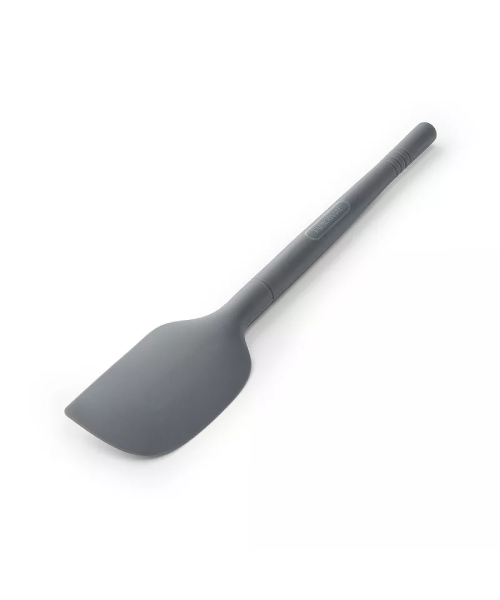
Not a set — one good one. The cheap ones have a head that separates from the handle, which traps food and eventually fails. A one-piece moulded spatula solves that permanently, and the better brands hold up to high heat without going sticky or discoloured. GIR is one that professional cooks name specifically.
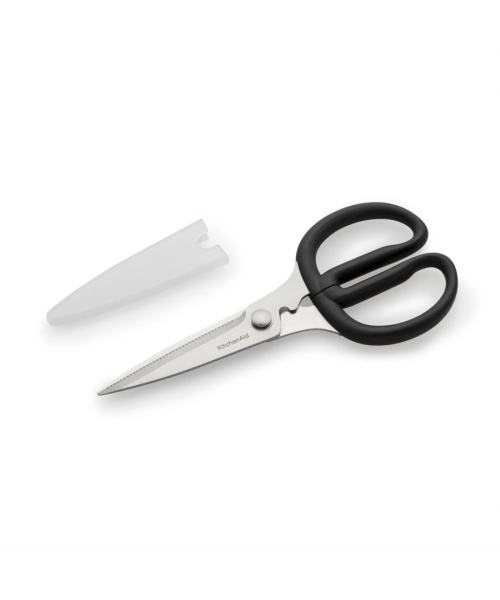
Used far more than most people expect: spatchcocking a chicken, trimming herbs, opening packaging, cutting pizza. Look for a pair that comes apart at the pivot for cleaning — the ones that don’t become genuinely unpleasant over time.
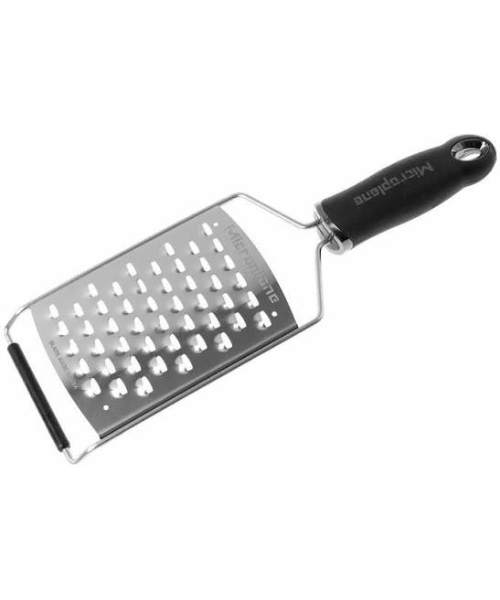
Another of Symon’s four essentials. Zest, hard cheese, garlic, nutmeg, ginger. It does one category of thing but does it better than any alternative, and it changes how much people season.
Squeeze bottles. Under $10 for a set.
An odd-looking gift on its own, but a genuine professional habit: restaurant kitchens keep oil in squeeze bottles rather than decorative cruets, because you can control the pour with one hand. Good as a stocking filler alongside something else.
A spice mill or pepper grinder. $25–50.
Pre-ground pepper is the single easiest upgrade in most home kitchens. A decent grinder with an adjustable burr is a noticeably better object than a supermarket one and gets used at every meal.
What to skip
This is the more useful half of a gift guide, and most leave it out.
Knives. The classic mistake. Knife preference is intensely personal — weight, balance, blade profile, handle shape, Japanese versus German steel — and someone who cares about cooking almost certainly has opinions you don’t know. Someone who doesn’t care won’t sharpen it, and an unsharpened knife is worse than the one they already own. There’s also the superstition about gifting blades, which some recipients hold and will not mention.
If you want to give something knife-adjacent, a honing steel or a whetstone is the better choice — though only if you know they already sharpen.
Single-purpose gadgets. Avocado slicers, strawberry hullers, egg separators, garlic rollers. They’re cheap, they look thoughtful, and they go in a drawer. The test is whether it does something a knife, a spoon or a hand can’t.
Anything that requires counter space they may not have. Stand mixers, air fryers, bread machines. Beyond the budget here anyway, but worth saying: a large appliance imposes a storage decision on the recipient, and many kitchens have no room for one.
Branded sets of utensils. Five silicone spatulas in graduated sizes means one gets used and four take up a drawer. One good tool beats five mediocre ones.
Cookbooks, unless you know their cooking. A cookbook is a strong gift when it matches what someone actually makes and a dead weight when it doesn’t. The hit rate is low unless you’ve cooked with them.
How to combine them
Under $50, the best approach is usually two or three small things that work together rather than one item stretched to the budget.
For a beginner: bench scraper + instant-read thermometer. One makes prep easier, the other makes results better. Roughly $40.
For someone who already cooks well: fish spatula + microplane. Both are tools good cooks often don’t own, and both get used immediately. Roughly $45.
For a baker: bench scraper + a bench-scraper-adjacent set — a good offset spatula and a digital scale if you can find one in budget. Weighing rather than measuring by volume is the single biggest improvement in home baking.
For someone who’s just moved in: shears + silicone spatula + squeeze bottles. Unglamorous, immediately used, and fills gaps nobody thinks to fill themselves.
For a stocking or an add-on: a stack of good cotton kitchen towels. Chefs mention these constantly and they’re never given as gifts. Flour sack or ribbed cotton, not terry.
The principle behind all of this
The tools professional cooks rely on are mostly cheap, mostly unspecialised, and mostly boring to look at. They get used every day because they do a general thing well rather than a specific thing perfectly.
That’s the opposite of how kitchen gifts are usually chosen, which is why so many of them end up in a drawer. If you’re deciding between something that looks impressive and something that looks dull, the dull one is nearly always the better gift.
Frequently asked questions
What’s the single best kitchen gift under $50?
An instant-read thermometer, if they don’t have one — it measurably improves results. A bench scraper if you want something cheaper that gets daily use.
Is a knife a good gift for someone who cooks?
Generally no. Knife preference is personal and specific, and a good cook likely already has one they’ve chosen deliberately.
What do chefs actually use most?
Across independent lists, the recurring items are a bench scraper, a fish spatula, an instant-read thermometer, a silicone spatula, shears and a microplane.
Is it better to buy one nice thing or several small things?
Under $50, several small things usually works better, because each fills a different gap. Above that, one good item.
What about gift cards?
Not a bad answer for someone with strong preferences — particularly if knives or cookware are what they want, where choosing for them rarely goes well.
In short
Buy the bench scraper. Add a thermometer or a fish spatula depending on budget. Skip the knife, skip the single-purpose gadgets, and resist anything that looks more impressive than it is useful.
The best cooking gifts are the ones the recipient would never have thought to buy and then can’t work without.

Leave a comment