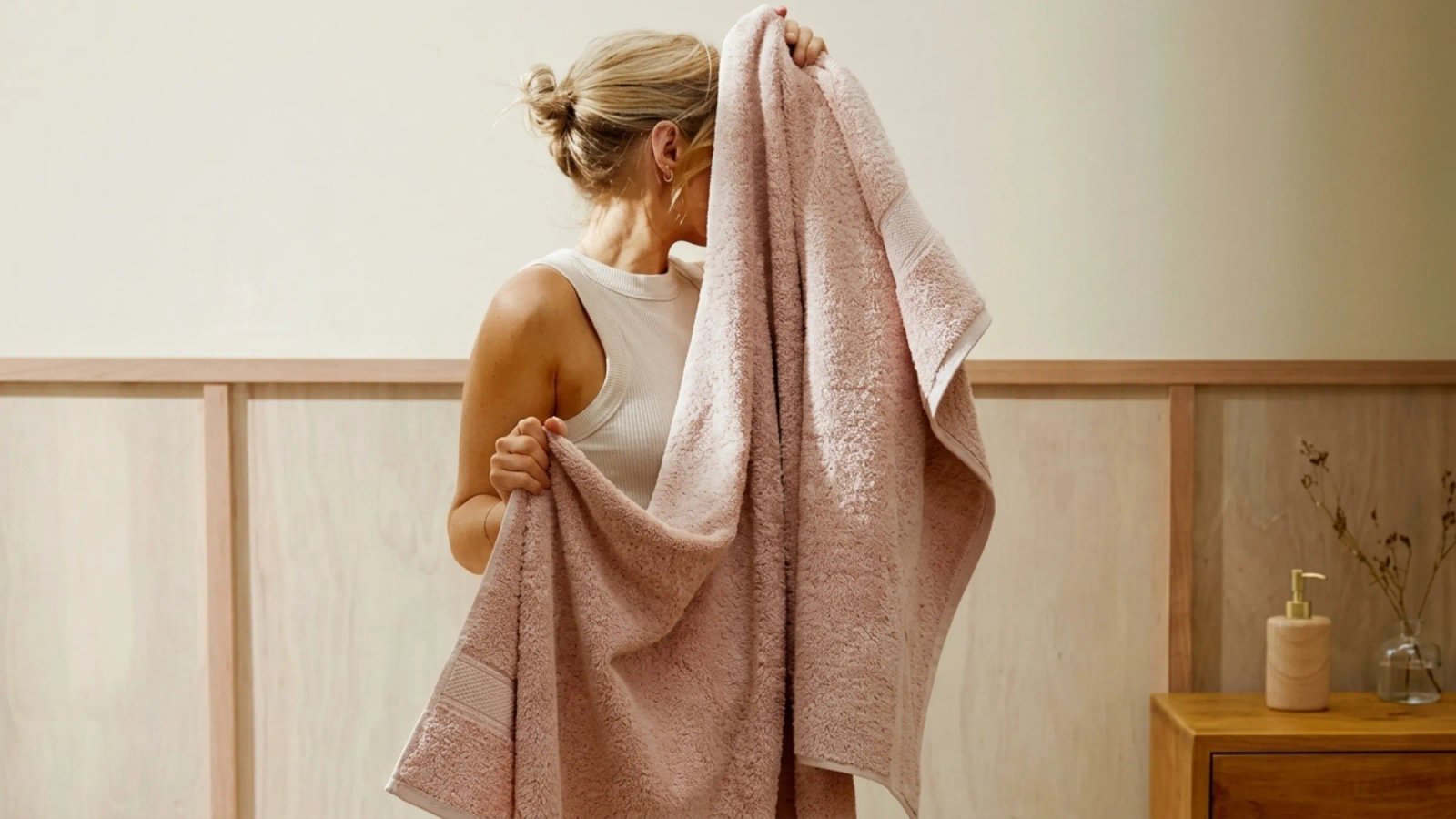
Towels are sold on one number: GSM, or grams per square metre. Higher is marketed as better, and the top of the range — 800, 900 — is sold as hotel luxury.
The number is real and it does measure something useful. But it measures density, and density cuts both ways. A denser towel absorbs more water and feels plusher. It also holds that water for longer, which means it takes considerably longer to dry.
In a well-ventilated bathroom with a heated rail, that’s a non-issue. In a small windowless bathroom shared by three people, an 800 GSM towel doesn’t fully dry between uses, develops a musty smell within days, and has to be washed far more often than a lighter one — which wears it out faster and makes it a worse purchase than the cheaper towel it replaced.
So the right GSM isn’t the highest you can afford. It’s the highest your bathroom can actually dry.
The short version
400–600 GSM is the everyday range and where most people should buy. It absorbs well and dries in a reasonable time.
600–900 GSM is genuinely plusher, and only worth buying if your bathroom ventilates well or you have a heated towel rail.
300–400 GSM is for the gym bag, the beach and travel — fast drying, not luxurious.
Beyond GSM, look for long-staple cotton and combed or ring-spun construction, and never use fabric softener on towels.
What GSM measures
Grams per square metre is the weight of the fabric — effectively how much cotton is packed into a given area. More cotton means more loops, more surface area, and more water held.
GSM | Feel | Dries | Best for |
300–400 | Thin, light | Fastest | Gym, travel, beach, kitchen, utility |
400–600 | Medium, soft, absorbent | Reasonable | Everyday bath towels — the sweet spot |
600–900 | Dense, plush, heavy | Slowest | Spa feel, guest bathrooms, heated rails |
Anything under 400 GSM will feel thin in a bathroom context. Anything over 600 will feel noticeably luxurious and noticeably slow.
The drying trade-off, in numbers
This is the part the marketing leaves out.
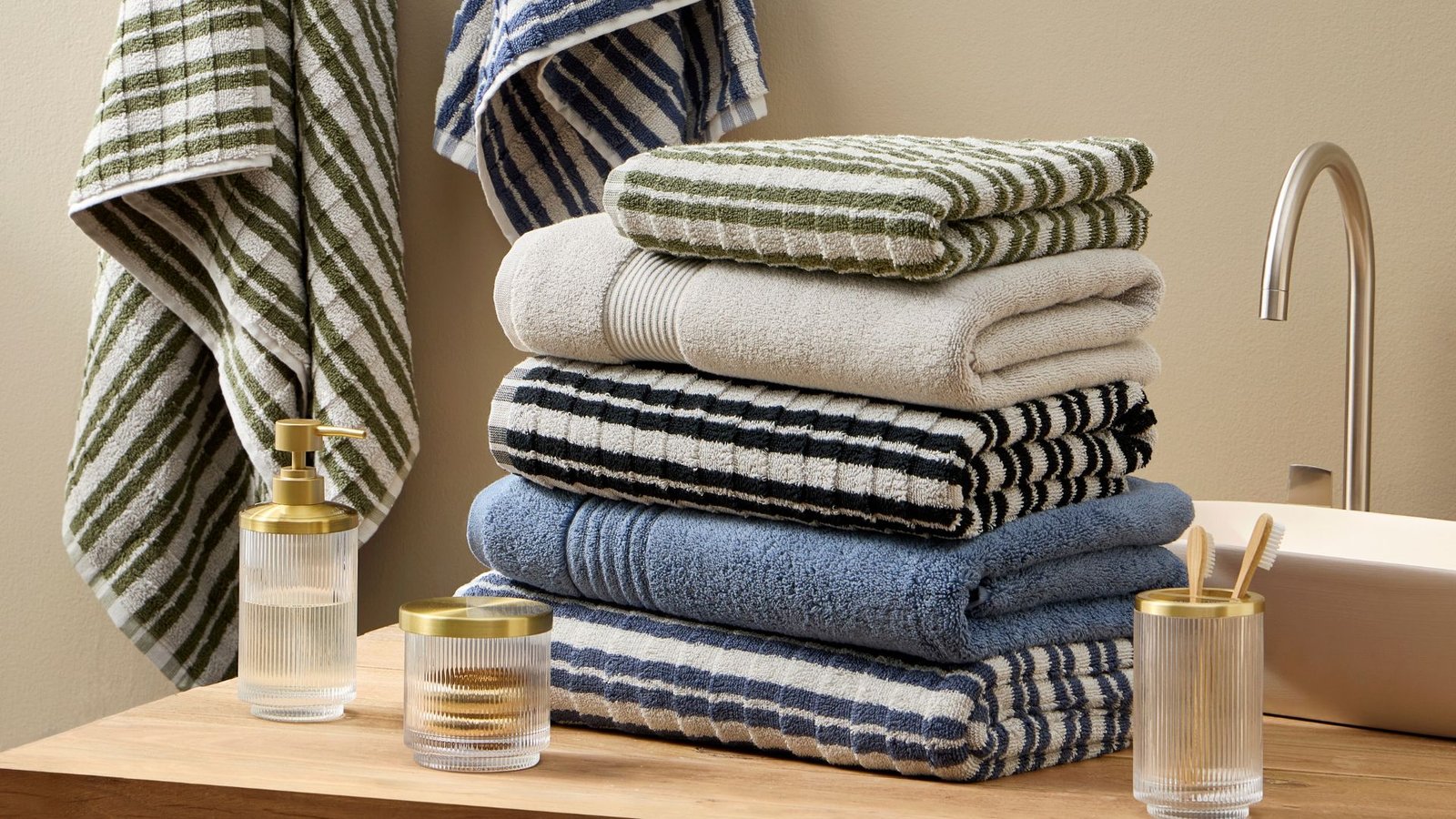
Towel retailers who publish estimates suggest that each 100 GSM adds roughly 15 to 20 minutes to natural air-drying time, and that moving from 500 to 800 GSM can increase drying time by something like 40%. Treat those as rough retailer estimates rather than tested figures, but the direction is not in dispute and matches what anyone who has owned heavy towels will tell you.
Why this matters more than it sounds:
A towel used daily needs to dry fully between uses. If it doesn’t, moisture stays in the fibres, bacteria multiply, and you get the sour smell that no amount of washing seems to fix permanently. The towel then needs washing every two or three uses instead of weekly — which means more laundry, more wear, and a shorter life for an expensive towel.
So before choosing GSM, assess your bathroom:
Good ventilation, heated towel rail, or a towel that lives outside the bathroom → 600+ GSM is comfortable
Average bathroom with an extractor fan → 500–600 GSM
Small, windowless, humid, or shared by several people → 400–550 GSM, and you’ll be happier
Humid climate generally → stay at the lighter end regardless
The plushest towel you’ve ever used was probably in a hotel with industrial ventilation and a fresh one delivered daily. That’s a different context to your bathroom.
Cotton type: long-staple is what matters
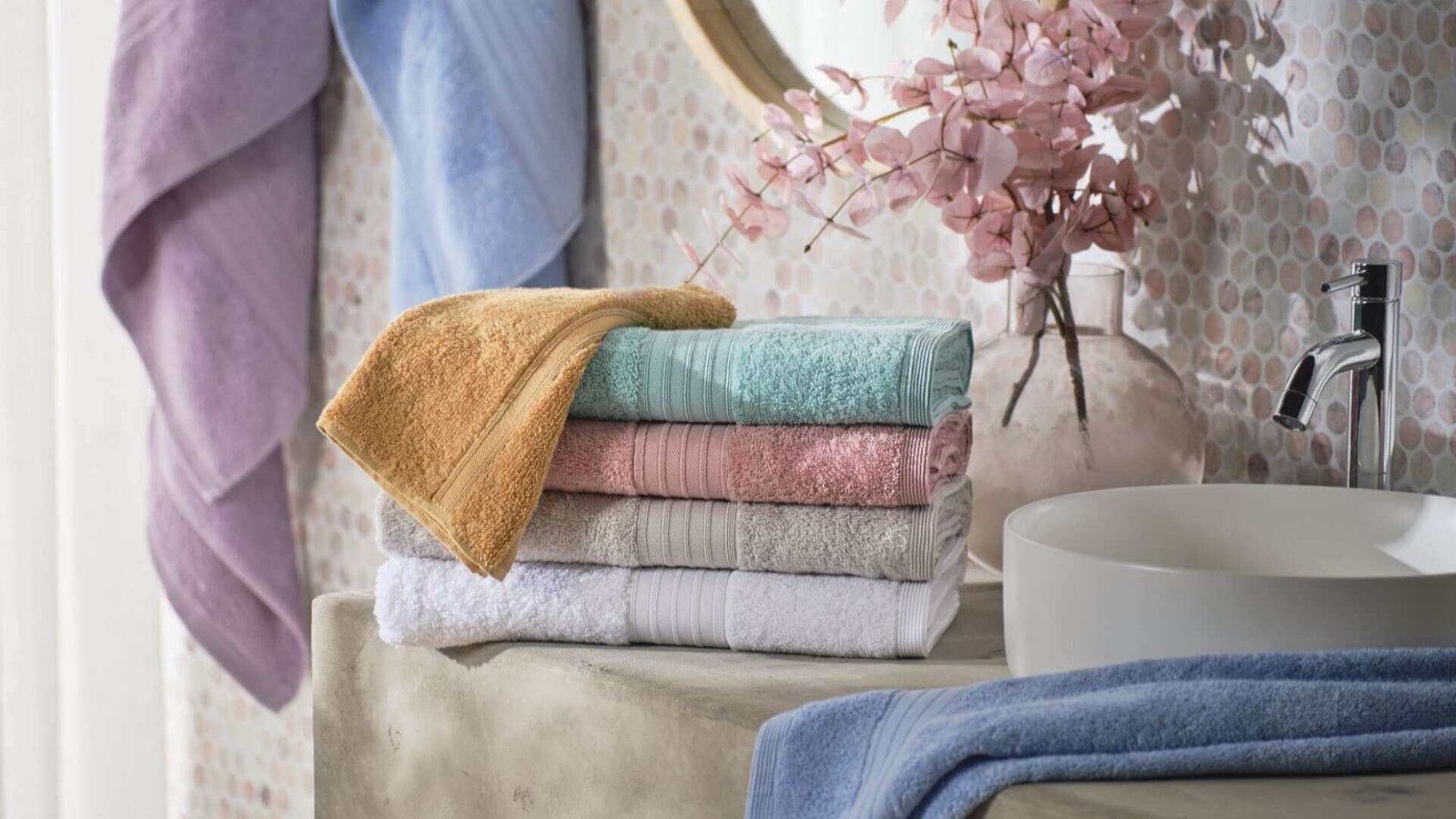
As with sheets, the length of the individual cotton fibre determines how good the yarn is.
Long-staple and extra-long-staple cotton spins into smooth, strong yarn with few loose ends. That means less linting, better durability, and a softer hand. The two names you’ll see most:
Egyptian cotton — extra-long staple, highly absorbent, and the fibres’ length allows very dense construction. Towels made from it tend to be heavier and slower drying, and they’re the premium option.
Turkish cotton — also long staple, but with fibres slightly shorter than Egyptian. The practical effect is a towel that’s lighter and faster drying, at some small cost in absorbency. For a humid bathroom, that trade is often worth making.
Both typically quote fibre lengths in the region of 1⅛ to 1¼ inches, which is what puts them above standard cotton.
A caution that applies to both: these are geographic names, not certifications. “Egyptian cotton” is one of the more loosely applied claims in home textiles. A brand that names its cotton and states the construction is telling you more than one that leans on the word alone.
Construction: the bit that affects durability
Three terms worth recognising.
Combed cotton has been mechanically combed to remove short fibres and impurities before spinning. The result is stronger yarn with fewer loose ends, which means less linting and a longer life. It’s a genuine quality marker.
Ring-spun yarn is twisted more tightly and uniformly, producing a smoother, more durable towel.
Zero-twist is the plush one, and it involves a real trade-off. Normally, yarn is twisted to give it strength. Zero-twist yarn isn’t — the fibres are laid together rather than twisted, which exposes much more surface area to water and produces a towel that’s noticeably softer and more absorbent per gram.
The catch is that twist is what gives yarn its strength. Zero-twist towels are less durable than twisted equivalents, and they shed more in the first few washes. They’re also only possible with long-staple cotton, since short fibres won’t hold together untwisted.
Zero-twist is worth buying if you want maximum plushness and you’ll treat the towels gently. It’s the reason a 550 GSM zero-twist towel can feel more luxurious than a 700 GSM twisted one — and it dries faster too, which is a genuine double advantage.
Other materials
Microfibre dries extremely fast and packs small, which makes it good for the gym and travel. It feels synthetic against skin and doesn’t last as long as good cotton. It’s a tool, not a towel.
Bamboo viscose blends are soft and absorbent with reasonable drying times, and often marketed as hypoallergenic. Quality varies widely by manufacturer.
Linen and Turkish peshtemal towels are very thin, dry extremely fast, and take up little space. They absorb less per pass but can be wrung out and reused, which suits beaches and travel better than bathrooms.
Bath towel or bath sheet
A bath towel is the standard size, roughly 27 × 52 inches. A bath sheet is larger, roughly 35 × 60.
The relevant point is that a bath sheet at the same GSM contains considerably more fabric, which means it holds more water and takes proportionally longer to dry. If you’ve been struggling with towels not drying, dropping from a bath sheet to a bath towel does more than dropping 100 GSM.
Care: the part that determines how long they last
Towels are the one textile where care instructions genuinely change performance, and two mistakes are nearly universal.
Never use fabric softener. This is the big one. Softener works by coating fibres in a waxy residue, and that residue is water-repellent. It makes towels feel softer while progressively destroying the thing you bought them for. A towel that has stopped absorbing properly has usually been softened, not worn out.
Use white vinegar instead if towels have gone stiff — roughly half a cup in the wash, no detergent, strips accumulated residue.
Wash new towels before first use. Towels ship with finishing agents that reduce absorbency, and new towels — especially zero-twist — shed. Wash them separately the first couple of times.
Don’t overload the washer or dryer. Towels need room to move. Packed tight, they don’t rinse properly and don’t dry evenly.
Tumble dry low, or air dry. High heat damages cotton fibres and shortens towel life. Low and longer is better.
Skip the dryer sheets for the same reason as softener.
Hang them spread out, not folded over a hook. A towel folded in half on a hook has half its surface available to dry. Spread across a rail, it dries in a fraction of the time — which matters most precisely when you’ve bought a high-GSM towel.
Mistakes worth avoiding
Buying the highest GSM you can afford. It’s the most common error. Match GSM to how well your bathroom dries, not to your budget.
Using fabric softener. It coats the fibres and kills absorbency permanently.
Hanging towels on a hook. Folded over a hook, they stay damp. Spread them on a rail.
Buying bath sheets for a humid bathroom. More fabric, more water, longer drying.
Trusting “Egyptian cotton” alone. It’s a loosely applied claim. Look for construction details alongside it.
Not washing them before first use. Finishing agents block absorbency, and new towels shed.
Replacing towels that have “stopped absorbing.” Usually they’re coated with softener residue. Try a vinegar wash first.
Frequently asked questions
What GSM is best for bath towels?
400–600 for everyday use. 600–900 is plusher but noticeably slower to dry, which suits a well-ventilated bathroom or a heated rail. Under 400 is for the gym and beach.
Is a higher GSM towel always better?
No. Higher GSM is more absorbent and more luxurious, and also heavier and slower to dry. In a humid or poorly ventilated bathroom, a very high GSM towel stays damp and goes musty.
Turkish or Egyptian cotton?
Egyptian is more absorbent and more luxurious; Turkish is lighter and faster drying. For a humid bathroom, Turkish is often the better practical choice.
What is zero-twist cotton?
Yarn laid together rather than twisted, which exposes more surface area and makes the towel softer and more absorbent per gram. It’s less durable than twisted yarn and sheds more at first.
Why have my towels stopped absorbing water?
Almost always fabric softener residue. Wash with white vinegar and no detergent to strip it, and stop using softener.
How often should towels be washed?
Every three or four uses is a common guideline, assuming they dry fully in between. If they don’t dry, wash more often — or buy a lower GSM.
Bath towel or bath sheet?
Bath sheets are larger and feel more generous, but hold more water and take longer to dry. In a small bathroom, stick with standard bath towels.
The recommendation
Buy 500–600 GSM in long-staple combed or ring-spun cotton for everyday use. That’s the range that’s genuinely absorbent and genuinely dries, and it’s where most of the value in this category sits.
If you want something plusher, buy zero-twist at around 550–650 GSM rather than going heavier in a standard twisted towel — you get the plush feel without the drying penalty.
Only go above 700 GSM if your bathroom has a heated rail or real ventilation.
Then wash them before first use, hang them spread on a rail, and never let fabric softener near them. That last rule will do more for how your towels feel in two years than any amount of extra GSM.


Leave a comment