
The Canada Goose Expedition Parka is rated to −30°C and below, costs around $1,700, and is filled with 625 fill power down.
The Uniqlo Seamless Down Parka costs around $180 and uses 750+ fill power down.
On the specification most people check, the cheap coat wins by a distance. In an Arctic wind it isn’t close, and understanding why is the whole of this guide.
Fill power measures the quality of the down — how much loft you get per ounce. It does not measure how much down is in the coat. The Expedition is packed with a great deal of moderate-quality down in a long, densely baffled, wind-stopping shell. The Uniqlo has a modest amount of excellent down in a light city jacket.
Both are good coats. They’re for different winters.
The short version
Uniqlo Seamless Down Parka (~$180) — the city coat. Light, warm for its weight, genuinely good construction, not built for blizzards.
The North Face McMurdo (~$400–450) — the all-rounder. Waterproof shell, substantial down fill, the best warmth-per-dollar for most real winters.
Canada Goose Expedition Parka (~$1,675+) — genuine extreme cold. Only worth it if you actually stand outside in −20°C.
And match the coat to your activity, not just the temperature. A coat rated for standing still will cook you on a brisk walk.
Fill power versus fill weight, again
Worth stating plainly because it governs everything else.
Fill power is a measure of loft: one ounce of 800-fill down expands to 800 cubic inches. Higher numbers mean better warmth-to-weight — a lighter, more compressible coat at the same warmth.
Fill weight is how many grams of down are actually in the garment. This is what determines total warmth, and almost nobody publishes it.
So total warmth is roughly fill power × fill weight. A coat with 625-fill down and a lot of it beats a coat with 800-fill down and very little.
Arc’teryx describes the practical fill power range as 550 to 1000, with 750–850 being the sweet spot for technical jackets where weight matters. For a city parka that lives on your body rather than in a pack, weight matters much less, which is why heavy-fill-weight, moderate-fill-power construction is a perfectly rational design choice at the top end.
What to do: if fill weight isn’t published — and it usually isn’t — use the coat’s overall weight and thickness as a proxy, and read the manufacturer’s own temperature guidance rather than inferring from fill power.
Length does more than you’d expect
This is the most underrated spec in winter coats.
A hip-length jacket leaves your thighs and lower back exposed. The femoral arteries run close to the surface of the upper thigh, and cooling the blood there cools you generally. A hip-length coat also means a cold seat whenever you sit down outside.
A thigh-length coat covers that, and a mid-calf parka covers most of the leg.
Length is often worth more than insulation thickness. A thinner thigh-length coat frequently outperforms a thicker hip-length one in real use, and it’s why genuine expedition parkas are long.
The trade-off is mobility — long coats restrict stride and are awkward on a bike or in a car. Many include a two-way zip so you can open the bottom without opening the top, which largely solves it.
The hood is a performance part
Fur ruffs look decorative and aren’t.
A deep hood with a ruff breaks the wind before it reaches your face, creates a pocket of still air in front of it, and prevents the frost that forms on exposed skin in extreme cold. This is why expedition parkas have them and fashion puffers often don’t.
What to look for: a hood deep enough to extend past your face, adjustable at both the face opening and the back of the head, and insulated rather than a single layer of shell. A hood that blows off in wind is doing nothing.
Wind and water matter more than insulation
Down traps air. Air moving through it takes the heat with it, and down that gets wet collapses and stops insulating almost entirely.
Wind resistance is the force multiplier. A tightly woven, windproof shell over moderate insulation outperforms a thick down jacket in a loose shell. This is where Uniqlo’s “seamless” construction earns its description — by bonding rather than stitching the baffles, it removes the needle holes where wind enters and down escapes.
Water is the bigger risk in most climates. A genuinely waterproof shell, like The North Face’s DryVent on the McMurdo, protects the down from the sleet and wet snow that characterise most inhabited winters.
The climate decision:
Your winter | Buy |
Cold and dry | Down, prioritise fill weight and length |
Cold and wet | Waterproof shell over down, or synthetic insulation |
Mild and wet | Synthetic — it keeps insulating when damp |
Extreme cold | Long down parka, deep ruffed hood, windproof shell |
Synthetic insulation — PrimaLoft and similar — is heavier and bulkier than down for the same warmth, but it keeps working when wet and dries far faster. In a maritime climate that’s often the better choice despite the worse specification.
The features that separate a parka from a puffer
Storm cuffs. Inner elastic or rib cuffs inside the sleeve that seal against the wrist. Without them, wind travels straight up your sleeves.
Wind skirt (powder skirt). An internal elasticated band at the waist that stops wind coming up from below. Standard on expedition parkas, absent on most fashion coats, and it makes a real difference.
Two-way zip. Lets you open the bottom of a long coat for sitting and walking without exposing your torso.
Insulated hand pockets. Fleece or down-lined, positioned where your hands naturally fall. Pockets that are just shell fabric aren’t doing anything.
Internal pockets. Phone batteries die fast in cold. An internal chest pocket keeps a phone warm and working.
Chin guard. A fabric flap behind the top of the zip. Trivial until a metal zip pull meets your chin at −15°C.
The three picks
Uniqlo Seamless Down | TNF McMurdo | Canada Goose Expedition | |
Price | ~$180 | ~$400–450 | ~$1,675+ |
Fill power | 750+ | 600 recycled | 625 |
Shell | Water-repellent | DryVent waterproof 2L | Water-repellent, windproof |
Length | Hip / thigh | Thigh | Thigh |
Hood | Insulated | Insulated, ruff | Deep, removable fur ruff |
Best for | City commuting | Most real winters | Genuine extreme cold |
Uniqlo Seamless Down Parka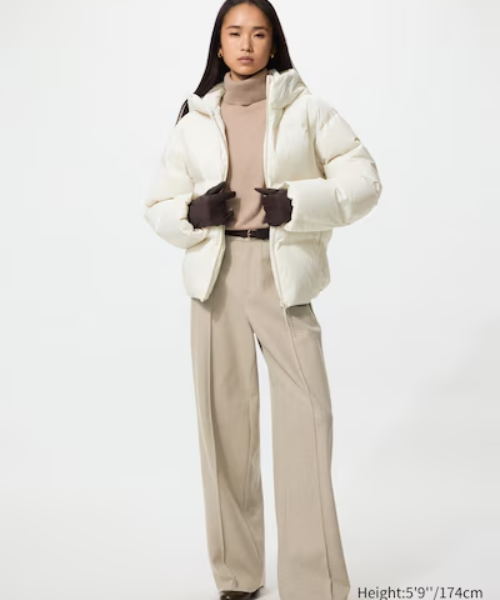
Around $180, and the best value in this guide by a distance.
The seamless construction is a genuine engineering feature rather than marketing: bonding the baffles instead of stitching them removes the needle holes where wind gets in and down works out. Combined with 750+ fill power down and a water-repellent finish, you get a coat that’s remarkably warm for how light and slim it is.
It’s also the only one here that doesn’t look like outdoor equipment, which matters if it’s going over work clothes five days a week.
The drawbacks: it lacks the extreme-weather hardware — no heavy-duty wind skirt, no storm cuffs of any substance, and the hood is modest. The down quantity is modest too, so it’s warm for its weight rather than warm in absolute terms. In sustained sub-zero wind it isn’t enough.
Buy it if: your winter is cold but civilised, you’re mostly moving between heated buildings, and you want something that looks like a coat rather than kit.
Skip it if: you spend real time outside in genuine cold, or your winter is wet.
The North Face McMurdo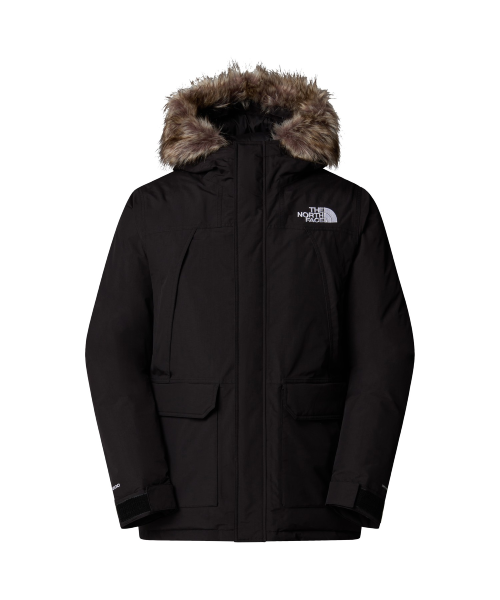
Around $400 to $450, and the pick for most people.
The combination that makes it work is 600-fill recycled down inside a fully waterproof DryVent two-layer shell. The fill power is unremarkable; the fill weight and the shell are not. For the wet-cold winters most people actually experience, protecting down from moisture matters more than maximising loft.
It’s thigh length, with an insulated hood, and it’s consistently rated among the warmest jackets available at its price. The North Face’s claimed cold rating for it is aggressive — treat specific temperature figures from any manufacturer sceptically — but the real-world consensus is that it handles serious winter comfortably.
The drawbacks: it’s heavy and bulky compared to the Uniqlo, and it looks like outdoor gear. At 600 fill power it’s less efficient than higher-fill alternatives, so you carry more weight for the warmth.
Buy it if: your winter involves wet snow, sleet or rain as well as cold, and you want one coat that handles everything.
Skip it if: you need something that works with formal clothing, or your winters are mild.
Canada Goose Expedition Parka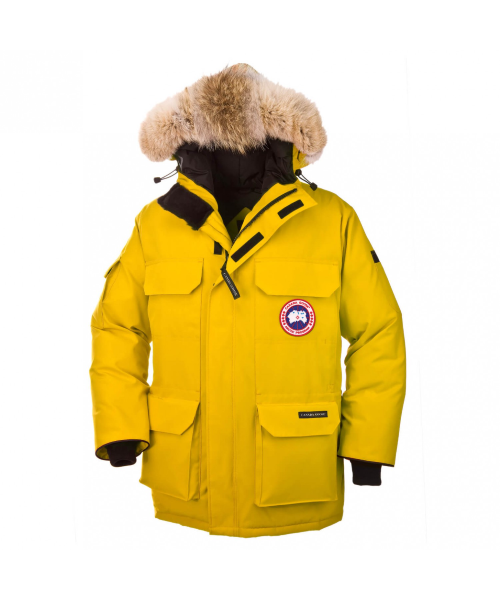
Around $1,675 to $1,895, made in Canada, rated to −30°C and below.
This is the coat the specification debate is really about. 625-fill duck down, which sounds modest, packed densely into a long, heavily baffled shell with a deep removable fur ruff, storm cuffs, a wind skirt, and a large number of properly insulated pockets. It even includes removable backpack straps for carrying it when you don’t need it.
It outperforms jackets with far higher fill power because the design — length, hood coverage, wind resistance and sheer quantity of down — does the work. If you genuinely stand outside in −20°C, this is what that requires.
The drawbacks are substantial. The price is extraordinary, much of it brand. It’s dry clean only. It’s far too warm for ordinary winters — wear it at 0°C while walking and you’ll sweat, and damp insulation is cold insulation. And it’s heavy.
Buy it if: you live somewhere genuinely extreme, or you work outdoors in winter.
Skip it if: your coldest day is −5°C. You’re buying capability you’ll never use and will be uncomfortable in.
Two worth knowing about: the Fjällräven Nuuk Parka at around $535 has topped OutdoorGearLab’s men’s winter jacket testing, and the Columbia Landroamer II at around $220 is a well-regarded budget option for everyday warmth.
Mistakes worth avoiding
Buying the warmest coat available. Too warm plus any activity equals sweat, and wet insulation is cold insulation. Match the coat to how much you move.
Comparing on fill power alone. It measures down quality, not quantity. A 625-fill parka packed full beats an 800-fill jacket with very little in it.
Ignoring length. A thigh-length coat usually beats a thicker hip-length one in real conditions.
Buying down for a wet climate. Wet down collapses. You want a waterproof shell or synthetic insulation.
Dismissing the fur ruff as decoration. It breaks wind in front of your face and is one of the most functional parts of an extreme-cold hood.
Sizing too tight. Down needs room to loft, and you need room for a layer underneath. A compressed coat is a cold coat.
Washing it wrong. Down needs down-specific detergent and a long tumble dry with dryer balls to re-loft. Some parkas are dry clean only — check before you buy if that matters to you.
Frequently asked questions
Does higher fill power mean a warmer coat?
No. Fill power measures down quality and warmth-to-weight. Total warmth depends on how much down is in the coat, plus length, shell and hood design.
Why does a 625-fill parka outperform an 800-fill jacket?
Because it contains far more down, is longer, and has a windproof shell and a deep hood. Design and quantity beat efficiency.
Down or synthetic?
Down for cold and dry; synthetic for wet, because it keeps insulating when damp. Hybrid coats use both.
Is Canada Goose worth the money?
Only if you genuinely face extreme cold. The construction is real, but a large part of the price is brand, and the coat is too warm for ordinary winters.
What length coat should I buy?
Thigh length as a default. Mid-calf for extreme cold. Hip length only for mild winters or high activity.
How should I size a winter coat?
With room for a layer underneath and without compressing the down. Compressed insulation doesn’t insulate.
Can I wash a down parka?
Usually, with down-specific detergent and a long low-heat tumble dry with dryer balls. Some, including the Canada Goose Expedition, are dry clean only.
The recommendation
Work out your actual winter first — how cold, how wet, and how much you’ll be moving.
For cold-and-dry city winters with mostly short exposures, buy the Uniqlo Seamless Down Parka. It’s light, genuinely well constructed, and it’s $180.
For most real winters — cold with wet snow and sleet — buy The North Face McMurdo. The waterproof shell over substantial down fill is the right combination for the conditions most people face, and it’s the best warmth-per-dollar here.
For genuine extreme cold, or outdoor work, buy the Canada Goose Expedition Parka and accept that you’re paying a brand premium alongside real capability.
And resist buying up. The most common winter coat mistake isn’t buying one that’s not warm enough — it’s buying one that’s far too warm, sweating into it on a ten-minute walk, and being colder than you would have been in something lighter.


Leave a comment