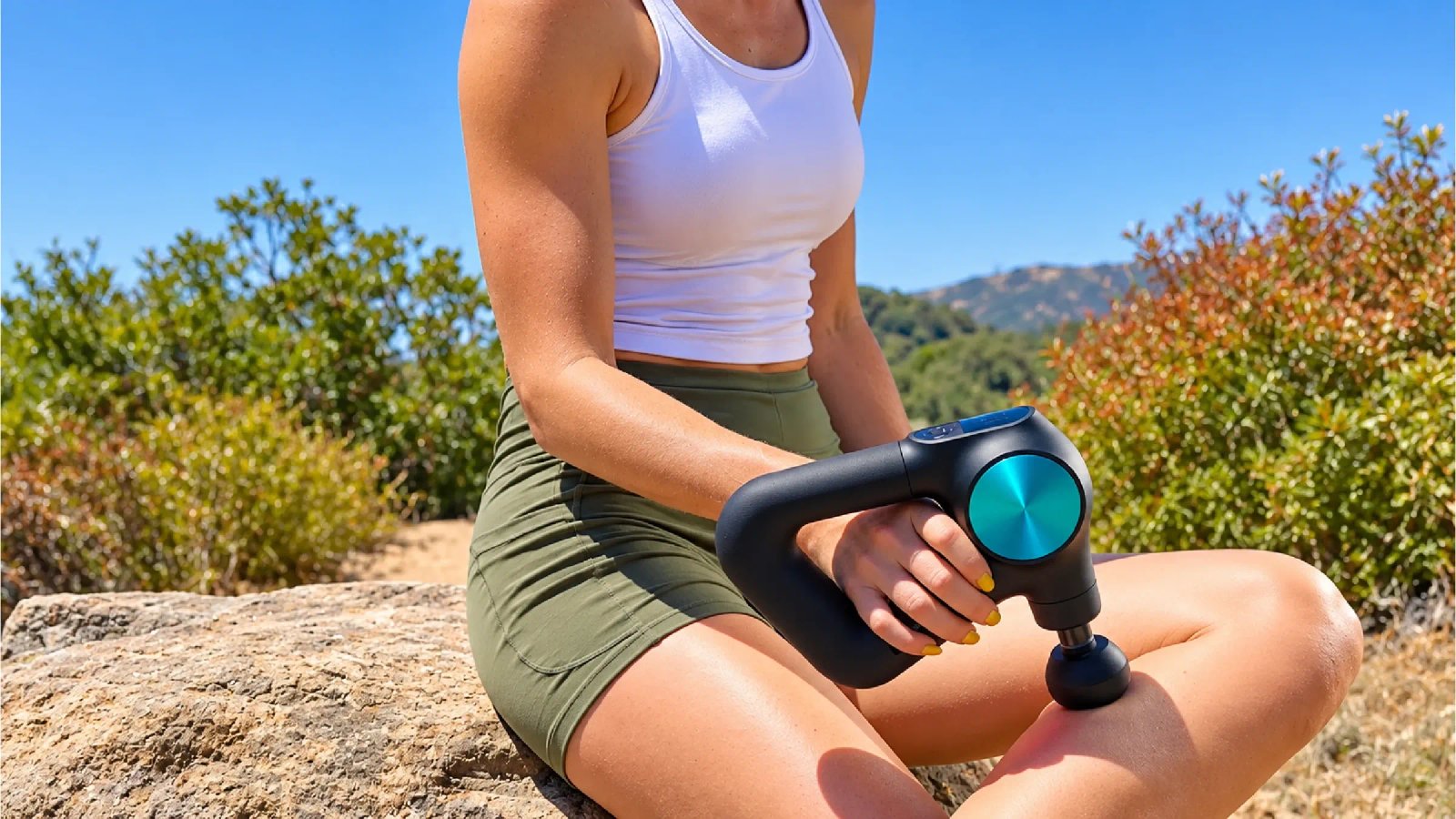
Therabody’s Theragun line runs from $149 to $599, and the differences between models are not obvious from the marketing. The Relief is $149, the Mini $199, the Prime $299, the Elite $399 and the PRO Plus $599. The PRO Plus is the flagship — 16mm amplitude, up to 60 lbs of force, 150 minutes of battery, six attachments and Bluetooth guidance through the app. Most people do not need it. The sensible answer for the majority of buyers sits in the middle of the range, and the discounts around Black Friday are worth waiting for.
Buy it if / Skip it if
· Buy it if you train regularly and want something for general muscle soreness and recovery
· Buy it if you want guided routines rather than guessing where to point it
· Buy it if you have tried cheaper massage guns and found them loud, weak or short on battery
· Buy it if you want the app ecosystem, which is the clearest thing separating Therabody from cheaper rivals
· Buy it if you can shop a sale, where the PRO Plus has dropped to $549.99 and other models fall further
· Skip it if you are looking for treatment of an injury rather than general wellness — that is a conversation for a doctor or physiotherapist
· Skip it if $149 is already more than you want to spend, because effective basic devices cost less
· Skip it at the top of the range unless you genuinely need 16mm amplitude and 150 minutes of battery
Who Therabody is
Therabody built the percussive massage category in consumer form. The Theragun’s distinguishing feature from the start was amplitude — how far the head travels on each stroke — which is what separates a device that works into muscle from one that vibrates on the surface.
The lineup now spans five main Theragun models plus a wider wellness range, and the branding has shifted from a single device toward a system: percussive massage, vibration therapy, heat and cold attachments, guided breathwork, and TheraMind sound therapy, all tied together through the Therabody app.
The positioning is explicitly wellness rather than medical. The company’s own framing is relief, recovery and mobility — easing soreness, reducing stress, sleeping better. That distinction matters, and it is one the brand is reasonably careful about.
The customer trains, sits at a desk too long, or both, and has decided that a cheap massage gun is not what they want.
What Therabody does differently
Amplitude is the actual engineering difference. The PRO Plus runs a 16mm stroke at 1,750 to 2,400 RPM with up to 60 lbs of force. Cheaper devices typically move far less. Whether you need that depth is a separate question, but it is a real specification rather than a marketing adjective.
The app does more than connect. Bluetooth pairing unlocks guided routines, tracking and personalised treatments, which addresses the main failure of massage guns — people buy one, use it wrongly for a fortnight and put it in a drawer. Guidance is the difference between a tool and an ornament.
The range is genuinely tiered rather than cosmetically so. $149 Relief, $199 Mini, $299 Prime, $399 Elite, $599 PRO Plus. The steps up buy amplitude, battery life, attachments and app depth, not just finishes.
Multi-therapy is the current direction. The PRO Plus bundles percussive massage with heat, a Cold Plus attachment, vibration, breathwork and sound therapy in one device. Whether you use all six is up to you, but it is a different product from a motor in a handle.
The range, decoded
Model | Price | Best for |
Theragun Relief | $149 | Everyday soreness, the entry point |
Theragun Mini | $199 | Travel and gym bags — portability first |
Theragun Prime | $299 | Simple, powerful, no extras |
Theragun Elite | $399 | The sweet spot — power plus app features |
Theragun PRO Plus | $599 | The flagship — six therapies, 16mm, 150-min battery |
Products worth your money
Theragun Relief — $149
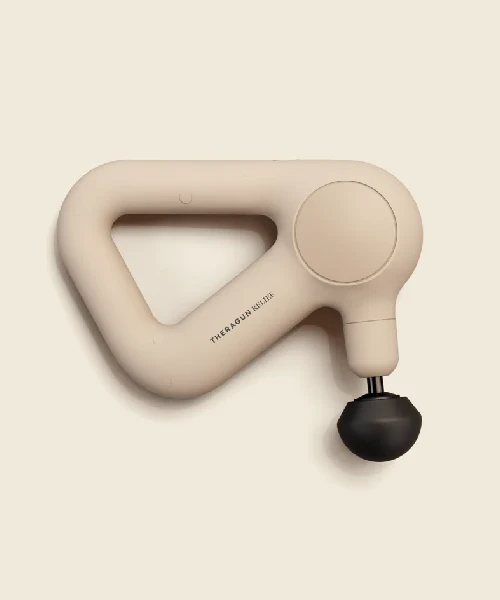
Best for: A first percussive device, and anyone who wants the brand without the flagship price.
Why it stands out:
· The lowest entry point into Theragun at $149, built around everyday aches rather than athletic recovery
· Lighter and simpler than the models above it, which makes it more likely to actually get used
· Available in colourways including Sand and Navy, which matters more than it should for something that lives on a side table
One honest limitation: Lower amplitude and fewer features than the Elite and PRO Plus — this is for general soreness, not deep tissue work.
Bottom line: The right buy if you are curious rather than committed, and the model most people over-buy past without needing to.
Theragun Elite — $399
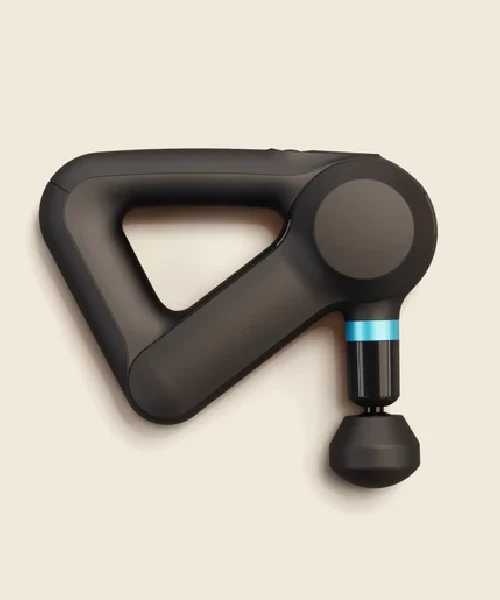
Best for: The recommendation for most people who train seriously.
Why it stands out:
· Sits at the point in the range where you get real power alongside the premium app features, without the PRO Plus premium
· Bluetooth connectivity and guided routines, which is the feature that keeps the device in use rather than in a drawer
· Widely discounted — it has appeared at €299 from €399 at European retailers, and US sale pricing follows similar patterns
One honest limitation: $399 is still a lot for a massage device, and the Prime at $299 covers similar ground with fewer smart features.
Bottom line: The model to buy if you want one device to last. Wait for a sale and the gap to the Prime narrows considerably.
Theragun PRO Plus — $599
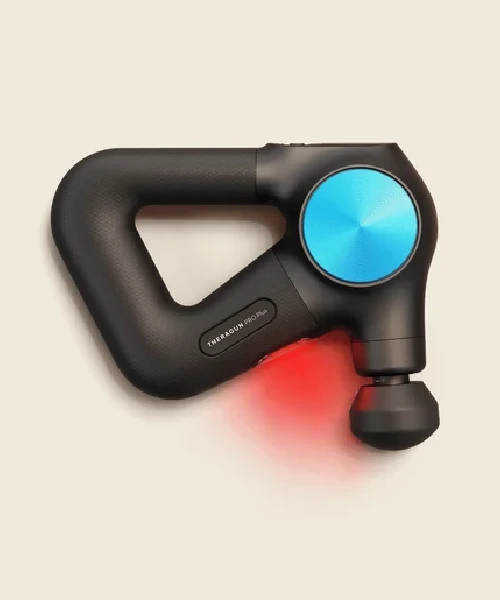
Best for: Serious athletes, and people who will genuinely use more than one of the six therapies.
Why it stands out:
· 16mm amplitude at 1,750 to 2,400 RPM delivering up to 60 lbs of force, with a 150-minute battery and six attachments
· Six therapies in one device — percussive massage, vibration, heat, cold through the Cold Plus attachment, guided breathwork and TheraMind sound therapy
· At 2.8 lbs with a soft case and USB-C charging, it is portable despite being the flagship
One honest limitation: $599 is a steep price for a massage device, and reviewers have been direct that it is hard to justify for a first-time buyer.
Bottom line: Buy it if you are a serious athlete or you will use the multi-therapy features. It has dropped to $549.99 in Black Friday events, which is when to move.
What owners actually say
Consistently praised:
· Power and depth compared with cheaper devices, which is the most repeated point
· Quietness relative to the force delivered
· Battery life, particularly on the PRO Plus at 150 minutes
· The guided app routines, cited by owners as the reason they kept using it
Consistently criticised:
· Price across the whole range, which is the universal objection
· Attachment management — six heads is more than most people organise
· The gap between models being hard to understand from the marketing alone
· Weight on the larger models for extended one-handed use
The money question
The honest version of this question is: how much amplitude do you actually need?
At $149, the Relief does what most people bought a massage gun for — working over sore shoulders and legs after training or a long day. At $599, the PRO Plus does considerably more, but the extra $450 is buying depth, battery, attachments and therapies that a casual user will not exhaust.
The middle is where the thinking happens. The Prime at $299 is the simple powerful option. The Elite at $399 adds the Bluetooth and guided routines that keep the device in regular use. For anyone who trains several times a week, the Elite is the model to recommend.
Discounts are real and worth planning around. The PRO Plus has been reduced to $549.99 in Black Friday promotions, and European retailers have listed the Elite at €299 from €399. Therabody is a brand that discounts seasonally rather than permanently, so timing a purchase around a major sale event is the single easiest way to save $100 or more.
One important framing note. These are wellness devices for general muscle soreness, recovery and relaxation — that is how the brand positions them and how they should be judged. If you have persistent pain, an injury, or any medical condition, a percussive device is not a substitute for seeing a doctor or physiotherapist, and it is worth asking one before using it on an affected area.
How it compares
Theragun | Hypervolt | Budget devices | |
Entry price | $149 | Comparable | Under $100 |
Flagship price | $599 | Lower | Not applicable |
Amplitude | Up to 16mm | Lower | Lower |
App ecosystem | Extensive, guided routines | Yes | Rare |
Multi-therapy | Heat, cold, breathwork, sound on PRO Plus | Limited | No |
Who it suits | Buyers wanting depth and guidance | Buyers wanting quiet power for less | Buyers wanting the basic function cheaply |
Questions people ask
What is amplitude and why does it matter?
Amplitude is how far the massage head travels with each stroke. The PRO Plus runs 16mm, which is what delivers depth into muscle rather than vibration on the surface. It is the main technical difference between models and brands.
Which Theragun should I buy?
The Relief at $149 if you want everyday soreness relief. The Elite at $399 if you train regularly and want the app features. The PRO Plus at $599 only if you are a serious athlete or will use the multi-therapy functions.
How long does the battery last?
The PRO Plus is rated at 150 minutes on a charge, with USB-C charging. Lower models run shorter, which is one of the things the price steps buy.
What is the Cold Plus attachment?
An attachment on the PRO Plus intended to help with swelling, part of the six-therapy system alongside heat, vibration, percussive massage, breathwork and sound therapy.
Can it treat an injury?
Therabody positions these as wellness devices for soreness, recovery and relaxation, not as medical treatment. If you have an injury or persistent pain, talk to a doctor or physiotherapist before using one on the area.
Does Therabody discount?
Yes, seasonally. The PRO Plus has been reduced to $549.99 during Black Friday, and other models see similar reductions. Waiting for a major sale event is worth $100 or more on the larger models.
The verdict
Therabody turned percussive massage from a physiotherapy clinic tool into a consumer product, and it did it by getting the engineering right first. Amplitude is a real specification, the Theragun has more of it than most rivals, and the difference is noticeable the first time you use one after a cheap device.
The app is the quieter achievement. Most massage guns fail not because they are bad but because people do not know how to use them, get bored, and stop. Guided routines and tracking address that directly, and owners say so unprompted — it is the feature most often cited as the reason the device is still in use six months later.
The reservation is the price ladder. A $599 flagship and a $149 entry model are a wide spread, and the marketing does not make the differences between the five tiers obvious. The PRO Plus is an impressive piece of engineering that most buyers do not need, and reviewers have been consistent on that point.
Buy the Relief at $149 if you are curious. Buy the Elite at $399 if you train regularly — it is the model where power meets the features that keep it in use. Buy the PRO Plus at $599 only if you will genuinely use more than two of its six therapies, and buy it during a sale where it has hit $549.99. And remember what it is: a wellness device for soreness and recovery, not a replacement for a clinician.


Leave a comment