
Walk into most running shops and you’ll be put on a treadmill, filmed from behind, and told whether you overpronate. Based on that, you’ll be steered toward a stability shoe or a neutral one.
The evidence behind that process is considerably weaker than its confidence suggests.
Research reviewing the anti-pronation model has found that static arch height doesn’t predict how the foot actually moves while running, that rearfoot pronation hasn’t been shown to be a risk factor for running injuries, and that prescribing shoes based on arch height doesn’t reduce injury risk compared with prescribing them at random. A military study comparing shoes assigned on foot morphology and stride against plain neutral cushioned shoes found no difference in soft-tissue injury rates.
A 2022 Cochrane review pooling twelve trials and over 11,000 participants reached a similar conclusion: most evidence shows no reduction in lower-limb injuries between running shoe types — though it rated the certainty of that evidence as very low to low.
That last caveat matters, and it cuts both ways. The research isn’t strong enough to say stability shoes don’t work. But it’s equally not strong enough to support the confident prescription most shops offer — and it does mean that being in the “wrong” category is unlikely to be harming you.
So what should you actually use to choose?
The short version
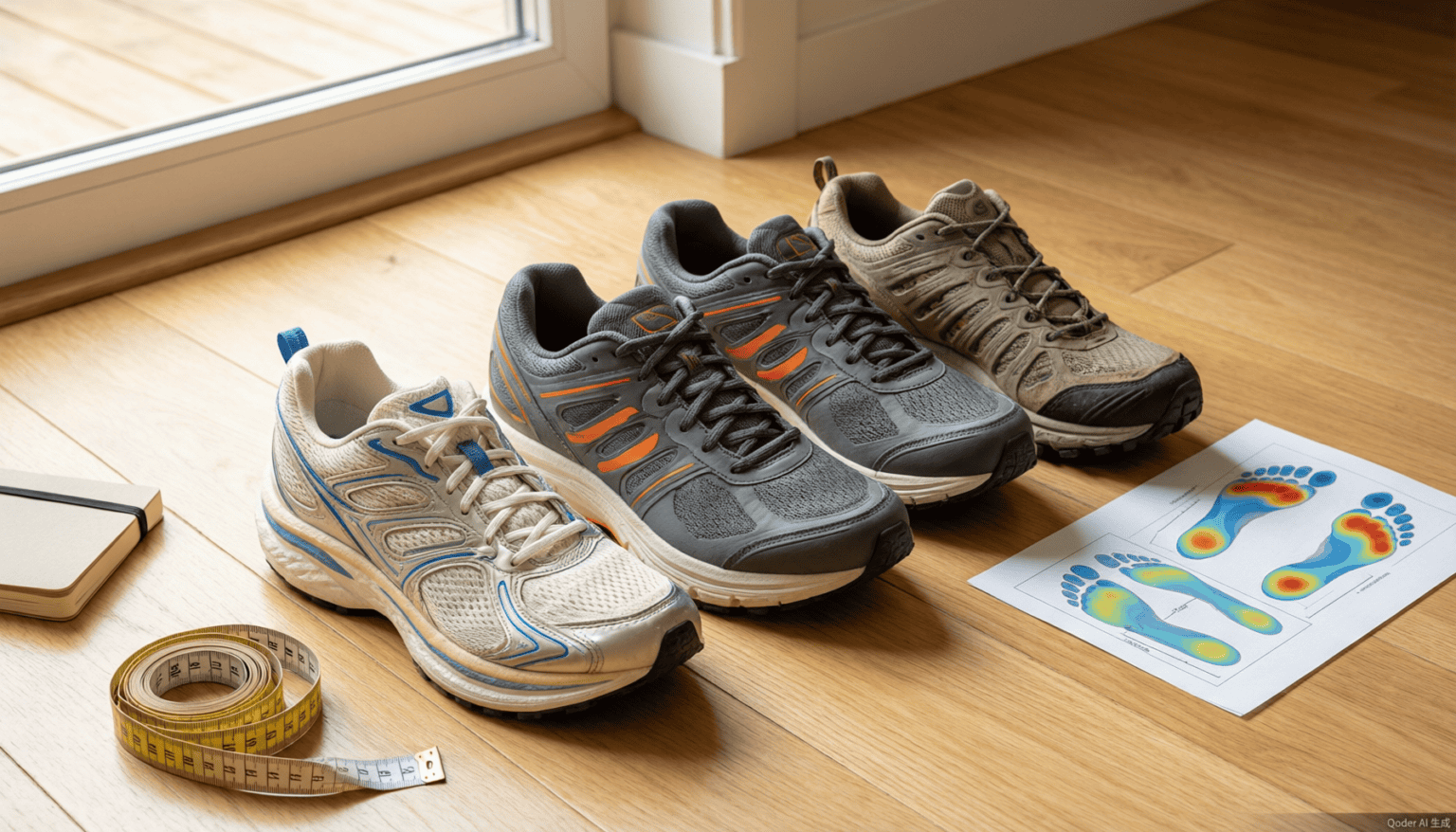
Comfort is the one selection criterion with real support behind it. Research into what’s called the “comfort filter” found that runners choosing the shoe that felt most comfortable improved comfort and reduced injury risk — and it’s the one approach with a coherent rationale.
Test comfort over distance, not in the shop. Two or three kilometres at running pace, not a lap of the shop floor. Buy where you can return them.
Don’t change heel drop abruptly. This is one of the better-supported mechanical points, and abrupt transitions are a known injury route.
Replace them around 300–500 miles, and rotate between pairs if you can.
If something hurts, see a physiotherapist, not a shoe shop. Shoe choice should almost never be the primary treatment for a running injury.
Why the pronation model fell apart
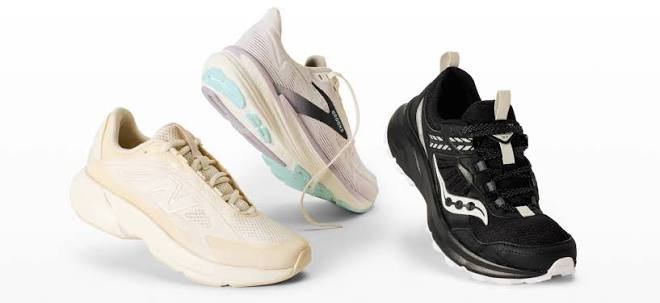
It’s worth understanding, because the industry still runs on it.
The theory was reasonable: excessive inward rolling of the foot was assumed to cause injury, so shoes with medial posts and firmer foam were built to limit that motion, and runners would be assigned shoes by arch type.
Three things undermined it.
The measurement doesn’t transfer. Arch height measured standing still doesn’t predict how the foot behaves during dynamic activity like running. Pronation is a movement, not a position — and the static test used in most shops measures a position.
The link to injury didn’t hold. Rearfoot pronation hasn’t been established as a risk factor for running injuries. In at least one study, the pronated group actually had slightly fewer injuries than the neutral group.
The intervention didn’t work. Shoes prescribed on static arch height haven’t been shown to change injury risk versus random assignment.
What this means for you: if you’ve been told you overpronate and must wear stability shoes, you can treat that as one data point rather than a prescription. Plenty of people who pronate run happily in neutral shoes. If a stability shoe feels good, wear it. If it doesn’t, the label isn’t a reason to persevere.
It’s also worth noting how little the category label tells you. Across twenty shoes marketed as “stability,” heel stack heights ranged from 32mm to 42mm and heel drops from 5mm to 12mm — a spread wide enough that the word describes marketing position more than construction.
The comfort filter
If gait analysis isn’t the answer, something has to be. The best-supported alternative is straightforward: pick the shoe that feels most comfortable.
The reasoning is that your body already knows its preferred movement pattern, and a shoe that fights it registers as discomfort. Comfort, in this model, is the readout of a biomechanical fit you can’t measure directly.
How to apply it properly:
Test at running speed, over distance. Standing in a shop tells you almost nothing. A shoe that feels fine for thirty seconds can feel wrong at kilometre three. Buy from a retailer with a genuine returns policy on worn shoes — many running specialists offer 30-day trial periods — and run in them.
Two to three kilometres is a meaningful test. A lap of the shop floor is not.
If it needs breaking in, it’s the wrong shoe. This is a useful rule. Modern running shoes don’t require a break-in period. Discomfort on day one is information, not something to train through.
Test both feet. Most people have a size difference. Fit the larger foot.
Try them at the end of the day, when your feet are at their largest, and in the socks you actually run in.
The specs that do matter
Two mechanical numbers are worth understanding, less for choosing a shoe than for not injuring yourself when you change.
Heel-to-toe drop
The height difference between the heel and the forefoot, ranging from 0 to about 12mm. Eight to twelve millimetres is the traditional standard.
There is some evidence that moderate-to-high drop (8–12mm) is associated with reduced injury risk, and that zero-drop barefoot-style shoes are associated with increased injury risk.
The more important point is about change. Abruptly switching drop — going from a 10mm shoe to a 4mm one, say — shifts load onto the calf and Achilles, and doing it suddenly is a well-recognised route to injury. If you want to change drop, do it gradually across several weeks, keeping the old pair in rotation.
Overweight runners are generally advised to avoid minimally cushioned, low-drop shoes.
Stack height
The total thickness of material between your foot and the ground. Modern shoes commonly run 32–42mm at the heel.
Higher stack means more material underfoot and a softer ride; lower stack means more ground feel.
What the evidence says is less than you’d expect. Studies have found that midsole hardness in modern cushioned running shoes doesn’t appear to influence running-related injury risk. Minimalist shoes do reduce measured impact forces — but that reduction hasn’t translated into fewer injuries.
So treat cushioning as a comfort preference, not an injury-prevention decision. Some people like running on a lot of foam; some don’t. Neither is protecting you.
Fit, which is not the same as size
Fit problems cause more day-to-day running misery than category labels ever will.
Half a size to a full size up from your normal shoe is standard. Feet swell during running, and a toe hitting the front on downhills produces black toenails and worse.
A thumb’s width at the front with the shoe laced, while standing.
The toe box should let your toes spread. Crushed toes are implicated in neuromas and general discomfort, and toe box width varies enormously between brands. Some manufacturers offer multiple widths, which is worth seeking out if standard shoes pinch.
The heel shouldn’t slip. Some movement is normal; lifting out of the shoe is not.
Width is brand-specific. If every shoe from one brand feels narrow, that’s the brand’s last, not your foot. Try another.
Replacement and rotation
Shoes lose roughly 50% of their cushioning after 300 to 500 miles. That’s the figure cited in the clinical literature, and it’s the main reason to replace shoes even when the upper looks fine.
The outsole wearing through is a late sign. The midsole foam compresses long before that, and you can’t see it. Track mileage rather than judging by appearance.
Rotating between pairs appears to help. One study found that rotating running shoes — ideally different types or brands — was associated with fewer running-related injuries. The plausible mechanism is varying the load pattern rather than repeating an identical stress every run.
If you run regularly, two pairs in rotation is a reasonable setup, and they’ll each last longer in calendar terms.
When something actually hurts
This is worth saying plainly: running shoe choice should almost never be the primary treatment for a running injury.
If you have pain, see a physiotherapist or sports medicine clinician. The main drivers of running injury are training variables — volume, intensity, and particularly how quickly these increase — not footwear.
Clinicians do sometimes use shoe changes as a temporary adjunct while managing a specific injury. Someone with Achilles tendinopathy, for example, might be steered temporarily toward a higher-drop, less flexible shoe to reduce calf loading. But that’s a specific intervention from someone who has assessed you, not a category recommendation from a shop.
And moderate your mileage increases. That’s the advice with the strongest support behind it, and it has nothing to do with what’s on your feet.
Mistakes worth avoiding
Treating gait analysis as a prescription. It’s one input. The evidence that it predicts the right shoe is weak.
Buying without running in them. Shop-floor comfort doesn’t predict kilometre-five comfort. Use a retailer with a trial period.
Trying to break shoes in. Modern running shoes don’t need it. Discomfort on day one means the wrong shoe.
Switching drop abruptly. One of the better-supported ways to injure yourself. Transition gradually.
Buying your street shoe size. Feet swell. Go up, and leave a thumb’s width.
Judging wear by the outsole. Midsole cushioning degrades invisibly. Track mileage.
Expecting a shoe to fix an injury. See a clinician. Look at your training load first.
Assuming “stability” describes construction. Across the category it covers a huge range of stack heights and drops. Judge the individual shoe.
Frequently asked questions
Do I need stability shoes if I overpronate?
The evidence doesn’t support prescribing shoes on pronation. Static arch measurements don’t predict dynamic movement, pronation hasn’t been established as an injury risk factor, and prescribing by arch height hasn’t been shown to reduce injuries. Choose on comfort.
What’s the best way to choose running shoes?
Comfort, assessed at running speed over two to three kilometres. It’s the selection method with the most coherent evidence behind it.
Does more cushioning prevent injuries?
Studies haven’t found midsole hardness in modern shoes to influence injury risk. Treat cushioning as a comfort preference.
What heel drop should I run in?
There’s some evidence favouring 8–12mm and some associating zero-drop shoes with higher injury rates. More important than the number is not changing it abruptly.
How often should I replace running shoes?
Around 300–500 miles, when cushioning has degraded by roughly half. Don’t wait for visible wear.
Does rotating shoes help?
Research suggests runners who rotate between different shoes have fewer running-related injuries.
Can shoes fix my knee pain?
Shoe choice is rarely the main treatment for a running injury. See a physiotherapist and look at your training load.
The recommendation
Buy from a retailer with a real returns policy on worn shoes. Try several pairs across categories — neutral and stability both — and run in them for two or three kilometres each. Buy the one that feels best, whatever the label says.
Go up half a size, leave a thumb’s width at the front, and don’t accept a shoe that needs breaking in.
Keep the drop close to what you’re already running in, replace at 300–500 miles, and run a second pair in rotation if you can.
Then stop thinking about shoes and look at your training. How fast you add mileage matters far more than what’s underneath you — and it’s the one variable you fully control.

Leave a comment