
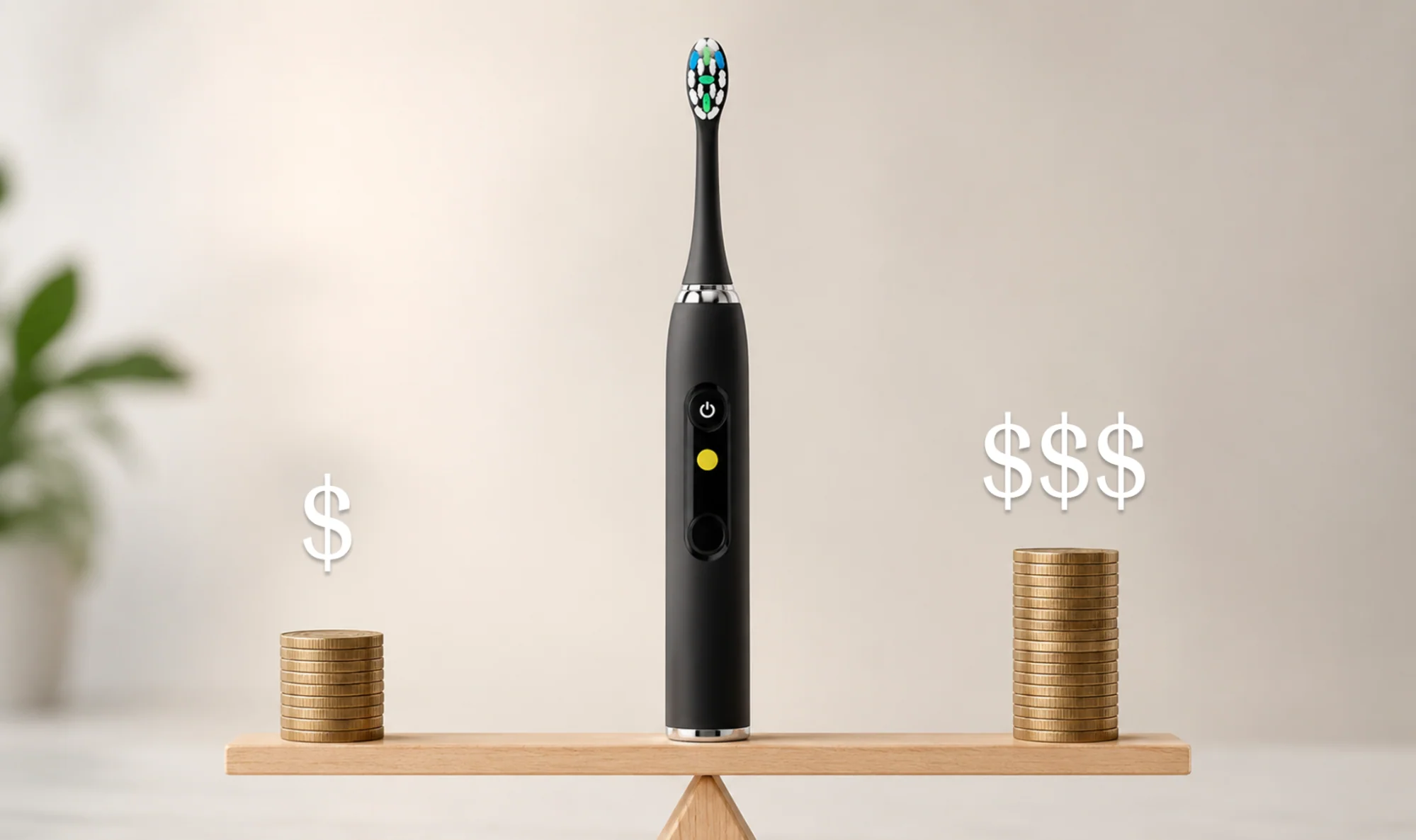
Electric toothbrush ranges run from about $20 to over $300. The difference between those two ends is mostly displays, app connectivity, cleaning modes and travel cases.
What the clinical evidence supports is narrower than that. Powered brushes do outperform manual ones — a Cochrane systematic review covering more than 5,000 participants found oscillating-rotating brushes reduced plaque by 21% more and gingivitis by 11% more than manual brushing over one to three months. Those are meaningful differences.
But beyond that basic finding, the evidence thins out fast. The gap between brush types is small and disputed. The gap between a $60 brush and a $300 one is, as far as plaque removal goes, essentially absent — a point dental sources state directly: extra modes, apps and displays don’t materially improve cleaning over a basic model.
There is one feature worth paying for, and one cost most people don’t calculate. Here’s how to think about it.
The short version
An electric brush beats a manual one for most people, mainly because it lowers the technique threshold — you position it rather than having to scrub correctly.
The one feature worth prioritising is a pressure sensor. Over-brushing causes gum recession and enamel abrasion at the gumline, usually without the person noticing.
Oscillating-rotating versus sonic is close to a wash. There’s a modest evidential edge to oscillating-rotating, but independent testers call it a draw, and consistency matters more.
Calculate the brush head cost before the handle price. Over five years, heads routinely cost more than the brush did.
A well-used manual brush beats a poorly used electric one, and if cost is a barrier, a good manual used properly is not a concession.
Why electric helps, and who it helps most
The mechanism isn’t that electric brushes clean harder. It’s that they remove the need for correct technique.
Manual brushing done properly requires a specific small-circular or angled motion at the gumline, sustained for two minutes. Most people scrub back and forth instead, which cleans the tooth surface reasonably and the gumline poorly — and the gumline is where gingivitis starts.
An electric brush supplies the motion. Your job reduces to positioning the head correctly and moving it slowly. That’s a much easier skill to execute consistently.
So the benefit is largest for people who wouldn’t apply good manual technique reliably — which is most people. It’s larger still for anyone with reduced dexterity, arthritis or mobility limitations, and for children, where a parent positioning a brush does much of the work.
And it’s smallest for people who already brush well manually. If your dentist tells you your home care is good, an electric brush is an incremental improvement rather than a fix.
Oscillating-rotating or sonic: honestly
This is the question most buying guides answer confidently and the evidence doesn’t.
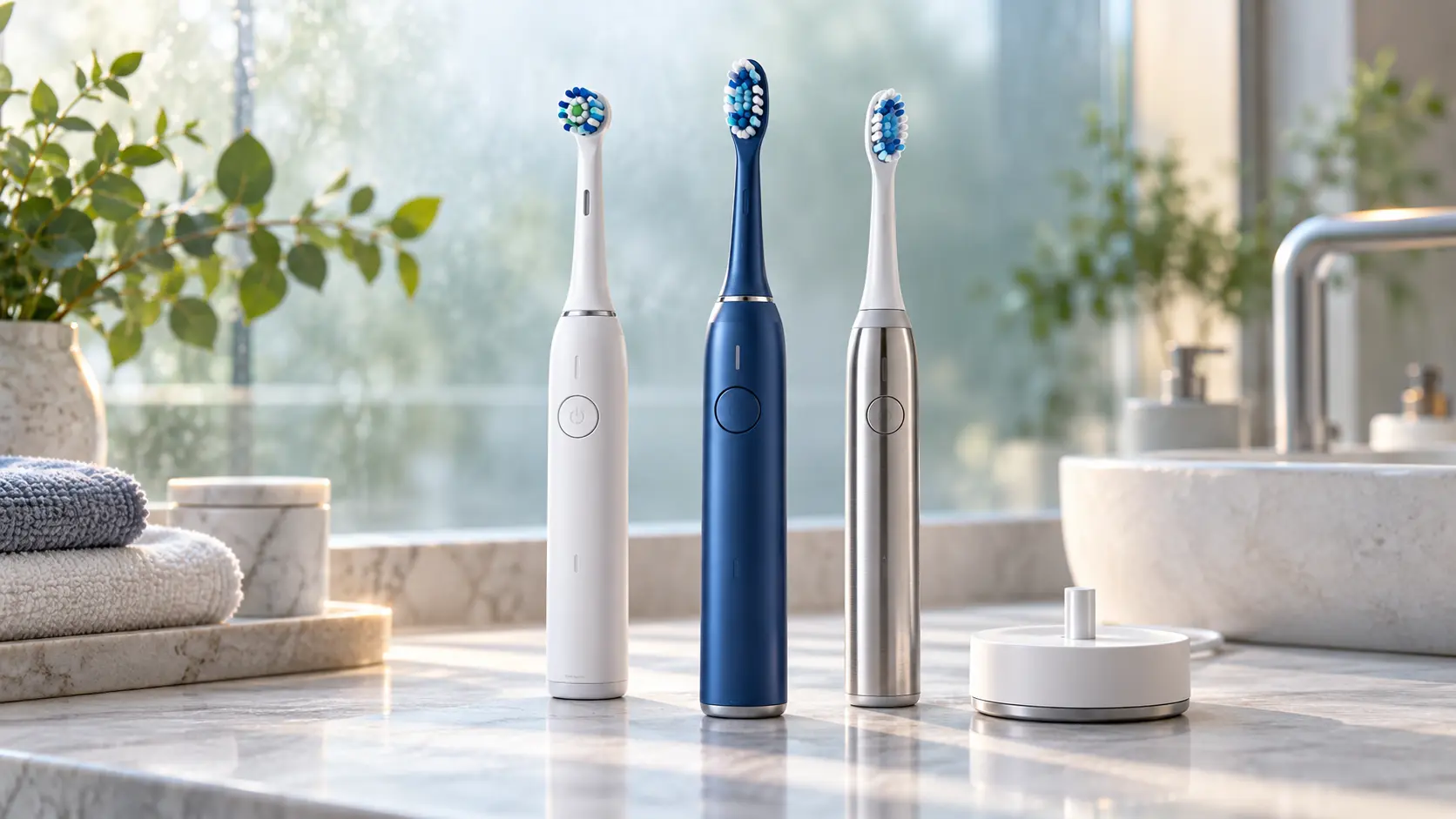
Oscillating-rotating brushes have a small round head that rotates back and forth at speed, often with added pulsation. Oral-B is the main proponent.
Sonic brushes have an elongated head vibrating side to side at very high frequency — around 31,000 strokes per minute. Philips Sonicare is the main proponent.
What the research says depends on which part you read. A 2014 Cochrane review of 56 trials found oscillating-rotating removed about 11% more plaque and reduced gingivitis by about 6% more than sonic. An earlier Cochrane review found a small but significant difference in the same direction.
But two things complicate that. Consumer Reports, summarising the Cochrane comparison, describes the result as essentially a draw, and its own testing found no clear winner — three of its six recommended brushes were oscillating and three were sonic. And a substantial body of the oscillating-rotating research comes from the company that pioneered the technology, which is worth knowing when weighing it.
The honest conclusion: oscillating-rotating has a modest edge in the most-cited reviews, the difference is small enough that it’s swamped by whether you brush consistently for two minutes twice a day, and both substantially outperform a manual brush.
Oscillating-rotating | Sonic | |
Head | Small, round | Elongated, familiar |
Evidence edge | Modest, in main reviews | Comparable in independent testing |
Reach | Better at back teeth and inner lower front | Easier transition from manual |
Noise | Louder, more vibration | Quieter, higher-pitched |
Head cost | Typically lower | Typically higher |
Choose by feel. The round head reaches awkward surfaces more easily; the elongated head feels more familiar and is quieter. Neither choice is a mistake.
One thing to avoid: cheap brushes with side-to-side heads that aren’t genuinely sonic. That category doesn’t have the same evidence base behind it.
The feature that actually matters
A pressure sensor. This is the one worth paying for, and it’s worth paying for because of what it prevents rather than what it improves.
Brushing too hard causes gum recession and abrasion of the enamel at the gumline. It happens gradually, it’s largely irreversible, and people doing it generally have no idea — hard brushing feels thorough.
A pressure sensor alerts you, or cuts the motor power, when you press beyond a safe threshold. On better models it’s a light; on some it’s a change in the brush’s behaviour you can feel.
Prioritise it especially if: you know you brush hard, you already have any gum recession, or you’re buying for a child.
Pressure sensors appear at modest price points — Sonicare’s ProtectiveClean 4100 and Oral-B’s mid-range models both include one well below premium pricing. You do not need to spend $200 to get this feature.
What you don’t need
Dental sources are direct about this: none of the following materially improve plaque removal compared with a basic oscillating-rotating or sonic model.
Multiple cleaning modes. Whitening, gum care, sensitive, deep clean. Most people use one mode permanently. The brush does the same thing.
App connectivity and position tracking. Interesting for a fortnight. The evidence that it changes long-term behaviour is thin, and the feature commands a large premium.
Displays on the handle. Decorative.
Premium travel cases and charging glasses. Nice objects. Not cleaning.
Very high stroke counts. Above the threshold where the brush does the work for you, more strokes don’t translate into more plaque removed.
What you do want beyond a pressure sensor is a two-minute timer with 30-second interval prompts, which is standard across almost the whole category including the cheapest models. That’s genuinely useful, because most people underestimate two minutes substantially.
The cost nobody calculates
Brush heads are where electric toothbrushes actually cost money.
Typical replacement head prices run around $5–8 each for Oral-B and $7–12 each for Sonicare, and heads should be replaced roughly every three months — four a year.
Work it out over five years:
Four heads a year at $8 = $32/year = $160 over five years
Four heads a year at $12 = $48/year = $240 over five years
That’s frequently more than the handle cost, and it means a $25 brush with $8 heads can be more expensive over time than a $60 brush with $5 heads.
Three things to check before buying:
Head availability and price, specifically for the model you’re considering. Premium ranges sometimes use proprietary heads that cost more.
Cross-compatibility. Sonicare uses a universal click-on system across its range. Oral-B heads are broadly cross-compatible within tiers, though some premium-range heads differ. A brush locked to one expensive head type is a long-term cost.
Third-party heads. They exist and are far cheaper. Quality varies, and manufacturers discourage them — worth knowing they’re an option rather than treating them as a plan.
How to actually use it
The technique differs from manual brushing, and using an electric brush like a manual one wastes most of its advantage.
Don’t scrub. The brush supplies the motion. Moving it back and forth yourself fights it.
Guide it slowly, tooth by tooth. Position the head at the gumline on each tooth surface and let it work for a few seconds before moving on.
Angle toward the gumline, not flat against the tooth face. That’s where plaque accumulates and where gingivitis begins.
Let the weight of the brush do the pressing. This is what the pressure sensor is teaching you.
Two minutes, twice daily, and use the timer rather than guessing.
Don’t rinse vigorously afterwards. Spit out excess toothpaste and leave the fluoride on your teeth.
Replace heads every three months, or sooner if the bristles splay. Worn bristles clean noticeably less well.
Mistakes worth avoiding
Buying on features rather than the pressure sensor. Modes and apps don’t improve cleaning. The sensor prevents damage.
Not calculating head costs. Over five years they often exceed the handle price.
Scrubbing with it. Position and hold. Moving it yourself negates the mechanism.
Buying an expensive brush you resent. The worst outcome in this category is a costly brush used briefly and abandoned. A cheaper brush used consistently wins.
Keeping heads past three months. Splayed bristles clean worse, and the cost of replacing on time is small.
Assuming brand loyalty matters. Both major systems work. Consistency is the variable.
Ignoring where the head meets the handle. This joint traps moisture and can build up mould. Rinse and dry it, and don’t leave it standing in water.
Frequently asked questions
Are electric toothbrushes actually better than manual?
The evidence says yes for most people — a Cochrane review found oscillating-rotating brushes removed 21% more plaque and reduced gingivitis 11% more than manual. The main mechanism is that they lower the technique requirement.
Oscillating-rotating or sonic?
Close to a wash. Oscillating-rotating has a modest edge in the most-cited reviews; independent testing finds no clear winner. Both beat manual, and consistency matters more.
What’s the one feature worth paying for?
A pressure sensor. Over-brushing causes gum recession and enamel abrasion at the gumline, usually without the person realising.
Do I need an expensive model?
No. Extra modes, apps and displays don’t materially improve plaque removal. A mid-range brush with a pressure sensor and a timer covers it.
How often should I replace the brush head?
About every three months, or sooner if bristles splay. Worn bristles clean less effectively.
Can an electric toothbrush damage my gums or enamel?
Used correctly, no. The risk is the same as with manual brushing — too much pressure. Pressure sensors substantially reduce it.
Are electric brushes safe for children?
Yes, with age-appropriate models. Pressure sensors are particularly worth having for kids.
Is a manual brush ever fine?
Yes. A well-used manual brush beats a poorly used electric one. If an electric brush is a cost barrier, good manual technique is a legitimate alternative.
The recommendation
Buy a mid-range brush with a pressure sensor and a two-minute timer, in whichever head style you prefer. That combination is available well under $100 from both major brands, and the evidence doesn’t support spending more for cleaning performance.
Before you buy, price four replacement heads a year over five years and add it to the handle cost. That number should influence your choice more than the feature list does.
Then use it properly: guide it slowly at the gumline, don’t scrub, don’t press, and replace the head every three months.
The brush matters less than what you do with it twice a day for the next decade.

Leave a comment