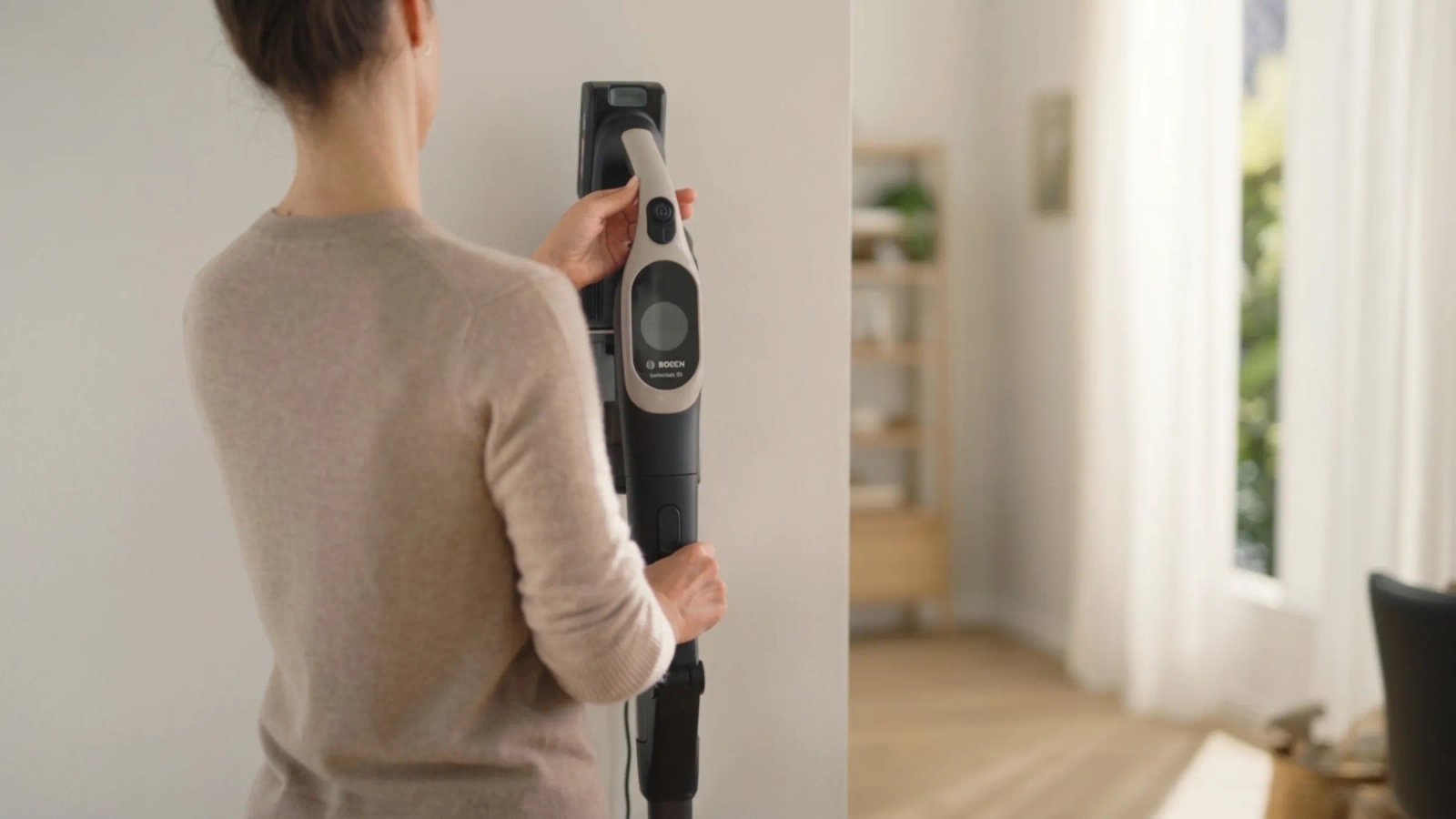
Every cordless stick vacuum is sold on two numbers. Suction, measured in air watts. Runtime, measured in minutes.
Both are true. Neither is available at the same time as the other.
The suction figure is measured in maximum or boost mode. The runtime figure is measured in eco mode, with a non-powered tool attached. A vacuum advertising 240 air watts and 60 minutes delivers 240 air watts for somewhere around eight to twelve minutes, or 60 minutes at a fraction of that power.
That’s not dishonest exactly — both figures are measured — but it means the spec sheet can’t tell you what you actually want to know, which is whether the thing will clean your house on one charge.
What determines that is a different set of specifications, and two of them barely get mentioned: weight, because you hold this machine up, and bin size, because a small bin means stopping.
The short version
Buy the Shark Stratos if you want the sensible choice — roughly half the Dyson price, a brushroll that handles both hard floors and carpet, and genuinely good anti-tangle performance.
Buy the Dyson V15 Detect if you want the best-performing machine available and the price isn’t the deciding factor.
Buy the Tineco Pure ONE S70 if runtime is your binding constraint — it’s the long-runner of the three, and lighter than the Shark.
And check the weight before anything else. A stick vacuum you find heavy is a stick vacuum you stop using.
What the numbers actually mean
Air watts (AW) measure suction at the cleaning head, accounting for both airflow and pressure. Unlike the Pascal figures quoted on robot vacuums, air watts are a reasonable measure — they just describe max mode only.
Current flagships sit around 200–280 AW. Mid-range models run 100–180 AW. For most homes, anything above about 150 AW in max mode is more than sufficient; the difference shows up on deep carpet, not hard floors.
Runtime is quoted in eco mode with a non-motorised tool. Attach a powered floor head — which you will, because that’s the point — and the figure drops. Switch to max mode and it drops dramatically.
Realistic expectation: a vacuum advertising 60 minutes will give you roughly 30–40 minutes of actual floor cleaning in a normal mode, and under 15 minutes on boost.
The practical implication: use eco or auto mode for most cleaning and save boost for specific spots. Modern auto modes, which detect floor type and adjust power, do this for you and are genuinely useful.
Weight is the spec that decides whether you use it
A stick vacuum isn’t pushed along the floor like an upright. You carry it, and you hold it at arm’s length for stairs, upholstery, skirting boards and ceilings.
The range in this category is large: roughly 4.8 lb at the lightest to nearly 9 lb at the heaviest. That’s close to double, and you feel every ounce of it after the first minute of overhead work.
Weight | How it feels |
Under 5 lb | Easy one-handed, comfortable above shoulder height |
5–7 lb | Comfortable for normal floor work, tiring held up |
Over 8 lb | Fine on floors, genuinely hard work on stairs and ceilings |
Heavier machines usually have bigger batteries and bigger bins, so this is a real trade-off rather than a flaw. But if you live in a house with stairs, or you’ll be using it above waist height regularly, weight should outrank suction in your decision.
Bin size and the emptying problem
Dustbin capacities in this category run from about 0.35 to 0.8 litres — tiny compared with a corded upright.
A 0.35L bin on a pet-owning household means emptying mid-clean, every clean. A 0.7L bin covers most of a normal home in one pass.
Self-emptying docks have now reached cordless, which solves this at the cost of money, counter or floor space, and bag consumables. Worth it if you clean daily; unnecessary if you clean weekly.
Check the emptying mechanism too. Some bins eject cleanly with a lever; others require you to pull hair out of the cyclone assembly by hand, which is a weekly unpleasantness.
Brushrolls matter more than suction for most floors
This is where the cleaning difference actually shows up.
Soft roller heads — a fabric or felt cylinder — excel at fine dust on hard floors and don’t scatter larger debris the way a stiff brush does.
Bristle brushrolls agitate carpet fibres to lift embedded dirt. Necessary for carpet, less good on hard floors.
Combined heads have both in one head, which is the sensible answer if you have both floor types. Shark’s DuoClean PowerFins is the best-known implementation.
Anti-tangle design is the other variable, and it matters enormously if anyone in the house has long hair or you have pets. Without it, you’ll be cutting hair off the brushroll with scissors regularly. Comb-style scrapers and conical brush geometries both work.
If you have pets or long hair, prioritise anti-tangle over suction. It’s the difference between a five-minute clean and a five-minute clean plus ten minutes of maintenance.
The three picks
Shark Stratos Cordless | Dyson V15 Detect | Tineco Pure ONE S70 | |
Price | Around $350 | Around $495–750 | Around $569 |
Suction | 300W motor | ~240 AW | ~200 AW |
Runtime | Up to 60 min | Up to 60 min | Up to 95 min (eco) |
Weight | ~8.9 lb | ~6.8 lb | ~6.2 lb |
Bin | 0.68 L | 0.76 L | 0.6 L |
Brushroll | DuoClean PowerFins, self-cleaning | Laser-equipped fluffy + anti-tangle | Zero Tangle |
Stands out | Dual-surface head, anti-odour | Laser dust detection, particle counting | Runtime, light weight, folding tube |
Shark Stratos Cordless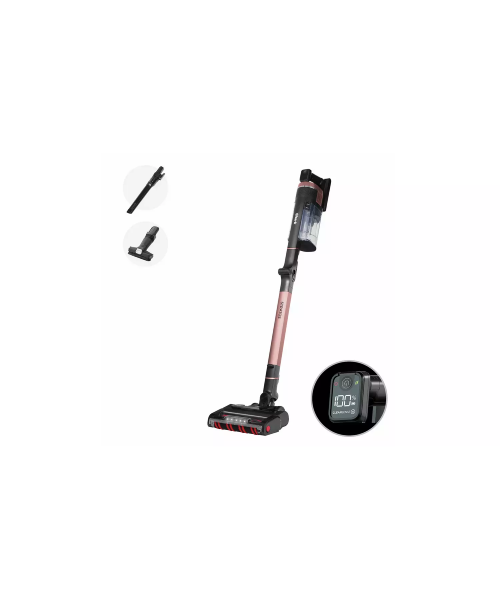
At roughly $350, this is the value pick and the one most households should buy.
The DuoClean PowerFins head combines a soft roller and a bristle brush in one unit, which means it handles hard floors and carpet without swapping heads — a genuine convenience that the specification sheet understates. The brushroll is self-cleaning and performs well against hair tangling. Independent testing site Vacuum Wars gave the Stratos awards in 2025 for both best cordless on hard floors and best on carpets, which is an unusual double.
The MultiFlex wand bends in the middle, letting you reach under furniture without crouching. It includes anti-odour technology, which is a niche feature that pet owners rate more highly than you’d expect.
The drawback is weight. At around 8.9 lb it’s the heaviest of the three by a clear margin, and that tells on stairs and overhead. Charging is also slow — around three hours from empty.
Buy it if: you have mixed flooring, pets or long hair, and you want the best cleaning per dollar.
Skip it if: you have a lot of stairs, or you’ll frequently use it above shoulder height.
Dyson V15 Detect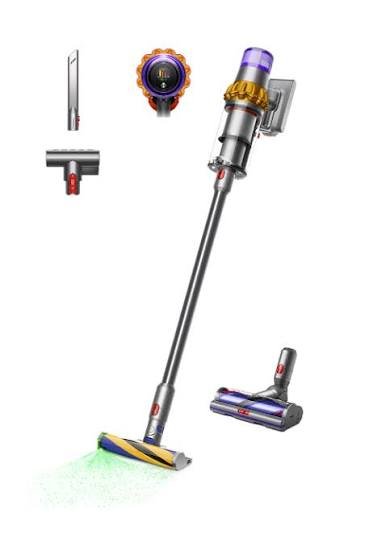
Around $495 to $750 depending on retailer and promotion, and consistently the top-rated cordless at independent testing sites.
The headline feature is the green laser on the fluffy head, which rakes across hard floors at a shallow angle and makes dust visible that you genuinely cannot otherwise see. It sounds like a gimmick and isn’t — it changes how thoroughly people clean, because you can see what you’ve missed.
The piezo sensor counts and sizes particles and displays them on the screen, and auto mode uses that to adjust power in real time. Suction is around 240 AW, which is at the top of the category, and testing has found it comparable to corded models.
At around 6.8 lb it’s meaningfully lighter than the Shark, with the largest bin of the three at 0.76 L.
The drawbacks are price and ownership cost. Replacement filters and batteries are expensive, and the gap between this and the Shark in actual cleaning results is much smaller than the gap in price.
Buy it if: you want the best and the price isn’t decisive, or you have a lot of hard floor where the laser earns its keep.
Skip it if: you’re comparing on value. The Shark does most of this for substantially less.
Tineco Pure ONE S70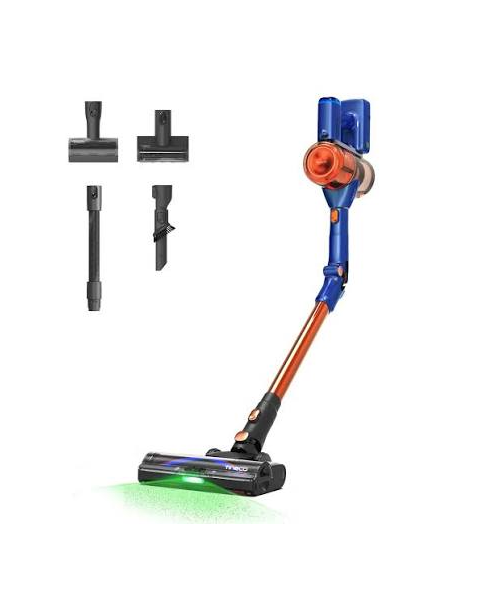
Around $569, with roughly 200 AW of suction and a claimed 95 minutes of runtime in eco mode — comfortably the longest here.
At about 6.2 lb it’s also the lightest of the three, which combined with the runtime makes it the choice for large homes where a 30-minute working runtime genuinely isn’t enough. Six-stage filtration and a zero-tangle brush cover the practical bases, and the 180-degree folding tube lets it get under low furniture and store compactly.
The drawbacks: suction is the lowest of the three, the 0.6 L bin is the smallest, and Tineco’s service network and parts availability aren’t as established as Dyson’s or Shark’s — worth weighing on a machine you expect to own for years.
Buy it if: you have a large home, or runtime anxiety is the thing stopping you going cordless.
Skip it if: you have deep carpet, where the extra suction of the other two will show.
Other things worth checking
Removable battery. A swappable battery means you can buy a spare and double your runtime, and replace it in a few years instead of replacing the vacuum. Fixed batteries make the machine disposable.
Filtration. Sealed HEPA systems matter if anyone has allergies. Also check whether filters are washable and how often they need replacing — this is a recurring cost.
Freestanding or wall dock. Most stick vacuums won’t stand up on their own. A wall dock needs a plug and a wall; a freestanding one needs floor space. Decide before you buy where it lives.
Trigger or switch. Some models require you to hold a trigger continuously, which becomes tiring. A locking switch is more comfortable for long sessions.
Mistakes worth avoiding
Comparing on runtime alone. The quoted figure is eco mode with a non-powered tool. Expect roughly half of it in real cleaning.
Ignoring weight. It’s the specification most likely to determine whether the vacuum gets used, especially in houses with stairs.
Buying a small bin for a pet household. You’ll empty it mid-clean every time.
Skipping anti-tangle with long hair in the house. Hair wrapped round a brushroll kills suction and costs you time every week.
Assuming a stick vacuum replaces a full vacuum entirely. For most homes it does; for deep carpet throughout, a corded upright still cleans better.
Overlooking consumables. Filters, batteries and brushrolls all cost money. Price them before comparing handles.
Frequently asked questions
How much suction do I need?
Above roughly 150 air watts in max mode covers most homes. The difference shows on deep carpet, not hard floors.
Why doesn’t my vacuum last as long as advertised?
Runtime is quoted in eco mode with a non-motorised tool. With a powered floor head in a normal mode, expect roughly half; on boost, well under 15 minutes.
Which is better for pet hair?
Prioritise an anti-tangle brushroll over raw suction. The Shark Stratos and Tineco both do this well.
Are cordless vacuums good enough to be your only vacuum?
For most homes with mixed or hard flooring, yes. For wall-to-wall deep carpet, a corded upright still has an edge.
Is the Dyson worth double the Shark?
On performance, it’s the better machine. On value, the Shark does most of what it does for roughly half. The laser is genuinely useful on hard floors.
Should I get a self-emptying dock?
Worth it if you clean daily or have a small bin. Unnecessary for weekly cleaning.
The recommendation
For most households, buy the Shark Stratos Cordless. The dual-surface head, anti-tangle brushroll and 60-minute runtime cover almost every situation, and the money saved against the Dyson buys a lot of other things.
Buy the Dyson V15 Detect if performance outranks price, particularly if you have a lot of hard floor — the laser changes how well you actually clean.
Buy the Tineco Pure ONE S70 if your home is large enough that runtime is the real constraint, and you want something light.
And whichever you choose, check its weight against where you’ll use it. The best cordless vacuum is the one you reach for, and the main reason people stop reaching is that it’s heavier than they expected.


Leave a comment