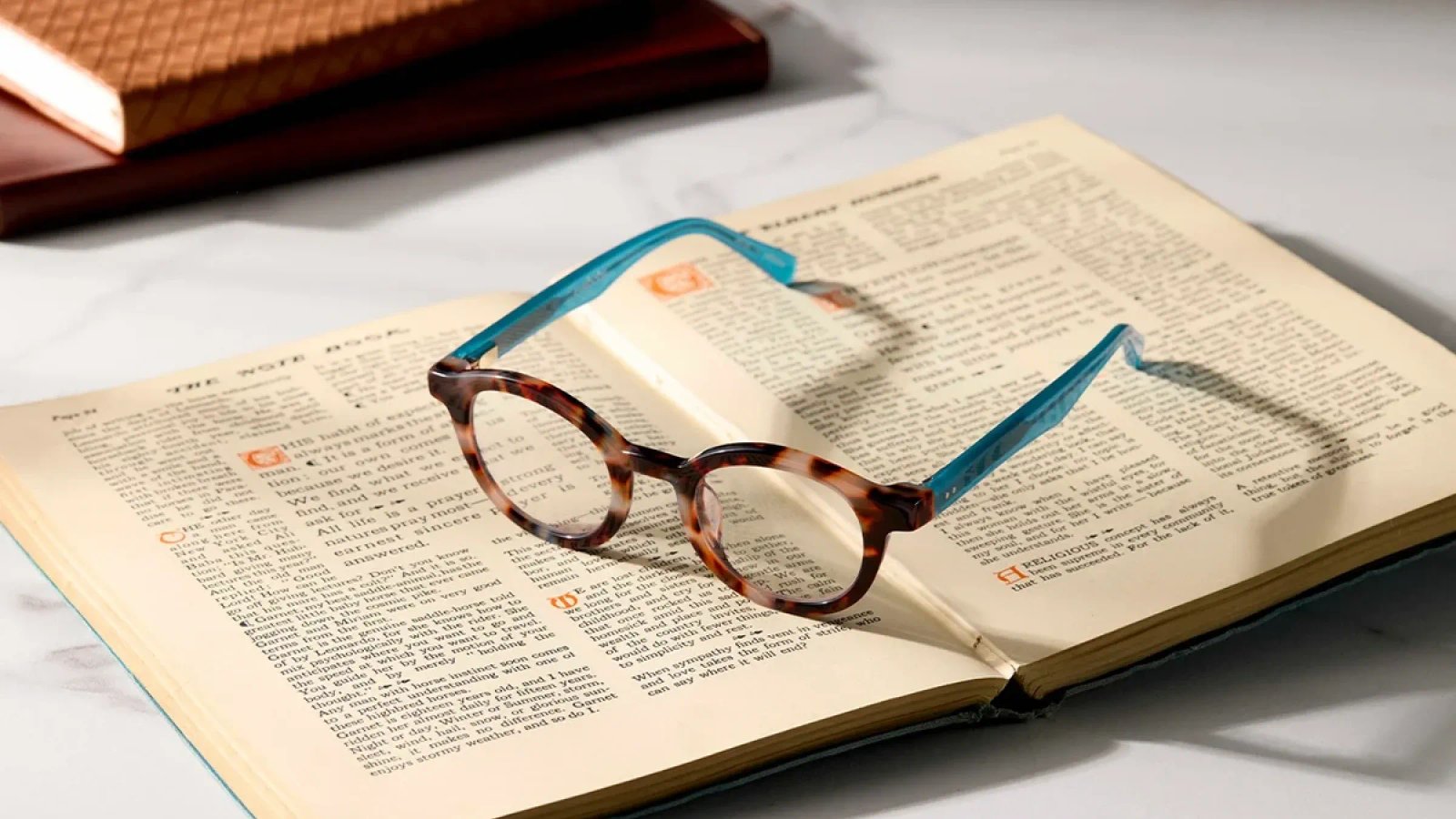
eyebobs makes reading glasses and prescription frames for people who think drugstore readers are an insult. Standard readers are $98 in strengths from 0.00 to 4.00. Blue Light Readers are $138. Progressive Readers run $158 in strengths from 1.25 to 3.50, and the same frames take a full prescription starting at $98. Frames are acetate, cut individually so no two pairs match exactly, with virtual try-on and sizes in Average and Wide. Clearance frames appear at $59 from $98, and a six-frame storage case is $25 from $40. The whole proposition is that a reader can be a design object rather than a medical accessory.
Buy it if / Skip it if
· Buy it if you need readers and have concluded that the pharmacy rack is depressing
· Buy it if you want blue-light filtering and magnification in one pair for screen work
· Buy it if you want progressive readers without the cost of full prescription progressives
· Buy it if you have a wider face, since Wide sizing is offered as standard
· Buy it if you like the idea of acetate cut from individual sheets, so your pair is genuinely unique
· Skip it if $98 for readers is beyond what you will spend, where drugstore pairs cost a tenth
· Skip it if you lose glasses constantly, because losing a $98 pair hurts in a way losing a $12 pair does not
· Skip it if you need a complex prescription with high-index or specialist lenses, where a full optician is better
Who eyebobs is
eyebobs built its business on an observation that is obvious once stated: reading glasses are a design category that nobody had treated as one. Everyone over forty eventually needs them, almost everyone buys them from a spinning rack at a pharmacy, and almost everyone is mildly embarrassed by the result.
The brand’s answer is readers with real design behind them, priced like eyewear rather than like a convenience purchase. Frames carry names rather than numbers — Ahead of the Curve, Abundant Color — and the copy is deliberately irreverent, pitched at trendsetters rather than patients.
The product structure is straightforward. Every frame is available in four lens configurations: standard Readers at $98 in strengths from 0.00 through 4.00, Blue Light Readers at $138 in the same range, Progressive Readers at $158 from 1.25 to 3.50, and full Prescription from $98. That means you choose the frame you like and then decide what goes in it.
Frames are acetate, offered in Average and Wide sizes across oval, round and other shapes, with a virtual try-on so you can see them on your own face. The brand is specific about the material: every pair is cut from its own sheet of patterned acetate, no two sheets are alike, and the flecks on your pair will land differently from the photograph.
The customer is over forty, has a job, and would rather not look like they have given up.
What eyebobs does differently
The same frame takes four different lens types. Readers, blue-light readers, progressive readers and full prescription — all available in every frame, at $98, $138, $158 and from $98 respectively. That means your choice is driven by how you look in the frame rather than by which lens the frame happens to accommodate.
Progressive readers at $158 fill a real gap. Full prescription progressives from an optician run into the hundreds. Progressive readers — which handle the transition between reading and mid-distance without a full prescription — at $158 is a genuinely useful middle option that few brands offer.
Acetate is cut individually and the brand says so. Each pair comes from its own sheet of patterned acetate, which means the flecks and patterns differ from the product photograph. Most brands would hide that variance; eyebobs leads with it as a feature.
Wide sizing is a standard option, not an afterthought. Frames are offered in Average and Wide, which matters enormously for anyone who has spent years in frames that pinch at the temples.
The strength range goes further than most. Readers run from 0.00 — a plain lens for anyone who wants the frame without magnification — up to 4.00, in quarter-dioptre steps through the middle of the range where most people sit.
The range, decoded
Product | Price | Notes |
A Big Deal storage case | $25 (from $40) | Holds six frames |
Acetate Lanyard | $35 | Brown tortoise, for keeping readers on you |
Clearance prescription frames | From $59 (from $98) | Discontinued colourways |
Readers | $98 | Strengths 0.00 to 4.00 |
Prescription frames | From $98 | Single-vision and beyond, lens options added |
Blue Light Readers | $138 | Same strength range, blue-light filtering added |
Progressive Readers | $158 | Strengths 1.25 to 3.50 |
Products worth your money
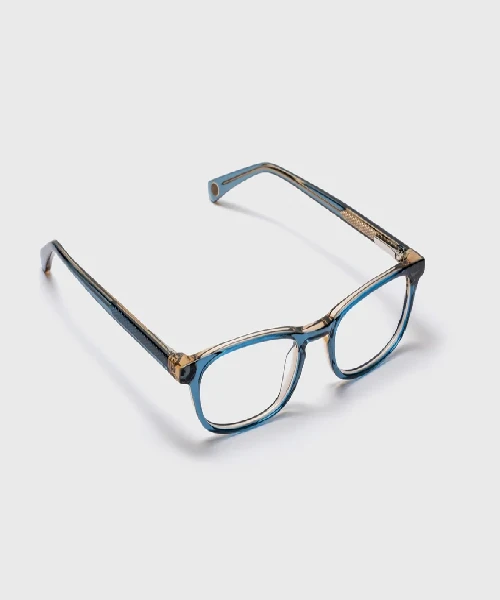
Readers — $98
Best for: The core product, and the reason the brand exists.
Why it stands out:
· A full strength range from 0.00 to 4.00, in quarter-dioptre steps through the 1.25 to 3.00 band where most readers sit, so you can match your actual requirement rather than rounding to the nearest half
· Acetate frames cut from individual sheets, meaning the pattern on your pair is unique — the brand states explicitly that the flecks will land differently than in the photograph
· Available in Average and Wide sizing, across oval, round and other shapes, with virtual try-on
· The 0.00 option exists for anyone who wants the frame as a non-prescription accessory, which is a smart inclusion
· Styles like Ahead of the Curve come in multiple colourways — Cobalt Crystal, Brown to Sand Crystal Fade, Green Fleck Tortoise — at the same $98
One honest limitation: $98 is roughly eight times what a drugstore pair costs, and the optics in a simple magnifying lens are not eight times better. You are paying for the frame.
Bottom line: The right buy if you wear readers daily and are tired of being embarrassed by them. Check the clearance section first, where frames appear at $59.
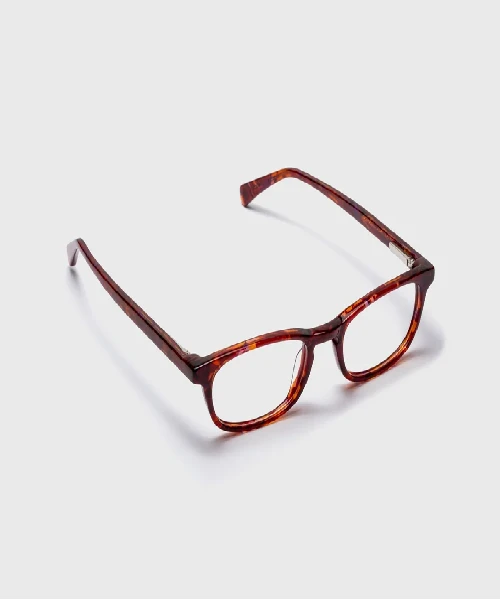
Blue Light Readers — $138
Best for: Screen work, where magnification and blue-light filtering are both wanted.
Why it stands out:
· Combines reading magnification with blue-light filtering in one lens, which removes the need to switch between two pairs at a desk
· The same full strength range as the standard readers, from 0.00 to 4.00, so the 0.00 option works as pure blue-light glasses for anyone who does not need magnification
· Available in the full frame catalogue rather than a restricted sub-range, so you are not choosing from three ugly options
· A $40 premium over standard readers, which is in line with what opticians charge for the coating
· Pairs naturally with the six-frame storage case at $25 if you end up with a desk pair and a handbag pair
One honest limitation: Blue-light filtering benefits are debated, and a $40 premium is real money if you are not confident it helps you.
Bottom line: Worth it if you spend long days at a screen and already know you want readers. If magnification is not needed, the 0.00 option gives you the filter alone.
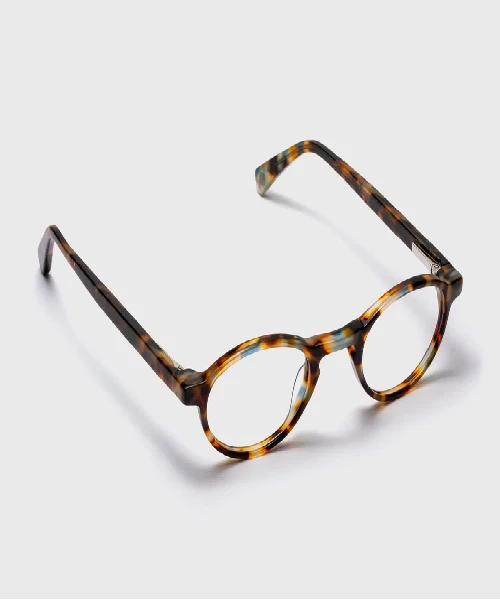
Progressive Readers — $158
Best for: The most useful product here, and the one that solves a problem most brands ignore.
Why it stands out:
· Progressive readers handle both reading distance and mid-distance in one lens, which is the specific problem that makes single-strength readers frustrating — you can read the page and see the laptop
· $158 against the several hundred dollars that full prescription progressives typically cost at an optician
· Available in strengths from 1.25 to 3.50, in quarter-dioptre steps, covering the range where progressive readers are actually useful
· Offered across the same acetate frame catalogue as the standard readers, with Average and Wide sizing
· A middle step between simple readers and committing to full prescription progressives
One honest limitation: Progressive lenses take adjustment, and the lower strength range means this does not replace a full prescription for anyone with distance correction needs.
Bottom line: The best-value product in the range if the single-strength reader is not working for you. $158 to avoid a several-hundred-dollar optician bill is a straightforward calculation.
What owners actually say
Consistently praised:
· Frame design, which is the whole reason people pay this instead of pharmacy prices
· Acetate quality and the individuality of the patterning
· Wide sizing being genuinely available rather than a token option
· The strength range extending to 4.00 and including 0.00
· Virtual try-on making frame selection realistic rather than a guess
Consistently criticised:
· Price against drugstore readers, which is the inescapable comparison
· Losing an expensive pair being considerably more painful than losing a cheap one
· Frames appearing in the clearance section at $59, which makes paying $98 feel like bad timing
· Progressive readers requiring an adjustment period, as all progressives do
· Limited sizing options beyond Average and Wide on some styles
The money question
$98 for reading glasses is a lot, and the right way to assess it is to ask what you are buying.
You are not buying better magnification. A +2.00 lens is a +2.00 lens, and the drugstore version will magnify identically. What you are buying is acetate cut from individual sheets, frames designed rather than mass-produced, sizing that accommodates a wide face, and the experience of not feeling diminished by the thing on your face.
Whether that is worth $98 depends entirely on how often you wear them. Readers worn eight hours a day are effectively part of your face; readers worn twice a week to check a menu are not. The daily wearer is the customer here.
Three ways to reduce the cost. First, the clearance section, where discontinued colourways appear at $59 from $98 — a 40% reduction on the same frames. Second, buy the lens configuration you actually need rather than defaulting to the most expensive: blue light at $138 only if you work at a screen, progressives at $158 only if single-strength readers are failing you. Third, buy the $25 six-frame storage case so you stop losing them, which is the biggest hidden cost of expensive readers.
One important health note. Reading glasses are not a substitute for an eye exam. Over-the-counter magnification treats a symptom, and changes in near vision can occasionally indicate something that needs attention. If you have not had your eyes examined recently, if your vision has changed noticeably, or if you experience headaches, eye strain or double vision, see an optometrist. Choosing your own reader strength is fine for most people; diagnosing your own eyes is not.
If you have astigmatism or different prescriptions in each eye, off-the-shelf readers will not correct properly — that is what the prescription option at $98 is for, with your optometrist’s prescription.
How it compares
eyebobs | Warby Parker | Drugstore readers | |
Readers price | $98 | Comparable | $10–$25 |
Blue light readers | $138 | Varies | Rare |
Progressive readers | $158 | Not typically offered | No |
Frame material | Acetate, individually cut | Acetate and metal | Plastic |
Sizing | Average and Wide | Multiple | One size |
Strength range | 0.00 to 4.00 | Varies | 1.00 to 3.50 typically |
Who it suits | Daily reader wearers who care how they look | Buyers wanting full prescription eyewear | Occasional use, lowest cost |
Questions people ask
How much are eyebobs readers?
Standard readers are $98, blue light readers are $138, and progressive readers are $158. Full prescription frames start at $98 with lens options added.
What strengths are available?
Readers and blue light readers run 0.00 to 4.00, in quarter-dioptre steps through the common range. Progressive readers run 1.25 to 3.50.
What are progressive readers?
A lens that handles reading and mid-distance in one pair, so you can read a page and see a laptop screen without switching. At $158 they are substantially cheaper than full prescription progressives.
Can I get my full prescription in these frames?
Yes. Prescription versions start at $98 with the frame, and lens options are added. You will need a current prescription from your optometrist.
Do they come in wider sizes?
Yes. Frames are offered in Average and Wide, which is unusual at this price point and genuinely useful for broader faces.
Is there a cheaper option?
The clearance section, where discontinued colourways appear at $59 from $98. Check it before buying at full price.
Do I need an eye exam first?
For simple readers, most people choose a strength themselves. But reading glasses are not a substitute for an eye exam — if your vision has changed, or you get headaches or strain, see an optometrist. Astigmatism and unequal prescriptions need proper correction rather than off-the-shelf magnification.
The verdict
eyebobs found a category nobody was treating seriously. Reading glasses are worn by almost everyone eventually, for hours a day, on the most visible part of the body — and the industry was content to sell them from a rack next to the batteries. Designing them properly, in individually cut acetate, with names and personality, was a genuinely good idea.
The lens structure is the quiet strength. Offering readers at $98, blue-light readers at $138, progressive readers at $158 and full prescription from $98 across the same frame catalogue means the decision is about the frame you want rather than the lens the frame will accept. The progressive readers in particular fill a real gap — a middle option between simple magnification and several hundred dollars of prescription progressives.
The disclosure about the acetate deserves mention too. Telling buyers that each pair is cut from its own sheet and the flecks will land differently than in the photograph is the opposite of how most eyewear is sold, and it turns a manufacturing variance into the reason to buy.
The reservation is unavoidable and the brand knows it: these are $98 reading glasses, and $12 reading glasses magnify identically. The premium buys design, material and fit, which matters if you wear them daily and does not if you wear them occasionally. And frames turning up in clearance at $59 makes the full price feel like a timing question.
Check the clearance section first, where frames run $59. Buy the standard readers at $98 if you want the design. Step up to blue light at $138 if you work at a screen all day, or to progressive readers at $158 if a single strength keeps leaving you between distances. Buy the $25 case so you stop losing them. And book an eye exam if it has been a while, because readers manage a symptom rather than answering the question.

Leave a comment