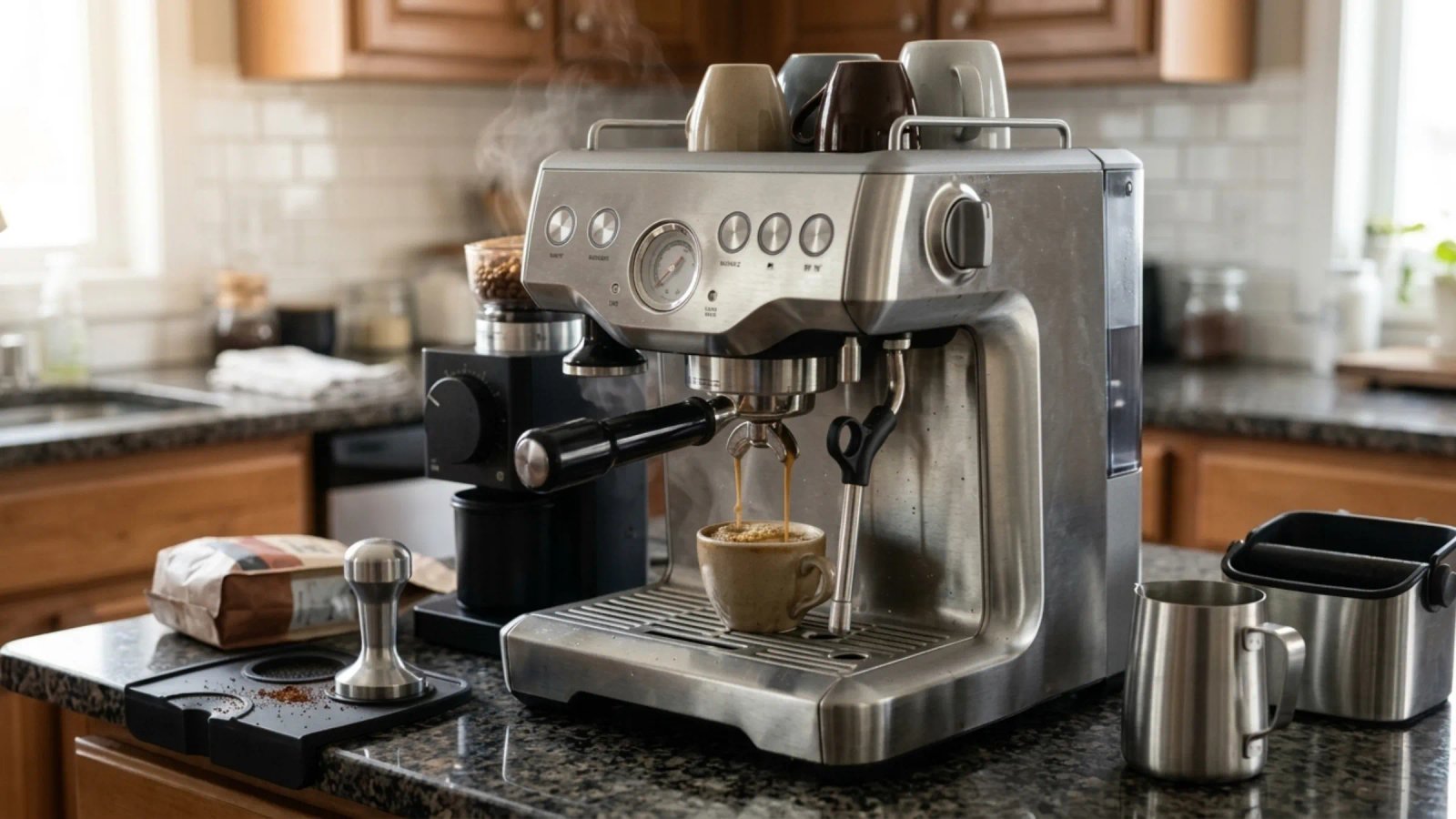
A $450 espresso machine paired with a $40 blade grinder will produce worse espresso than a $300 machine paired with a $200 burr grinder. Espresso needs a fine, uniform, finely adjustable grind, and no machine can compensate for not having one. Every serious guide in this category says the same thing, usually in a line at the end that people skip.
So the real budget for home espresso is the machine plus roughly $150–300 for a grinder. If you only have $500 total, spend $300 on the machine and $200 on the grinder. You’ll get better coffee than spending it all on the machine.
With that established, here’s what the machine specs actually mean, and three worth buying.
The short version
Breville Bambino Plus (~$400–500) — the one for most people. Three-second heat-up, PID temperature control, and an automatic steam wand that texturises milk without you learning how.
Gaggia Classic Evo Pro (~$450–500) — the one to buy if you want to learn properly and keep it for a decade. Commercial 58mm portafilter, brass boiler, endlessly serviceable and moddable.
Breville Bambino (~$300) — the same core machine as the Plus with a manual steam wand, and the smartest buy if the savings go into your grinder.
And throw away the pressurised baskets the machine ships with, once you have a real grinder.
“15 bar” and “20 bar” are marketing
Pump pressure is the most prominently advertised spec in this category and one of the least meaningful.
Espresso is extracted at around 9 bar. That’s the standard, and it’s what good machines actually deliver at the group head.
The 15 or 20 bar figure describes the maximum pressure the vibratory pump can generate. Machines then use an over-pressure valve (OPV) to bleed that down to roughly 9 bar at the puck. So a “20 bar” machine and a “15 bar” machine both brew at about 9 bar — the larger number just means a pump with more headroom.
Where it genuinely matters: a machine that explicitly states a 9-bar calibrated OPV is telling you something useful. The Gaggia Classic Evo Pro ships with its OPV preset to 9 bar, which earlier versions didn’t — on older models, adjusting it was one of the first things owners did.
Treat a high bar number as a neutral spec. Treat a stated 9-bar extraction as a positive one.
Thermoblock or boiler
This is the real architectural difference at this price point, and it drives almost everything else about how the machine behaves.
Thermoblock (Breville’s ThermoJet) heats water on demand as it passes through a metal block. Heat-up is measured in seconds rather than minutes — the Bambino Plus is ready in about three. The trade-off is less thermal mass, which means less stable temperature during longer shots and generally weaker, shorter-lived steam.
Single boiler (the Gaggia) heats a reservoir of water. It takes around five minutes to come up to temperature, and longer still to switch between brewing and steaming. What you get is more thermal stability and considerably better steam power.
Thermoblock | Single boiler | |
Heat-up | Seconds | ~5 minutes |
Temperature stability | Good with PID | Better |
Steam power | Adequate | Stronger |
Brew-to-steam switch | Fast | Slow |
Suits | One or two drinks, quickly | Learning, milk drinks, longevity |
The practical question: do you make one coffee in the morning and want it now, or do you want to turn the machine on and make several drinks properly? Thermoblock for the first, boiler for the second.
54mm or 58mm portafilter
58mm is the commercial standard. It’s what café machines use, which means an enormous ecosystem of accessories: bottomless portafilters, precision baskets, tampers, distribution tools, puck screens. If you expect to go deeper into this hobby, 58mm is the ecosystem you want to be in.
54mm is Breville’s standard. The accessory market is smaller but perfectly adequate — bottomless portafilters and precision baskets exist, and the 54mm Breville ecosystem is shared with a few other brands.
For most people this won’t matter. For anyone who thinks they might get properly into it, 58mm is the less limiting choice.
The baskets your machine ships with
Here’s something nearly every manufacturer does and nearly no buying guide mentions.
Machines at this price ship with pressurised (dual-wall) baskets. These have a tiny restrictor hole that forces water through under artificial pressure, generating foam that looks like crema. They exist so the machine produces something acceptable with supermarket pre-ground coffee and no technique.
They also make real espresso impossible. The restrictor controls the pressure, not your grind, so dialling in does nothing and the result is thin and foamy rather than syrupy.
Once you have a decent grinder, switch to the non-pressurised (single-wall) baskets. Breville machines include both in the box — check the accessories. The Gaggia includes single-wall baskets as standard.
This single change makes a bigger difference than most upgrades you could buy.
Steam wand: automatic or manual
Automatic wands — the Bambino Plus being the notable example — sense milk temperature and stop at a set point, texturising as they go. You put the jug under, press a button, and get drinkable microfoam without learning anything.
Manual wands require you to position the jug, find the right angle, hear the stretching, and judge temperature by touch. There’s a real learning curve of a few weeks. The ceiling is higher — properly textured milk from a good manual wand beats what an automatic produces — but the floor is much lower.
The honest version: if you want lattes tomorrow, buy automatic. If you want to learn latte art in six months, buy manual. Most people who say they’ll learn don’t.
The three picks
Breville Bambino Plus | Gaggia Classic Evo Pro | Breville Bambino | |
Price | ~$400–500 | ~$450–500 | ~$300 |
Portafilter | 54mm | 58mm commercial | 54mm |
Boiler | ThermoJet | Brass single boiler | ThermoJet |
Heat-up | ~3 seconds | ~5 minutes | ~3 seconds |
PID | Yes | No (moddable) | Yes |
Steam wand | Automatic + manual | Commercial manual | Manual |
Tank | 1.9 L | 2.1 L | 1.4 L |
Solenoid valve | No | Yes (3-way) | No |
Breville Bambino Plus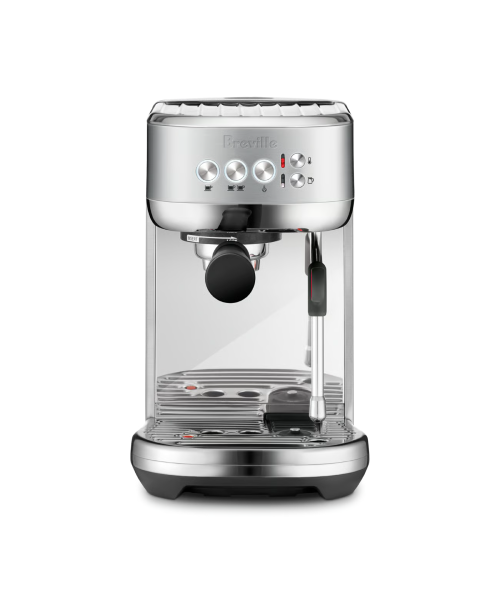
Around $400–500, and the most-recommended machine in this bracket for good reason.
The ThermoJet heater means it’s ready in about three seconds from cold, which sounds like a gimmick and changes daily use completely — there’s no decision about whether it’s worth turning on. PID temperature control holds the brew temperature steady, which is the main driver of shot-to-shot consistency. Pre-infusion gently wets the puck before full pressure, which improves extraction evenness.
The automatic steam wand is the real differentiator. You set milk temperature and foam level, press the button, and it produces genuinely good microfoam without technique. For anyone making flat whites on a weekday morning, that’s worth a lot.
It’s also small — about 7.7 inches wide — which matters on a crowded counter.
The drawbacks: the 54mm portafilter narrows your accessory options. The machine is light enough that it can shift when you lock in a portafilter firmly. And the automation that makes it easy also caps how much control you have.
Buy it if: you want good espresso and milk drinks with minimal learning, and counter space is tight.
Skip it if: you want to learn the craft, or you want a machine you’ll still be modifying in ten years.
Gaggia Classic Evo Pro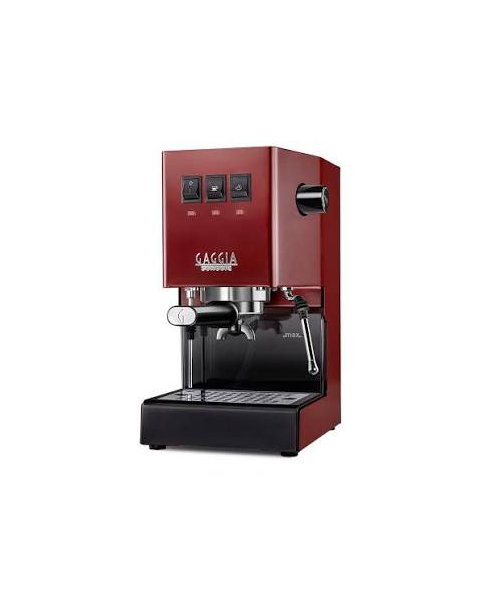
Around $450–500, and the machine the home espresso community calls a “lifer.”
The specification reads like a much more expensive machine: a commercial 58mm portafilter, a brass single boiler, a commercial steam wand taken from Gaggia’s professional line, and a three-way solenoid valve — which releases pressure after the shot so your puck comes out dry and knocks cleanly, and allows proper backflushing for cleaning. None of those appear on the Breville machines. The Evo revision ships with its OPV preset to 9 bar.
It’s built in Italy from serviceable parts, and owners routinely report a decade or more of use. Every component is replaceable, and it has the largest modding community of any machine under $500 — PID kits, pressure gauges, and OPV adjustments are all well-documented, which means the machine grows with you rather than being outgrown.
The drawbacks are real. Five minutes to heat up. No PID as standard, so brew temperature surfs rather than holds — manageable with technique, but it’s technique you have to learn. The manual steam wand has a learning curve. And it absolutely requires a good grinder; it is unforgiving in a way the Bambino isn’t.
Buy it if: you want to learn properly, you’ll keep it for years, and you’ve budgeted for a grinder.
Skip it if: you want coffee in thirty seconds without thinking about it.
Breville Bambino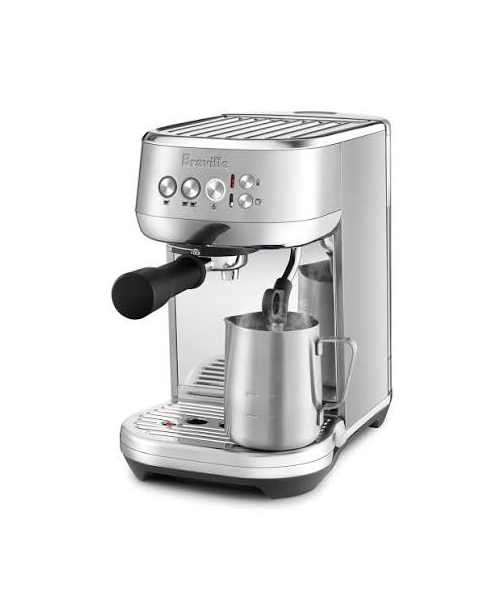
Around $300. The same ThermoJet heating, same PID, same three-second heat-up and same 54mm system as the Bambino Plus. What you lose is the automatic steam wand (this one’s manual) and some tank capacity — 1.4 L versus 1.9 L.
The argument for it is arithmetic. Buying the Bambino instead of the Bambino Plus saves roughly $150, and $150 moves a grinder from “entry-level” to “genuinely good.” Given that the grinder contributes more to cup quality than anything else at this price, that’s usually the better allocation.
Buy it if: you’re building a complete setup on a fixed total budget, or you’re happy to steam milk manually.
Skip it if: automatic milk frothing is the feature you actually want — then pay for the Plus.
One more option worth knowing: the Breville Barista Express bundles a conical burr grinder into the machine, which solves the grinder problem in one purchase. It frequently sits above $500 but drops into range on sale. The built-in grinder isn’t as good as a decent standalone, but it’s far better than no grinder, and the convenience is real.
Mistakes worth avoiding
Spending the whole budget on the machine. The grinder contributes more to cup quality. Split it.
Buying on bar pressure. Extraction happens at about 9 bar regardless. Higher advertised numbers mean a pump with headroom, not better espresso.
Using the pressurised baskets long-term. They fake crema and make dialling in impossible. Switch to single-wall once you have a grinder.
Using pre-ground coffee. Espresso grind goes stale within minutes, not days. If you’re not grinding fresh, you’re not getting espresso.
Expecting a thermoblock machine to steam like a boiler. It’s adequate, not powerful. Steam a smaller volume of milk.
Not descaling. Scale is the most common cause of death in home espresso machines. Follow the schedule for your water hardness.
Assuming you’ll learn manual steaming. Be honest. If you won’t, buy the automatic wand.
Frequently asked questions
What’s more important, the machine or the grinder?
The grinder. A good grinder with a modest machine beats a good machine with a poor grinder. Budget $150–300 for one on top of the machine.
Is 20 bar better than 15 bar?
No. Espresso extracts at around 9 bar. The larger number is the pump’s maximum, not what reaches your coffee.
54mm or 58mm portafilter?
58mm is the commercial standard with a much larger accessory ecosystem. 54mm is Breville’s and is adequate. Choose 58mm if you expect to go deeper.
What is a three-way solenoid valve?
It releases pressure after the shot so the puck comes out dry, and allows backflushing for cleaning. It’s a commercial feature, present on the Gaggia and not the Brevilles.
Should I use the baskets that came with the machine?
Only until you have a real grinder. Pressurised baskets fake crema and prevent proper extraction. Switch to single-wall baskets afterwards.
Is an automatic steam wand worth it?
If you want milk drinks without a learning curve, yes. The ceiling is lower than a well-used manual wand, but the floor is much higher.
How long do these machines last?
The Gaggia is widely reported at a decade or more, being fully serviceable. Thermoblock machines are generally less repairable and shorter-lived.
The recommendation
For most people: the Breville Bambino Plus, paired with a burr grinder of at least $150. Three-second heat-up, PID, and automatic milk make it the machine you’ll actually use on a Tuesday morning.
If you want to learn: the Gaggia Classic Evo Pro, with a grinder you’ve chosen deliberately. It’s slower, harder and better, and you’ll still own it in ten years.
If your total budget is $500: the Breville Bambino at $300 plus a $200 grinder. That combination makes better coffee than any $500 machine with a cheap grinder, and it’s the recommendation most guides bury at the bottom.
Then switch out the pressurised baskets, grind fresh, and descale on schedule.
Leave a comment