Ceramic Nonstick Pans: Buy Them as a Consumable, Not as Cookware
There are two separate questions people are really asking when they shop for ceramic nonstick, and most buying guides answer only the first one.
The first is: are these actually safer than Teflon? The answer is broadly yes, with a caveat about labelling.
The second is: how long will it stay nonstick? The answer is one to three years, and that single fact should change how you shop — including how much you spend. It’s also the fact that gets buried at the bottom of most roundups, under a recommendation for a $150 pan.
This guide deals with the second question first, because it’s the one that determines whether you’re happy with the purchase.
The short version
Ceramic coatings wear out. All of them, regardless of price. Treat a ceramic pan as something you’ll replace every couple of years and buy accordingly — somewhere in the $30 to $70 range rather than $150. GreenPan’s Valencia Pro line sits at a sensible price point with hard-anodized construction, and GreenPan’s cheaper Rio and Essence lines are around $30 if you’d rather replace more often for less. If you want a pan that lasts decades, you don’t want ceramic at all — you want stainless or carbon steel, covered at the end.
The safety question, answered properly
Traditional nonstick uses PTFE, the coating originally sold as Teflon. PTFE belongs to the PFAS family — the “forever chemicals,” so named because the carbon-fluorine bond is among the strongest in chemistry and the compounds don’t break down in the environment or the body.
Ceramic nonstick works differently. It’s a silica-based coating, derived from sand, that creates a slick surface without fluorine chemistry at all. Because the chemistry isn’t needed, there’s no reason for PFAS to be present.
Consumer Reports tested this directly, screening nonstick frying pans at several price points for PFOA and other PFAS compounds. The ceramic, PTFE-free pans in their test came back clean. Scientists CR consulted said they were unsurprised, since those chemicals simply aren’t required to make a ceramic coating nonstick.
So the headline claim holds up. But two caveats matter.
“Teflon-free” is not the same as “PFAS-free.” The first phrase only rules out one brand of one coating. Some manufacturers use it loosely while still relying on PFAS-based binders elsewhere in the construction. Look for an explicit PFAS-free or fluorine-free claim, not a Teflon disclaimer.
Check for lead and cadmium too. Both are heavy metals that can appear in ceramic glazes. Reputable brands state their absence explicitly — GreenPan, for instance, lists its cookware as free of PFAS, PFOA, lead and cadmium. If a listing mentions PFAS but says nothing about heavy metals, that’s an odd omission for a product category where it’s standard to disclose.
The durability question, answered honestly
Here’s the part that should drive your purchase.
Ceramic nonstick coatings typically lose their slickness within one to three years of regular use. PTFE coatings generally last three to five years or more. This isn’t a quality problem with any particular brand — it’s a property of the material. Ceramic coatings are harder but more brittle, and they degrade through a combination of heat cycling, micro-abrasion and exposure to acidic foods.
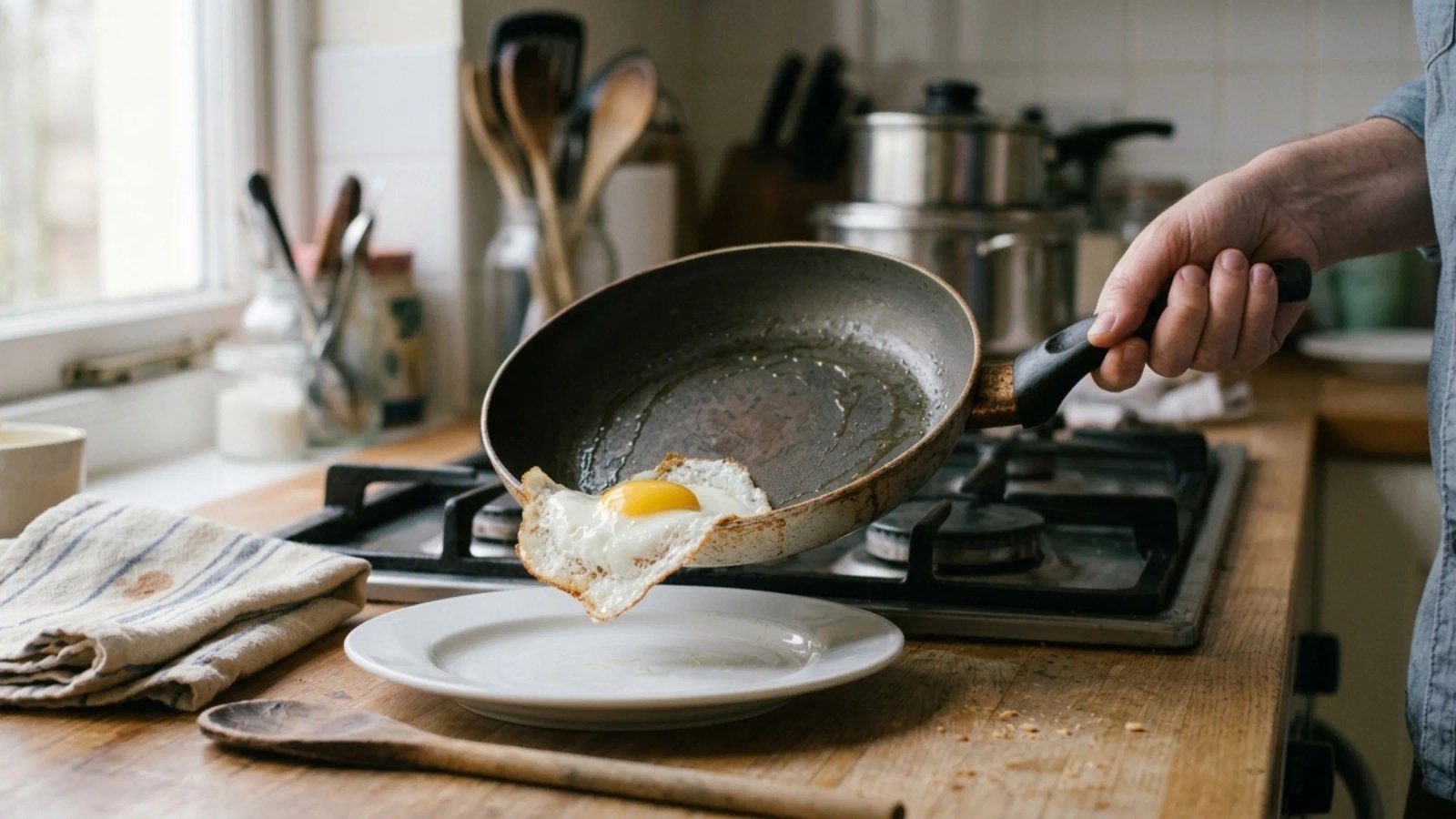
What this looks like in practice is gradual rather than sudden. The pan doesn’t fail; it just stops being nonstick. Month one, eggs slide. Month eight, eggs need a little oil. Month twenty, you’re scrubbing the pan after breakfast and wondering what went wrong.
One note on sourcing this claim: a lot of the most damning durability content about ceramic comes from cookware brands that sell stainless steel. That’s a conflict of interest worth being aware of — they have a commercial reason to emphasise ceramic’s weaknesses. But the one-to-three-year figure shows up consistently enough across independent sources, retailer documentation and user reports that it’s reasonable to plan around it.
The implication for your shopping: the price difference between a $30 ceramic pan and a $150 one does not buy you a proportionally longer coating life. It buys you better pan construction — thicker base, better heat distribution, a sturdier handle, nicer looks — all of which outlast the coating they’re attached to. You end up throwing away a well-built pan because the surface wore out.
That’s the argument for buying in the middle of the range. Good enough construction that it cooks well, cheap enough that replacing it in two years doesn’t sting.
What actually extends the life
Most of what kills a ceramic coating is avoidable, and these habits make a genuine difference.
Keep the heat low to medium. This is the big one. Ceramic coatings start degrading somewhere around 400–450°F. Ceramic heats fast, so medium is usually plenty. Never preheat a ceramic pan empty on high.
Never use it for searing. High-heat searing is exactly the job ceramic is worst at. Use stainless or cast iron.
Avoid temperature shock. Don’t run a hot pan under cold water. It warps the base and stresses the coating.
Hand wash with a soft sponge. Many ceramic pans are labelled dishwasher safe, and some genuinely survive it, but dishwasher detergent is abrasive and alkaline and will shorten coating life. “Dishwasher safe” is a permission, not a recommendation.
No metal utensils. Ceramic is hard but brittle — it chips rather than scratches.
Don’t stack pans bare. Put a cloth or paper towel between them. This is a surprisingly common cause of chipping.
Go easy on cooking sprays. Aerosol sprays leave a residue that polymerises into a sticky film that’s hard to remove and ruins release. Use a little oil from a bottle instead.
Watch acidic foods. Long simmers of tomato sauce or wine reductions are harder on ceramic than on PTFE.
Follow most of that and you’ll get toward the three-year end of the range. Ignore it and you’ll be at the one-year end.
Which pan
GreenPan Valencia Pro | GreenPan Rio / Essence | Premium ceramic (Caraway etc.) | |
Price | Around $70 per pan | Around $30 per pan | $100–150+ per pan |
Body | Hard-anodized aluminum | Aluminum | Aluminum |
Coating | Thermolon Minerals Pro, diamond-infused | Thermolon ceramic | Mineral ceramic |
Induction | Yes | Check by model | Yes |
Expected coating life | 1–3 years | 1–3 years | 1–3 years |
GreenPan Valencia Pro — the sensible middle
At roughly $70 for an 8" to 11" pan, and around $100–120 for a two-piece set, this is where the construction gets good without the price getting silly.
The body is hard-anodized aluminum rather than plain aluminum, which means a tougher, more scratch-resistant exterior and better heat distribution. The Thermolon Minerals Pro coating is diamond-infused, which GreenPan uses to improve scratch resistance. It’s induction-compatible, it has a stainless handle, and it’s explicitly free of PFAS, PFOA, lead and cadmium.
Two things to check before you buy, because published specifications for this line are inconsistent across retailers:
Oven-safe temperature. Different listings for Valencia Pro pans state 350°F, 500°F and 600°F. These may reflect different sizes or product generations, but you should confirm the figure for the exact pan you’re buying rather than assume the highest number.
Warranty terms. Some retailers list a two-year warranty on this line, others a limited lifetime warranty. Read what the warranty actually covers — cookware warranties very commonly exclude normal wear of the nonstick surface, which is the thing most likely to go wrong. A lifetime warranty that doesn’t cover the coating isn’t addressing your actual risk.
Buy it if: you cook most days and want a pan that handles well for the two or three years its coating lasts.
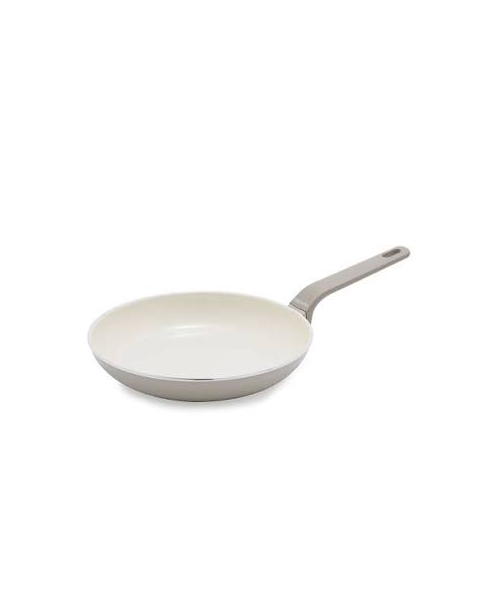
Around $30 per pan, sometimes less. Plain aluminum rather than hard-anodized, thinner, lighter, and more prone to hot spots and warping.
The logic here is straightforward: if the coating is going to wear out in a similar window regardless, buying the cheap one and replacing it more often costs less overall. You give up heat distribution and build quality, which matters if you’re cooking something delicate, and matters much less if the pan’s main job is eggs and reheating.
Check induction compatibility by model — it varies within these lines.
Buy it if: your ceramic pan is a breakfast pan, you have other cookware for serious work, and you’d rather spend $30 every eighteen months than $70 every two years.
Caraway and similar brands make genuinely attractive cookware. The coatings perform well when new, the colours are nice, and the storage systems are thoughtfully designed.
But at $100 to $150 a pan, you’re paying premium money for a surface with the same fundamental lifespan as a $30 one. Some of these are oven-safe to higher temperatures — Caraway’s skillet is listed at 550°F — which is a real functional advantage, though it’s somewhat beside the point given you shouldn’t be running ceramic hot anyway.
If the aesthetics matter to you and you’ve priced in replacing them, that’s a legitimate choice. Just make it with clear eyes rather than believing you’ve bought the durable option.
Buy it if: appearance is a real factor and the replacement cost doesn’t bother you.
Skip it if: you’re buying it expecting it to last longer than the cheap ones. It won’t, by much.
When not to buy ceramic at all
Ceramic nonstick does one job well: low-to-medium-heat cooking of things that stick, with minimal fat. Eggs, pancakes, fish, crêpes.
For everything else, uncoated cookware is better and lasts indefinitely:
Stainless steel handles any heat, any utensil, the dishwasher, and decades of use. It has no coating to degrade. It demands technique — proper preheating and enough fat — but there’s nothing to wear out.
Cast iron and carbon steel develop their own nonstick surface through seasoning, which improves with use rather than degrading. Carbon steel in particular is excellent for searing and a fraction of the price of premium ceramic.
The best setup for most kitchens is one ceramic pan for eggs and delicate work, and stainless or carbon steel for everything else. That way the consumable item is doing the job only it can do, and you’re not wearing out a coating on tasks that would be better done on bare metal anyway.
Frequently asked questions
Are ceramic pans really PFAS-free?
Reputable ones, yes. Consumer Reports testing found no PFAS in the ceramic, PTFE-free pans it screened. Look for an explicit PFAS-free or fluorine-free claim rather than just “Teflon-free,” and check for lead and cadmium disclosure too.
How long do ceramic pans last?
The coating typically loses its nonstick performance within one to three years of regular use. The pan itself lasts longer, which is the frustrating part.
Can you put ceramic pans in the dishwasher?
Many are labelled dishwasher safe, but hand washing meaningfully extends coating life. Dishwasher detergent is abrasive and alkaline.
Why did my ceramic pan stop being nonstick so fast?
Usually heat. Ceramic degrades above roughly 400–450°F, and it heats quickly, so it’s easy to overshoot. Cooking spray residue is the second most common cause.
Is ceramic better than Teflon?
Safer in terms of chemistry, less durable in terms of coating life. PTFE typically lasts three to five years or more against ceramic’s one to three.
Can you restore a ceramic pan’s nonstick surface?
Not meaningfully. You can remove polymerised oil residue with a gentle scrub and restore some performance, but once the coating itself has degraded, it’s done.
The recommendation
Buy the GreenPan Valencia Pro if you want one good ceramic pan and you cook regularly — it’s well built, properly PFAS-free, and priced in the range where replacing it won’t feel like a loss. Confirm the oven temperature rating for the specific pan and read what the warranty actually covers.
Buy Rio or Essence at around $30 if the pan’s job is mostly breakfast and you’d rather replace cheaply.
Skip premium ceramic unless you specifically want the way it looks, and buy carbon steel or stainless for anything that involves real heat. The genuinely durable pan in your kitchen shouldn’t be the one with a coating on it.
Leave a comment