
There is no single standard for carry-on luggage. No federal rule in the US, no binding international one. IATA publishes a recommendation that individual airlines routinely override.
What exists instead is a loose convention — 22 × 14 × 9 inches, or 56 × 36 × 23 cm — that most full-service US carriers follow, surrounded by a field of exceptions. Some budget airlines allow larger bags than that. Some allow smaller. European carriers impose weight limits that US carriers don’t. And the bag you buy may not be the size the label says, because manufacturers routinely measure without the wheels.
So “carry-on approved” on a product page tells you approximately nothing. Here’s what to check instead.
The short version
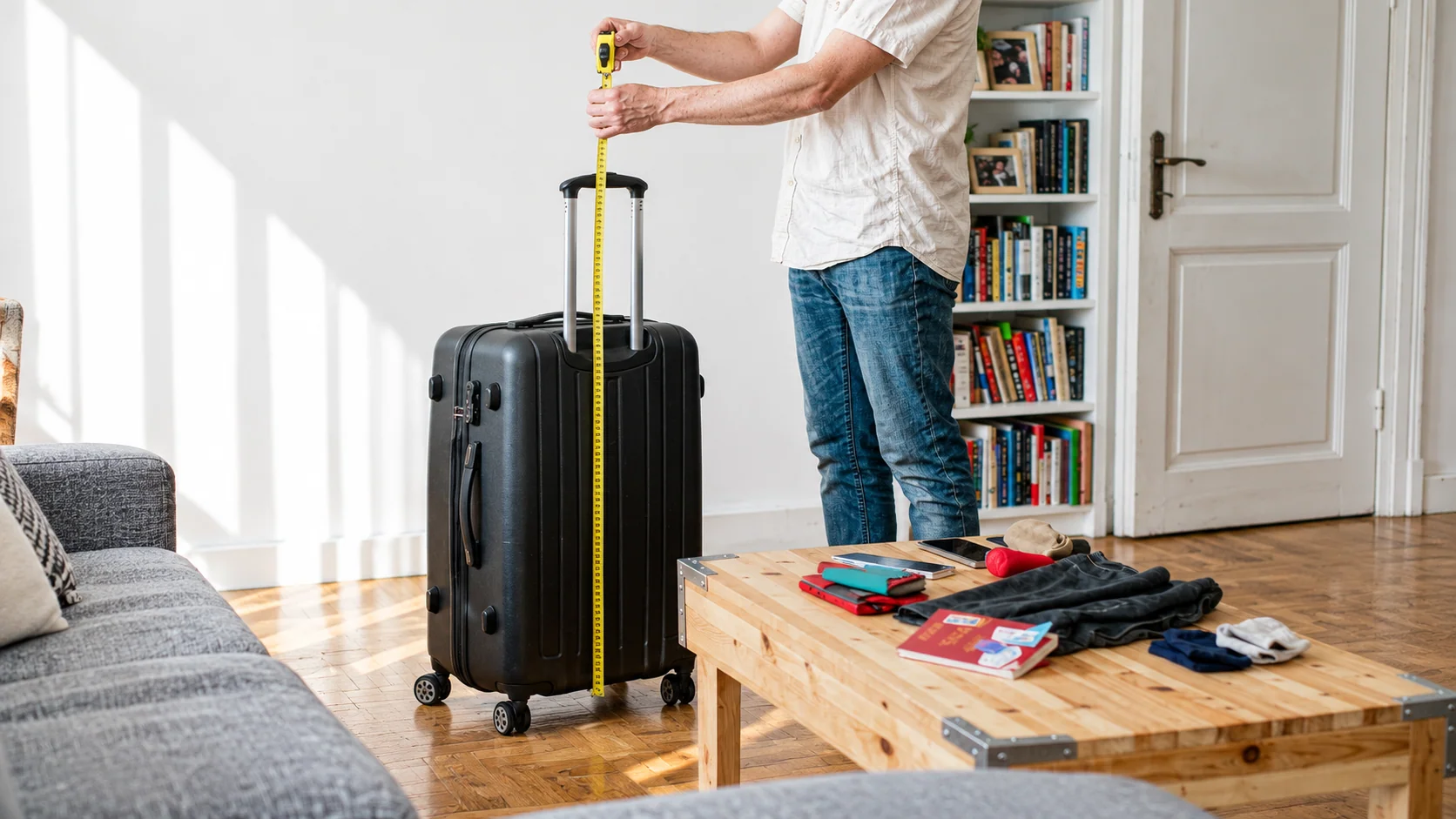
Measure the bag including wheels and handles. This is the most common failure. Airlines measure the whole object; many manufacturers don’t.
22 × 14 × 9 inches is the safe target for US travel, and it’s conservative enough to pass most international carriers too.
On budget airlines, the problem usually isn’t size — it’s that the carry-on costs money. Their free allowance is the personal item, and those limits are small and specific.
If you fly European budget carriers, weight matters more than dimensions. A 10 kg cap, enforced at the gate.
Polycarbonate over ABS if you want the shell to survive several years.
The wheels problem
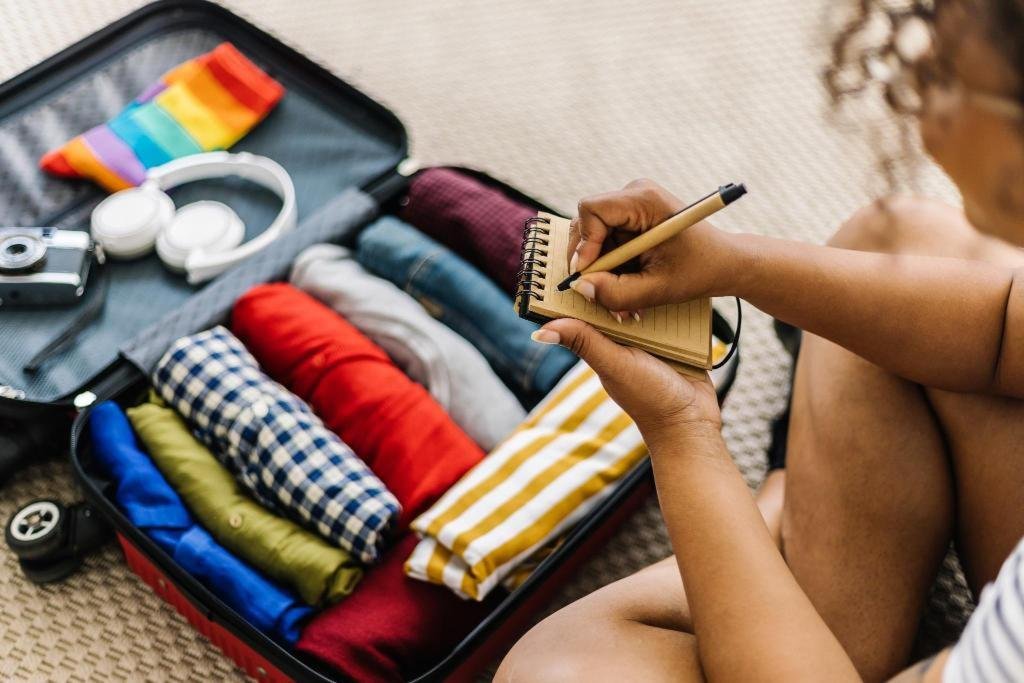
Airlines measure the external dimensions of the bag as it exists, wheels and handle housing included. That’s what the sizer at the gate measures.
Manufacturers do not consistently do the same. A substantial share of bags sold as “22 × 14 × 9” are 22 inches in the body, with wheels adding another inch or two underneath. Real-world examples of bags marketed as carry-ons measuring 22 × 15 × 9 — an inch too wide on one axis — are easy to find in customer complaints.
This is most prevalent at the budget end, where bags are sold on the size claim and the specification is measured in whichever way makes it true.
What to do: look for a product listing that explicitly states dimensions including wheels. Reputable brands say so. If the listing doesn’t specify, assume the stated figure excludes them and add an inch or two to your mental estimate. And when the bag arrives, measure it yourself with a tape before the tags come off.
Soft-sided bags have a related problem: they bulge. A fabric bag that measures 22 × 14 × 9 empty measures more than that packed full, especially if it has an expansion zip you’ve used. Hard shells don’t do this, which is one of their quiet advantages.
The actual limits
US domestic
Most full-service carriers use 22 × 14 × 9 inches. US carriers generally do not enforce carry-on weight limits — the bag needs to fit the sizer and be liftable into the bin.
Airline | Carry-on max | Personal item max | Note |
United | 22 × 14 × 9 | 17 × 10 × 9 | Basic Economy: personal item only on most domestic routes |
Alaska | 22 × 14 × 9 | Must fit under seat | Carry-on included on Saver fares |
Hawaiian | 22 × 14 × 9 | Must fit under seat | Carry-on included |
Spirit | 22 × 18 × 10 | 18 × 14 × 8 | Carry-on is a paid add-on |
Frontier | 24 × 16 × 10 | 14 × 18 × 8 | Carry-on is a paid add-on |
Allegiant | 22 × 16 × 10 | 16 × 15 × 7 | Carry-on is a paid add-on |
Sun Country | 24 × 16 × 11 | 17 × 13 × 9 | Carry-on is a paid add-on on most fares |
Read that table carefully, because it inverts the usual assumption. Spirit and Frontier permit larger carry-ons than United does. The catch isn’t the dimensions — it’s that on those carriers the overhead bin is a paid product. What’s free is the personal item, and those limits are tight and vary between carriers.
The same applies to Basic Economy fares on full-service airlines: United’s Basic Economy on most domestic routes includes a personal item only, with a full carry-on requiring a fee or status.
The practical consequence: on budget carriers and basic fares, the bag that matters is your personal item, and 17 × 10 × 9 is a safe target that clears most of them. A structured under-seat bag at the smaller end of the range is the versatile choice.
International
IATA recommends a maximum of 56 × 45 × 25 cm (roughly 22 × 18 × 10), but individual airlines set their own, usually stricter, limits.
Common international figures: 55 × 40 × 25 cm is widespread — it’s what ANA and JAL use, among others, with wheels and handles explicitly included.
The real international difference is weight. Where US carriers mostly ignore it, many others don’t:
European budget carriers (Ryanair, easyJet, Wizz Air) cap at around 10 kg and enforce it at the gate, particularly on full flights
Several European full-service carriers impose caps in the 8–12 kg range
These are weighed, not estimated
A hard-shell carry-on can weigh 3.5 kg empty. Against an 8 kg allowance, that’s nearly half your budget spent on the suitcase. If you fly European carriers regularly, bag weight is a specification worth optimising, and a lighter soft-sided bag may serve you better than a tough hard shell.
One useful shortcut: the linear-inch rule. Length + width + height ≤ 45 inches (115 cm) clears most airlines worldwide. A 22 × 14 × 9 bag totals 45 exactly.
Hard shell or soft side
Polycarbonate | ABS | Soft-sided (nylon) | |
Impact resistance | Best | Weakest, brittle in cold | Flexes, absorbs |
Weight | Moderate | Light | Lightest |
Expected life | Longer | Shorter | Varies by denier |
Bulges when packed | No | No | Yes |
External pockets | Rare | Rare | Yes |
Price | Higher | Lowest | Wide range |
Polycarbonate flexes under impact and returns to shape. It’s the material used in genuinely durable hard-shell luggage, and it costs more.
ABS is cheaper and lighter, and it’s what most budget hard shells use. Its weakness is cracking under impact, particularly in cold conditions — relevant given that luggage spends time in unheated cargo holds and on winter tarmacs.
Published comparisons of how much tougher polycarbonate is vary enormously between sources, so treat specific multipliers with caution. The directional consensus is clear and consistent: polycarbonate outlasts ABS, and ABS cracks where polycarbonate dents.
PC+ABS blends sit between the two and are common in mid-range bags.
Soft-sided luggage is lighter, has external pockets you can actually reach at the gate, and squeezes into awkward bin spaces. The costs are less protection for fragile contents and the bulge problem described above.
The choice: hard shell if you want contents protected and dimensions guaranteed. Soft side if weight and external access matter more — particularly on weight-capped European routes.
Other things worth checking
Wheels. Four-wheel spinners roll alongside you and are easier in airports; two-wheel inline designs handle rough pavement better and don’t roll away on a sloped jet bridge. Spinner wheels also protrude more, which eats into your dimension budget. Check whether wheels are replaceable — they’re the most common failure point on any suitcase.
Handle. A telescoping handle with two stops suits more heights than one with a single stop. Wobble in the handle when extended is the second most common failure.
Zips. Look for a chunky coil zip and, ideally, double zip pulls. The zip is the third failure point, and a split zip renders the bag useless mid-trip.
Warranty. Luggage warranties range from a couple of years to lifetime, and crucially differ in whether they cover airline damage. Many don’t. Read that clause specifically — airline handling is how most luggage actually gets damaged.
TSA-approved lock. Only relevant if you’ll ever check the bag. Built-in combination locks are convenient, but note they’re openable by anyone with a TSA master key, so they deter opportunists rather than secure valuables.
Weight of the empty bag. Often buried in the specs and genuinely important on weight-limited routes.
Mistakes worth avoiding
Trusting “carry-on approved.” It’s a marketing phrase with no definition behind it. Check the actual dimensions, including wheels.
Assuming budget airlines have smaller carry-on limits. Several allow larger bags — they just charge for the bin. The free allowance is the personal item.
Ignoring the personal item dimensions. On basic fares and budget carriers, this is the bag that matters, and limits vary between airlines by several inches.
Buying a heavy bag for European travel. An 8–10 kg allowance makes a 4 kg suitcase an expensive choice.
Using the expansion zip then trying to board. Expanded bags don’t fit sizers. The expansion is for checked journeys.
Not measuring the bag when it arrives. Five minutes with a tape measure before you remove the tags saves a gate-check fee later.
Assuming the rules stay put. Airline baggage policies change, and enforcement has been tightening. Check your specific airline’s official baggage page before each trip rather than relying on a bag bought three years ago.
Frequently asked questions
What size is standard carry-on luggage?
22 × 14 × 9 inches (56 × 36 × 23 cm) is the common US convention, but there’s no universal standard and limits vary by airline. Dimensions include wheels and handles.
Do airlines measure the wheels?
Yes. Airline sizers measure the whole bag. Manufacturers don’t always state dimensions the same way, which is why bags sold as compliant sometimes aren’t.
Do budget airlines have smaller carry-on limits?
Often the opposite — several allow larger bags. The difference is that the overhead bin is a paid add-on and the free allowance is the personal item, which has tighter limits.
Is there a carry-on weight limit?
US carriers generally don’t enforce one. Many international and European budget carriers do — commonly around 8–10 kg, weighed at the gate.
Polycarbonate or ABS?
Polycarbonate, if the bag needs to last. ABS is cheaper and lighter but more prone to cracking, especially in cold.
What’s the difference between a carry-on and a personal item?
A carry-on goes in the overhead bin. A personal item goes under the seat in front of you, typically limited to around 18 × 14 × 8 or less.
What’s a safe size that works everywhere?
A bag at or under 22 × 14 × 9 including wheels clears most carriers, and 45 linear inches total is a useful worldwide rule of thumb.
The recommendation
Buy a polycarbonate hard shell at or under 22 × 14 × 9 inches including wheels, in the lightest empty weight you can find at that size, with replaceable wheels and a warranty you’ve actually read.
Pair it with a structured personal item around 17 × 10 × 9 — that’s the bag that does the work on budget carriers and basic fares, where the overhead bin is something you pay for.
Then check your specific airline’s baggage page before each trip, because the rules move and enforcement has been getting tighter. A tape measure and two minutes on the airline’s website beats any phrase printed on the box.



Leave a comment