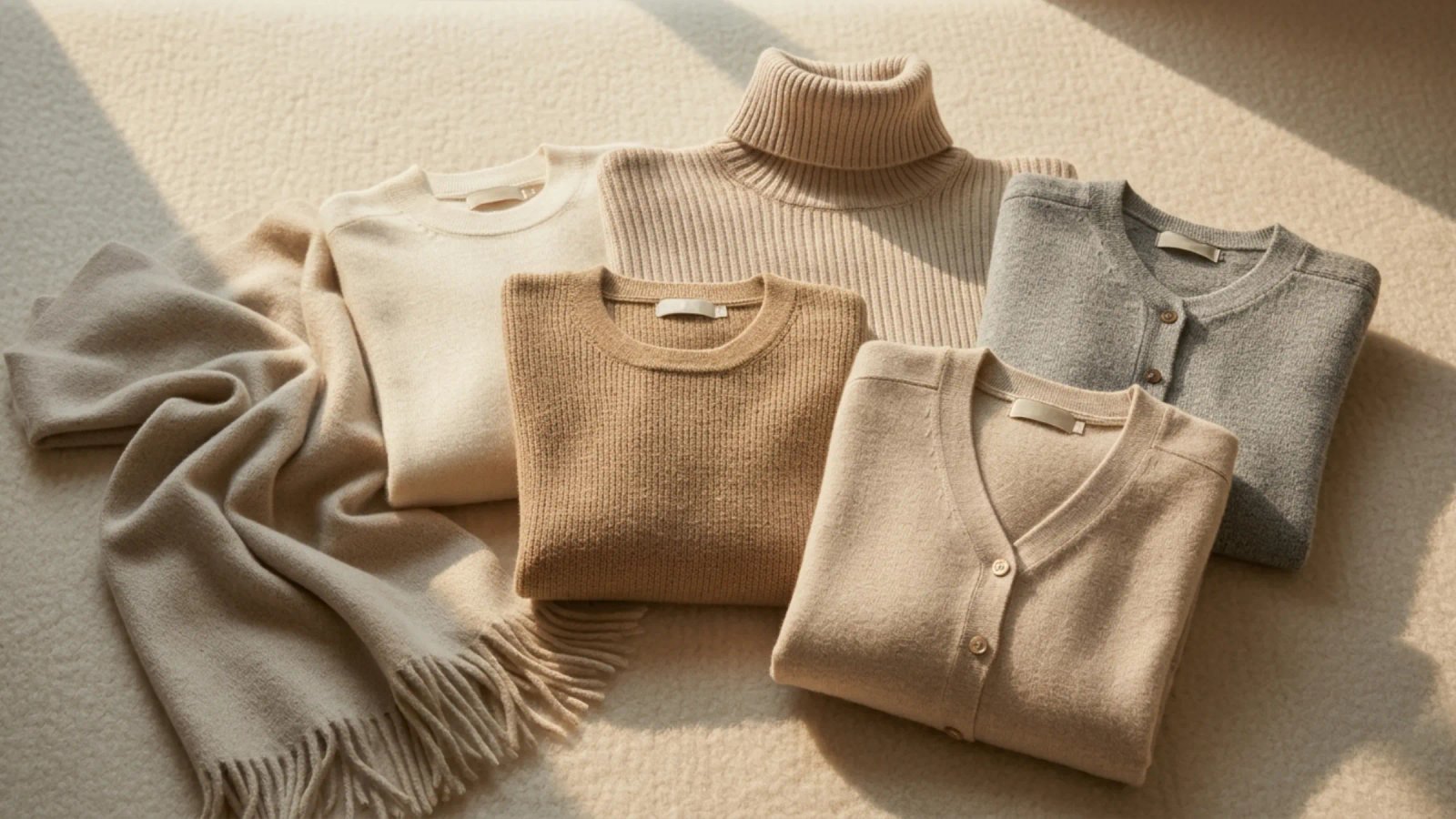
Two cashmere sweaters, both labelled 100% cashmere. One is $90, one is $400. Both feel soft in the shop.
Six months later, one has settled into something you reach for every week. The other is covered in pills, has gone thin at the elbows, and has a hole starting at the seam.
The difference was visible at purchase, but not through the specification most people check. Ply is not a quality measure — a 4-ply sweater made from poor fibre is worse than a 2-ply made from good fibre, and the industry quietly relies on buyers not knowing that. Meanwhile the specification that actually predicts how a sweater ages is one most shoppers have never heard of.
Here’s what the numbers mean and how to judge a sweater before you own it.
The short version
Quality comes from the fibre, not the construction. Two measurements define it: micron (how fine each hair is, which determines softness) and staple length (how long each hair is, which determines pilling and durability). Micron gets all the marketing attention; staple length is the one that decides whether you still like the sweater next winter.
Ply tells you thickness and warmth, not quality. Gauge tells you how tightly it’s knitted. Neither compensates for bad fibre.
And ignore how soft it feels in the shop — cheap cashmere is chemically softened to feel identical to good cashmere on the rail, and that treatment washes out.
Micron and staple length: the two that matter
Cashmere comes from the soft undercoat of cashmere goats, and it’s graded on two measurements of the raw fibre.
Micron is fibre diameter. Finer fibres feel softer against skin and don’t prickle. Good cashmere sits around 14–16 microns, which is substantially finer than standard sheep’s wool at 30 microns or more.
Staple length is how long each individual hair is, measured in millimetres. This is the underrated one.
Long fibres interlock properly when spun into yarn — they grip each other along their length and stay in the twist. Short fibres don’t have enough contact to hold, so they gradually work their way loose from the yarn surface, where friction tangles them into pills. Staple length is the single best predictor of whether a sweater will pill continuously or settle down.
This is why micron alone is misleading. A sweater can be made from genuinely fine 15-micron fibre that has been cut short, and it will feel beautiful in the shop and pill relentlessly in wear. Check both or neither.
The grading system, and why it’s not a standard
The industry uses an A/B/C classification based on those two measurements. Typical figures:
Grade | Micron | Staple length | Behaviour |
A | 14–15.5 | 34–36 mm | Softest, pills during break-in then settles |
B | 16–19 | 30–35 mm | Good compromise, some pilling over time |
C | 20–30 | 25–30 mm | Coarser, pills continuously, shortest life |
An important caveat: these grades are industry convention, not a regulated standard, and sources genuinely disagree about where the boundaries sit. Some define Grade C as starting above 20 microns; others put it at 25–30. Nobody audits the labels.
What that means practically is that Grade A on a hangtag is a claim, not a certification. It’s still worth something — a brand willing to state fibre specifications is more likely to have good ones than a brand that says nothing — but treat it as a signal rather than proof.
Grade A fibre typically costs three to five times Grade C, and genuinely fine material is a small fraction of what’s on the market. If the price doesn’t reflect that, the fibre probably doesn’t either.
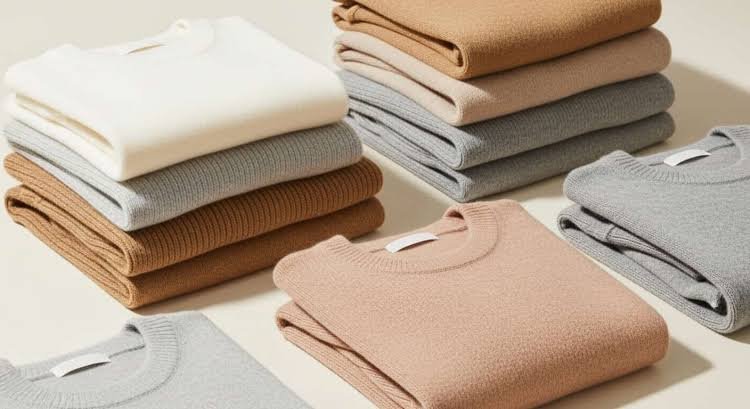
Ply is the number of yarn strands twisted together to form the thread that’s knitted.
More plies means a thicker yarn, which means a heavier, warmer, more substantial garment. That’s all it means.
It is not a quality measure, and this is where buyers get caught. A 4-ply sweater made from short, coarse fibre is still a sweater made from short, coarse fibre — it’s just a thicker one that will pill across a larger surface. Several cashmere specialists state this plainly: plies beyond about three add insulation without adding quality.
You’ll also find retailers claiming dramatic durability gains from higher ply — one asserts 4-ply lasts five times as long for 1.5 times the price. Treat those claims cautiously; they come from sellers of 4-ply garments, and they don’t square with the broader industry position that fibre quality drives longevity.
What ply to choose, by use:
1-ply: very light, often used in summer-weight knits. Softer feeling but noticeably less durable and more prone to holes.
2-ply: the standard for everyday sweaters. The right default for most people.
3-ply: noticeably warmer and more substantial. Good for cold climates.
4-ply and above: heavy, worn as an outer layer rather than indoors. Expensive, and usually more sweater than anyone needs.
If you’re choosing between a 2-ply at a higher price and a 4-ply at a lower one, the 2-ply is almost certainly the better garment.
Gauge: the spec that changes how ply feels
Gauge is stitch density — how many stitches per inch the machine knits.
Higher gauge means more, smaller stitches: a finer, smoother, lighter fabric. Lower gauge means fewer, larger stitches: a chunkier, more open, more relaxed knit.
Ply and gauge interact, which is why ply alone can’t tell you how a sweater will feel:
2-ply at high gauge → light, fine, good for layering under a jacket
2-ply at low gauge → noticeably thicker and warmer, same yarn
A tighter gauge also resists pilling slightly, because the fibres are held more firmly in the structure with less surface available to rub loose. Experienced knitters often point to this when comparing older cashmere favourably to modern production — vintage pieces were frequently knitted at a tighter gauge, with yarn spun denser rather than with air blown through it to save material.
That’s worth knowing as a reason not to assume weight equals quality. A sweater can feel substantial because it’s densely knitted from good yarn, or because it’s loosely knitted from thick, airy, cheap yarn. The first lasts.
How to judge a sweater in the shop
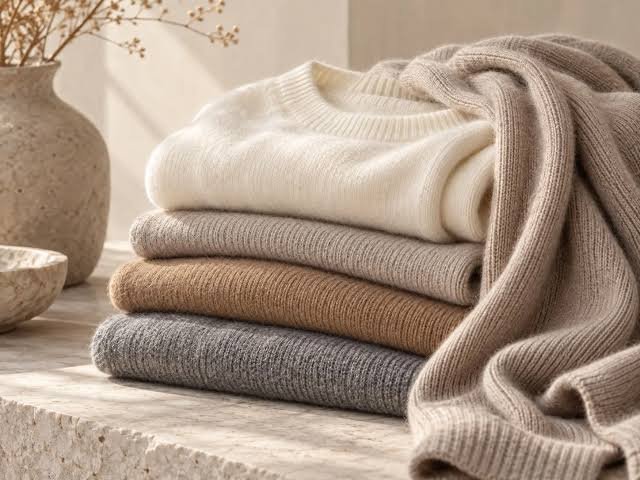
Softness tells you almost nothing, because cheap cashmere is chemically softened before sale and feels indistinguishable from good cashmere on the rail. The treatment washes out within a few launderings, at which point the true hand emerges. So test for other things.
The stretch test. Gently pull a section of the knit and release. Good cashmere springs back to shape. Low-grade or heavily blended fibre stays stretched. This is the most reliable quick check available to a shopper.
Hold it to the light. Stretch a section and look through it. A thin, gauzy, uneven appearance suggests loose construction and a garment that will go through at the elbows.
Check for fuzz, not slipperiness. Real cashmere has a slight natural halo of fine fibre. If it feels slick and perfectly smooth, like synthetic fleece, be suspicious.
Rub the surface briskly with your palm for a few seconds. Fibres working loose immediately is a bad sign — that’s short staple showing itself.
Look at what the brand discloses. Legitimate producers publish micron, staple length, ply and often origin. A listing that says only “100% cashmere” has chosen not to tell you, and the reason is rarely that the specifications are impressive.
Check the seams and finishing. Fully-fashioned seams, where the panels are knitted to shape rather than cut from fabric, are a marker of better construction and don’t unravel. Cut-and-sew construction is cheaper and more fragile at the edges.
Price as a filter. A 100% cashmere throw under $100, or a sweater at the price of a cotton one, is either not pure cashmere or made from Grade C fibre. The raw material cost doesn’t allow for anything else.
About pilling
A point that causes a lot of unnecessary disappointment: all cashmere pills at first. Loose surface fibres left from manufacturing work free during the first few wears and tangle. This is normal and happens to the best garments made.
The difference is what happens next. Good cashmere, made from long fibre, stops pilling once those surface fibres are gone — typically after the first few wears and a wash. Low-grade cashmere made from short fibre keeps producing pills indefinitely, because there’s an endless supply of short ends working loose from the yarn.
So don’t judge a sweater in week one. Judge it in month three.
To manage pilling: use a cashmere comb or a dedicated fabric shaver, gently, laying the garment flat. Don’t pick pills off by hand — that pulls fibre out of the knit and thins the fabric. And let the garment rest a day between wears so the fibres recover; back-to-back wear accelerates both pilling and wear at the elbows.
Care, briefly
Wash it, don’t dry clean it. Dry cleaning solvents are harsher on cashmere than careful hand washing. Use cool water and a wool-specific or cashmere detergent — ordinary detergent strips the natural oils.
Never wring it. Press the water out, roll it in a towel, then dry flat. Hanging a wet cashmere sweater stretches it permanently out of shape.
Store it folded, never hung. Hangers create shoulder points that don’t come out.
Store it clean. Moths are attracted to body oils and food traces rather than the fibre itself. A worn sweater put away for summer is an invitation.
Mistakes worth avoiding
Buying on softness in the shop. It’s the least informative test available, because chemical softening equalises everything on the rail.
Treating ply as a quality grade. It measures thickness. A 2-ply from good fibre beats a 4-ply from poor fibre comfortably.
Assuming 100% cashmere beats a blend. A well-made cashmere-silk or cashmere-wool blend from good fibre often outlasts a pure cashmere garment made from short fibre, and costs less. The blend isn’t the compromise; the fibre grade is.
Panicking at first-week pills. Normal. What matters is whether it continues.
Buying from a listing that discloses nothing. The absence of specifications is itself a specification.
Dry cleaning it routinely. Hand washing is gentler and cheaper.
Frequently asked questions
Is 4-ply cashmere better quality than 2-ply?
No. Ply measures yarn thickness and therefore warmth. Quality comes from fibre fineness and length. A 2-ply from Grade A fibre outperforms a 4-ply from Grade C.
What micron should I look for?
Around 14–16 microns is genuinely fine. But check staple length too — 34–36mm is the premium range, and it’s what determines pilling.
Why does my cashmere sweater pill so much?
Short staple length. Short fibres work loose from the yarn and tangle. Good cashmere pills during break-in and then stops; low-grade cashmere pills continuously.
Is Grade A cashmere a certified standard?
No. The A/B/C system is industry convention, not a regulated certification, and sources disagree on the boundaries. Treat it as a signal of a transparent brand rather than as proof.
Can I machine wash cashmere?
Hand washing in cool water with wool detergent is safest. Some garments permit a wool cycle — check the label. Always dry flat, never hang wet.
Is expensive cashmere always better?
Not always, but cheap cashmere is reliably poor. Genuinely fine fibre costs several times what coarse fibre does, so a price far below the market is telling you something about the material.
The recommendation
Buy 2-ply unless you specifically want a heavy outer layer, and spend the difference on fibre rather than thickness.
Favour brands that publish micron and staple length, and treat staple length as the more important of the two — around 34–36mm is what separates a sweater that settles from one that pills forever.
In the shop, run the stretch test, hold it to the light, and ignore how soft it feels, because that’s the one thing the manufacturer can fake.
Then wash it by hand, dry it flat, store it folded, and give it a day’s rest between wears. Good cashmere bought carefully lasts a decade. Bad cashmere looks identical for about three weeks.
Choosing a washable rug topic for the next article.


Leave a comment