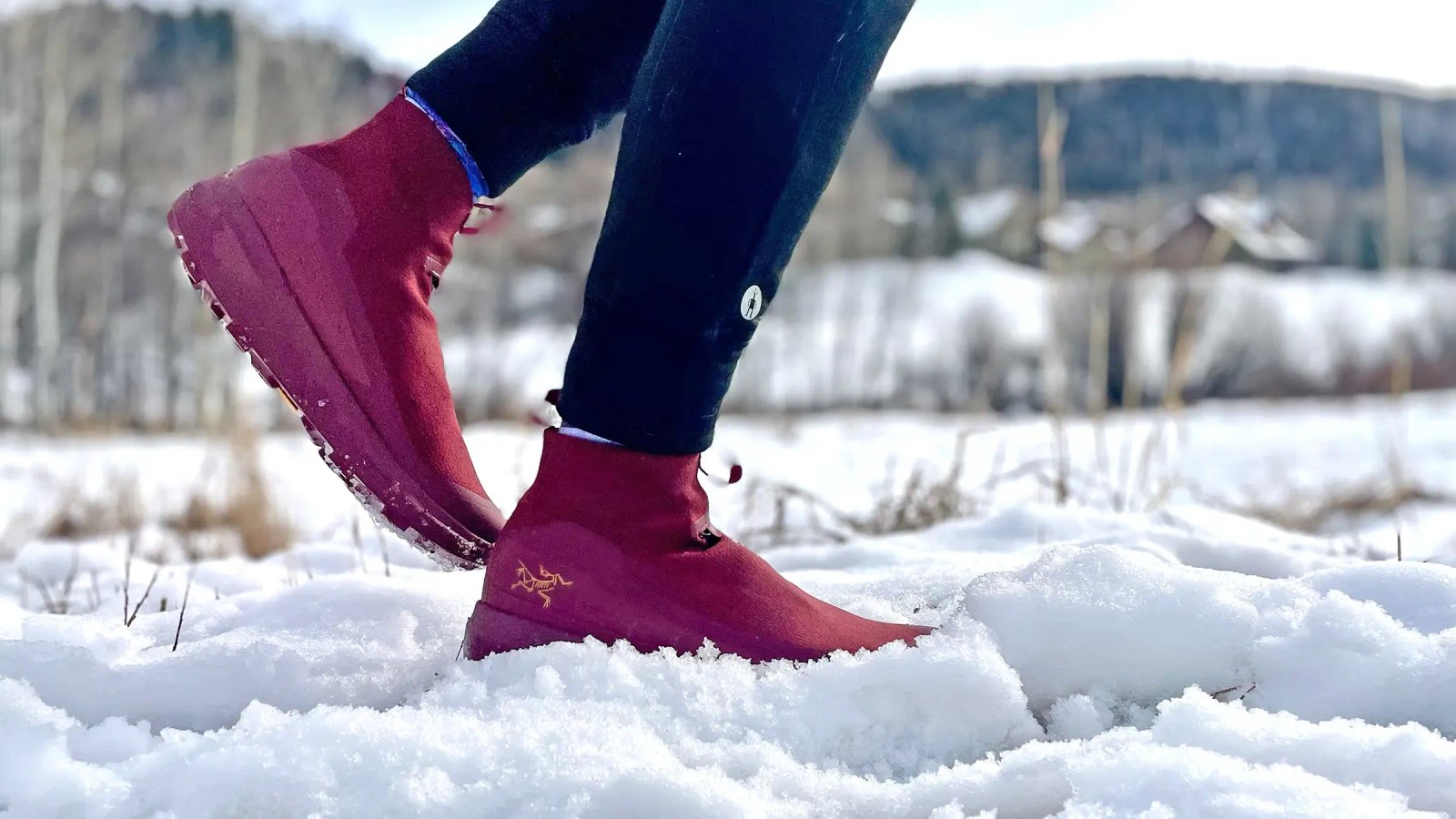
Look up what temperature a 200-gram insulated boot is good for and you’ll find, from apparently credible retailers: good above 20°F. Rated to −20°F. Suitable for −10°C to −20°C. Fine for mild days.
Those claims contradict each other by fifty degrees. They can’t all be right, and in fact none of them is, because gram ratings have no temperature standard behind them at all. Any temperature chart attached to one was invented by whoever published it.
The same problem applies to traction. Boots advertise deep aggressive lugs as the ice solution, and lug depth does almost nothing on hard ice — it’s the rubber compound that determines whether you stay upright.
Here’s what the numbers actually mean, and how to choose on the specifications that aren’t invented.
The short version
Insulation gram ratings measure insulation density per square metre, not total warmth, and more is not better — match the rating to your activity level, not to the temperature. For walking and commuting, 200g is usually right. For standing still outside, go higher.
For ice, ignore tread depth and look for a named cold-weather rubber compound — Vibram Arctic Grip, KEEN.Polar, Columbia’s winter Omni-Grip or similar. Standard rubber goes hard and slick below freezing regardless of how the sole is shaped.
And buy them roomy. A tight boot with 600g of insulation is colder than a well-fitted boot with 200g.
What the gram rating actually measures
The number refers to grams per square metre of the insulation fabric, not the weight of insulation in the boot.
This trips up nearly everyone. A 400-gram boot does not contain 400 grams of insulation — that would be close to a pound per boot, which would be absurd. It contains insulation material that weighs 400 grams per square metre, applied to whatever area of the boot is insulated.
Two consequences follow, and both matter.
It isn’t linear. A 400g boot is warmer than a 200g boot, but nowhere near twice as warm. Insulation performance flattens out as you add more — each additional layer traps progressively less additional air. The jump from 200g to 400g is meaningful. The jump from 800g to 1000g is marginal.
It says nothing about coverage. Two boots can both say 400g and insulate different amounts of the boot. One might insulate the full upper; another might skip the tongue, where a surprising amount of heat escapes. The spec doesn’t tell you.
Why the temperature charts are made up
Every retailer publishes a chart mapping grams to temperatures. They disagree wildly because there’s no testing standard requiring them to agree.
What makes a useful boot in cold weather depends on variables the gram rating doesn’t capture: how much of the boot is insulated, the sole thickness and whether it conducts cold from the ground, the fit, the sock, the wearer’s circulation, and above all how hard the wearer is working.
That last one is the big one, and it inverts the intuition most people bring.
Activity level, not temperature, should drive the choice:
Use | Recommended |
Running, hard hiking, shovelling snow | 100–200g, or uninsulated with a warm sock |
Walking, commuting, dog walking | 200g |
Moderate activity in genuine cold | 400g |
Standing still — ice fishing, spectating, outdoor work | 600–800g |
Stationary in severe cold | 800g+ |
The reason is sweat. Working hard in an over-insulated boot makes your feet sweat, the insulation absorbs the moisture, and saturated insulation loses a substantial portion of its insulating value. You end up colder in the heavily insulated boot than you would have been in the lighter one. The warmest boot in the shop is the wrong boot if you’re going to walk four miles in it.
One useful floor: anything under about 100g isn’t really a winter boot. It’s a lined shoe.
Traction: the compound matters more than the tread
This is the part that keeps people out of A&E, and it’s the part most product listings get backwards.
Lug depth and pattern work on soft, deformable surfaces — fresh snow, slush, mud. Deep lugs bite into material that gives way, and the spaces between them shed the snow so the sole doesn’t pack solid.
On hard-packed snow and ice, lugs do almost nothing. There’s nothing to bite into. What determines grip is friction between the rubber and the surface, and that comes down to the rubber compound.
Here’s the problem with ordinary rubber: it hardens as it gets colder. A compound that grips perfectly well at 15°C becomes stiff and slick below freezing, which is precisely when you need it. The sole hasn’t changed shape — it’s changed hardness.
Winter-specific compounds are formulated to stay pliable below freezing. They’re typically silica-based, and brands name them because they cost more to develop: Vibram Arctic Grip, KEEN.Polar, Columbia’s winter Omni-Grip formulations, and equivalents from other manufacturers.
If a boot is described only as having “aggressive lugs” or a “rugged outsole” with no named winter compound, assume it’s standard rubber. On ice, it will behave like standard rubber.
The trade-off: softer compounds grip better and wear faster. A winter boot with a soft sole used year-round on pavement will wear out sooner than an all-season boot. That’s a reasonable price for not falling over.
For genuine black ice, studs are the only reliable answer. Boots with embedded carbide studs — Icebug’s BUGrip system is the best-known — grip where no rubber compound can. The cost is noise and damage on hard indoor floors, which makes them a specialist choice rather than a general one. Removable traction devices that slip over an ordinary boot are the flexible alternative.
Waterproof is not the same as water-resistant
Wet feet are cold feet, and the distinction here is meaningful.
Waterproof means a membrane — Gore-Tex or a proprietary equivalent — plus sealed seams. Water doesn’t get through under normal conditions. This is what you want for slush, which is the real enemy: melting snow at pavement level is water with nowhere to go.
Water-resistant means treated material that sheds light moisture and then wets through. Fine for dry snow, useless by February in most cities.
Two caveats on waterproof boots worth knowing.
A waterproof membrane also slows moisture getting out. If you’re working hard, sweat accumulates inside, which is the same wet-insulation problem described above. This is another argument for less insulation when you’re active.
And a waterproof boot that’s shorter than the snow is pointless. Water enters over the top of the collar, and the membrane then holds it in. Height matters as much as the membrane.
Fit: the specification nobody lists
A boot that fits badly is cold regardless of its rating, and this is the most common reason people are disappointed by expensive boots.
Insulation only works when it’s lofted. Compressed insulation has no trapped air in it. A boot that’s tight anywhere — across the instep, around the toes, at the heel — has flattened insulation at that point, and that’s where you’ll feel the cold first.
Circulation matters more than insulation. Tight footwear restricts blood flow to the toes, which is what actually keeps them warm. This is why people in correctly-sized, modestly-insulated boots are often warmer than people in heavily-insulated boots half a size too small.
Buy winter boots with the sock you’ll wear, and buy them with room to wiggle your toes freely. Half a size up from your normal shoe is common and usually correct.
One thick sock beats two thin ones. Two socks compress against each other and against the boot, reducing loft and restricting circulation. A single merino or wool-blend sock of appropriate thickness works better than layering.
Avoid cotton socks entirely. Cotton holds moisture against the skin and loses all insulating value when damp.
The three types worth considering
Insulated walking boot | Pac boot | Studded ice boot | |
Typical insulation | 200–400g | 400–1000g, removable liner | 200g |
Best for | Commuting, walking, general winter | Standing still, severe cold | Black ice, steep icy paths |
Traction priority | Named winter compound | Varies — check | Carbide studs |
Weight | Moderate | Heavy | Moderate |
Indoor use | Fine | Clumsy | Damages hard floors |
Insulated walking boot — the right answer for most people
A waterproof leather or synthetic upper, 200g of insulation, a named cold-weather rubber compound, mid-height collar. Boots like the KEEN Revel 4 Mid sit in this category, using a proprietary cold-weather compound rather than relying on tread geometry.
This covers commuting, dog walking, winter errands and light hiking — which is what the vast majority of winter boots are actually used for.
Buy it if: you walk in them. The modest insulation is deliberate: you’re generating heat, and a heavier boot would make you sweat.
Skip it if: you stand outside for hours without moving. You’ll want more insulation than this provides.
Pac boot — for standing still
A rubber lower shell with a leather or synthetic upper and a removable felt or synthetic liner, usually heavily insulated.
The removable liner is the feature that matters: you take it out and dry it overnight, which solves the wet-insulation problem that otherwise compounds over consecutive days. For anyone outdoors for long stretches in real cold, this is a genuine advantage over sealed-construction boots.
They’re heavy and clumsy, and walking distances in them is unpleasant.
Buy it if: you’re stationary outdoors in cold weather — ice fishing, outdoor work, watching children’s sport in January.
Skip it if: you’re walking. You’ll overheat and the weight will tell.
Studded ice boot — the specialist
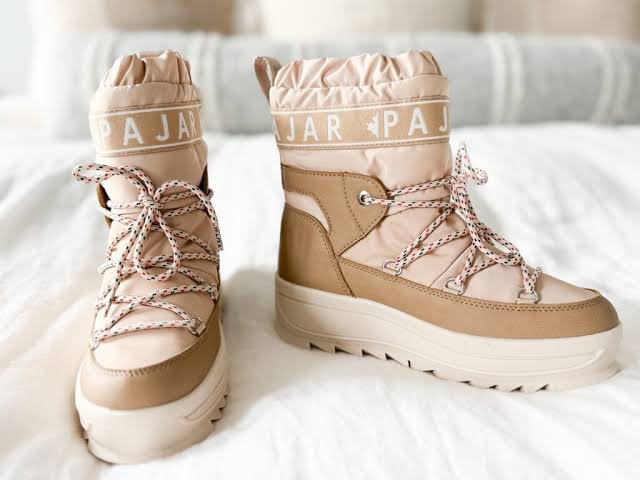
The costs are real: they click loudly on hard surfaces, they can mark wooden and tiled floors, and they’re more than most people need.
Buy it if: your regular route includes genuine black ice — a steep driveway, an untreated path, a northern city in February.
Skip it if: your conditions are mostly slush and packed snow. A good winter compound handles that, and removable traction devices cover the occasional icy day.
Mistakes worth avoiding
Buying the highest gram rating available. It’s the most common error. More insulation makes active feet sweat, wet insulation stops working, and you end up colder. Match the rating to activity, not to the lowest temperature you can imagine.
Assuming aggressive tread means ice grip. Lugs work in snow, compound works on ice. A deeply lugged sole in standard rubber will slide on a frozen pavement.
Buying your normal shoe size. Winter boots need room for a thicker sock and for the insulation to loft. Tight boots are cold boots.
Wearing two pairs of socks. Compresses the insulation and restricts circulation. One good wool sock.
Ignoring height. A low boot in deep snow fills from the top, and a waterproof membrane then keeps the water in.
Using them year-round. Soft winter compounds wear quickly on dry pavement. Winter boots last longer if they’re seasonal.
Frequently asked questions
What does 400g insulation mean in boots?
It means the insulation material weighs 400 grams per square metre — not that the boot contains 400 grams of insulation. It’s a density measure, not a total.
Is 400g warmer than 200g?
Yes, but not twice as warm, and not always better for you. If you’re walking or working, 200g often keeps you warmer because you sweat less.
What temperature are 200g boots good for?
There’s no standard answer, and retailer charts contradict each other by wide margins. Choose by activity level instead: 200g suits walking and commuting across most winter conditions.
What actually grips on ice?
The rubber compound, not the tread pattern. Look for a named winter compound such as Vibram Arctic Grip or KEEN.Polar. For genuine black ice, carbide studs.
Should I size up for winter boots?
Usually yes, often by half a size. You need room for a thicker sock and for the insulation to stay lofted. Try them on with winter socks.
Do I need waterproof or is water-resistant enough?
Waterproof, if you’ll encounter slush — which in most places means yes. Water-resistant materials wet through quickly.
The recommendation
For most people, buy a waterproof mid-height boot with 200g of insulation and a named cold-weather rubber compound, half a size up from your normal shoe, worn with one good wool sock. That combination handles commuting, walking and everyday winter better than anything heavier.
Go to 400g or a pac boot with a removable liner only if you genuinely stand still outside for long periods.
Add studs or removable traction devices if your route includes real ice, rather than buying a heavier boot and hoping the tread sorts it out.


Leave a comment