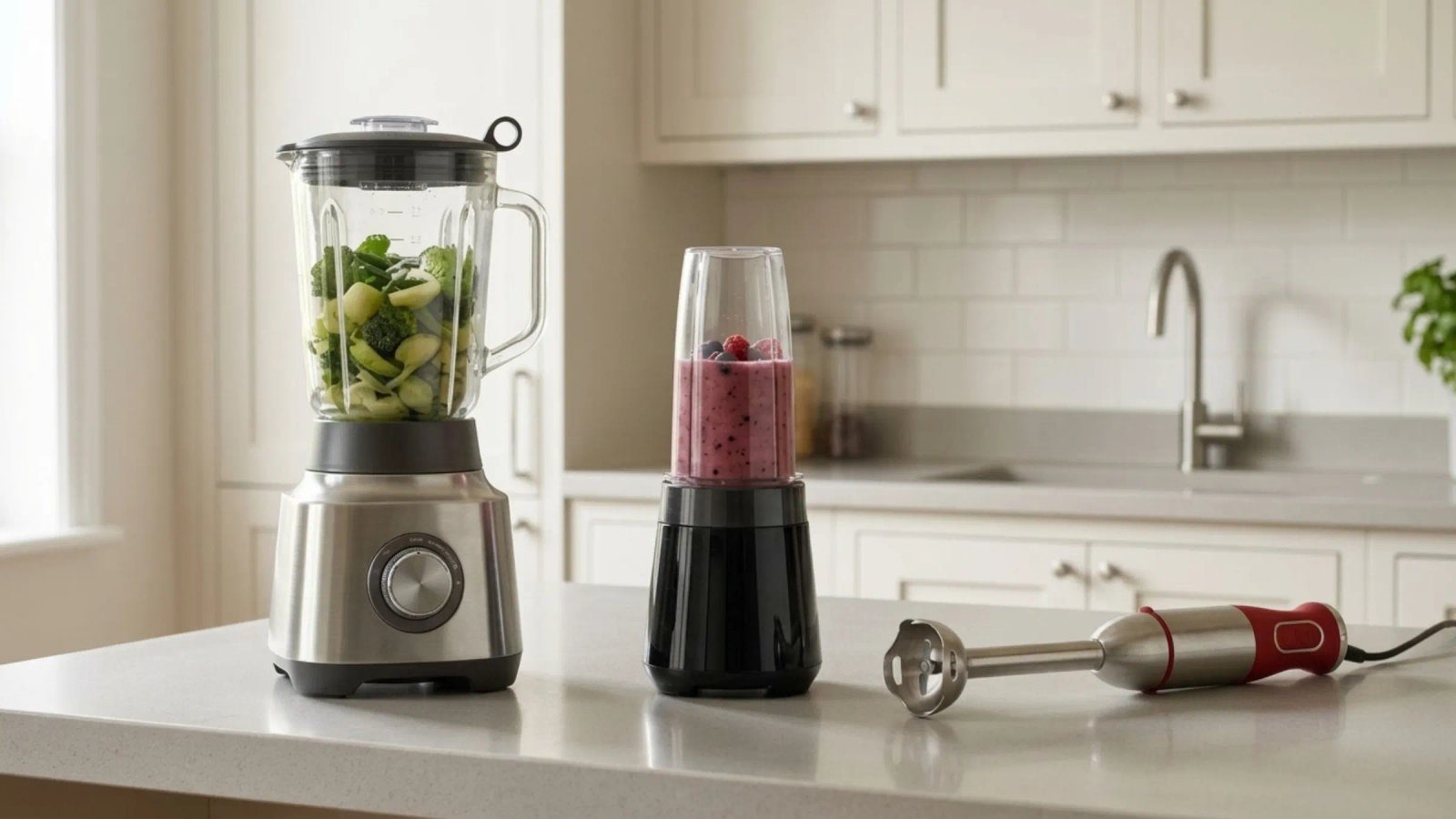
A Ninja Professional Plus costs around $99 and advertises 1,400 watts. A Vitamix 5200 costs several times that and works out to roughly 1,380 watts.
On the headline number, the cheap one wins.
In use it doesn’t, and the reason exposes how little the wattage figure tells you. The two numbers aren’t even measuring the same thing. Ninja quotes peak wattage — the momentary maximum the motor can draw. Vitamix and Breville quote continuous wattage — what the motor sustains while actually blending. A 1,400-watt peak motor draws considerably less than that during a 60-second smoothie, while a 1,380-watt continuous motor holds it.
And even corrected for that, wattage still isn’t the main variable. Jar shape matters as much as motor power — a conclusion America’s Test Kitchen has stated plainly after years of testing.
Here’s what actually determines whether a blender works, and three worth buying at three price points.
The short version
Vitamix 5200 (~$350–550) — the one you buy once. Tapered jar, tamper, variable speed, 7-year warranty, and the best results on the hard jobs.
Ninja Professional Plus BN701/BN801 (~$99–120) — the value answer. Excellent on ice and frozen drinks, noticeably weaker on fibrous greens and small seeds.
Blendtec Total Classic (~$280) — the hands-off option. Square jar creates its own vortex, preset cycles, lifetime blade warranty, no tamper needed.
Ignore the wattage figure entirely. Look at jar shape, blade design, whether there’s a tamper, and the warranty.
The vortex is the whole mechanism
A blender doesn’t chop so much as circulate. The blades pull ingredients downward, cut them, and throw them upward along the jar walls, where they fall back toward the centre and down into the blades again. That circulation is the vortex, and a blender that maintains it blends smoothly. One that loses it leaves chunks at the top while the bottom liquefies.
Jar shape determines whether the vortex holds.
Tall and tapered — narrower at the base, as on the Vitamix — concentrates ingredients at the blades and keeps the circulation tight. This is why a Vitamix handles thick mixtures that stall wider jars.
Wide jars let ingredients ride up the sides and sit there. You get a cavitation pocket — the blades spinning in air while the mixture stands still above them — which is the moment you turn it off and scrape the sides.
Square jars, as Blendtec uses, work differently again: the corners interrupt the spin and force ingredients back toward the centre, which is how Blendtec achieves circulation without a tamper.
This is why a $99 blender with a big jar and a big number struggles with nut butter. It’s not short of power. The mixture stops moving.
Blade design
Three approaches, and the differences are real.
Single blade assembly at the base (Vitamix, Blendtec). Fewer blades, and — counterintuitively — they’re blunt rather than sharp. These machines pulverise by speed rather than cutting, which means the blades don’t dull and don’t need replacing.
Stacked blade column (Ninja). A removable tower with blades at several heights through the jar. This is genuinely effective on ice and frozen fruit, because it attacks at multiple levels rather than waiting for ingredients to reach the base. It’s also the main reason Ninja performs so well on frozen drinks relative to its price.
Where the stacked column struggles is fibrous material and small seeds. Kale stems and berry seeds tend to survive, because the column design doesn’t generate the sustained fine pulverisation a tapered-jar machine does. If your smoothies are banana and frozen berries, you’ll never notice. If they’re kale and raspberries, you will.
The removable column has a practical cost too: it has to come out for cleaning, it’s sharp, and it’s another item on the drying rack.
The tamper is a functional spec
Vitamix includes a tamper — a plastic plunger that fits through a hole in the lid and lets you push ingredients down into the blades while the machine runs.
It sounds like an accessory. It’s the feature that makes thick mixtures possible.
Nut butter, frozen desserts, thick hummus, anything with minimal liquid — these are exactly the mixtures that stall the vortex. A tamper lets you force ingredients back into the blades instead of stopping, scraping and restarting.
Ninja’s locking lid design doesn’t allow one. Blendtec’s square jar is designed to make one unnecessary. Both are valid approaches, but if you want to make nut butter, a blender with neither a tamper nor a vortex-generating jar shape will frustrate you.
What separates the price tiers
With wattage dismissed, here’s where the money actually goes.
Build mass. A Vitamix base weighs around 10.5 lb against a Ninja’s 8, with thicker, commercial-specification plastic. Mass means the machine doesn’t walk across the counter under load, and it means the motor has somewhere to put its heat.
Motor duty cycle. Cheap blenders are built for short bursts. Run one continuously for two minutes making soup and it gets hot. High-performance machines are rated for sustained operation — which is how Vitamix makes hot soup from friction alone.
Warranty. The clearest signal in the category. Vitamix offers 7 to 10 years. Ninja offers 1. Blendtec offers a lifetime warranty on blades. A manufacturer willing to cover a motor for a decade is telling you what it expects the motor to survive.
Variable speed versus presets. Presets are convenient and, as several reviewers note, they add cost without improving results. Variable speed with a tamper gives more control to anyone who wants it.
The three picks
Ninja Professional Plus | Blendtec Total Classic | Vitamix 5200 | |
Price | ~$99–120 | ~$280 | ~$350–550 |
Motor | 1,400W peak | 1,560W / 3 HP | 2 HP (~1,380W continuous) |
Jar | 72 oz locking | 75 oz square FourSide | 64 oz tall tapered |
Blades | Removable 6-blade column | Blunt two-prong | Blunt single assembly |
Controls | Low/med/high, pulse, 3 programs | 6 presets, push button | Variable 1–10 |
Tamper | No | Not needed | Yes |
Warranty | 1 year | Lifetime blades | 7 years |
Ninja Professional Plus BN701 / BN801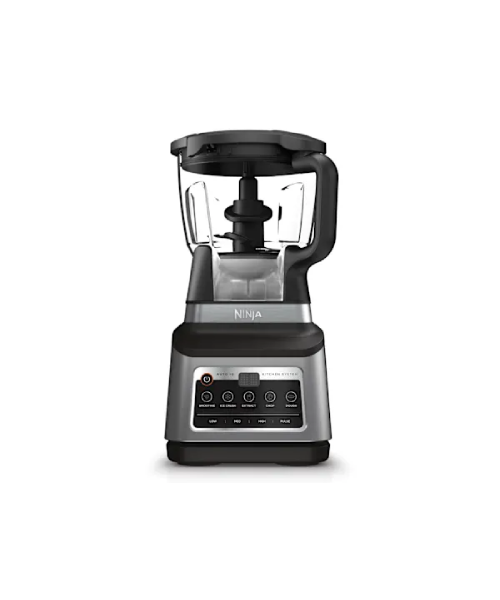
Around $99 to $120, and the blender that keeps winning value recommendations.
The stacked six-blade column makes it genuinely excellent at ice and frozen ingredients — frozen margaritas and frozen-fruit smoothies come out comparable to machines costing five times as much. The 72 oz jar is the largest here, and the three auto programs cover smoothies, frozen drinks and crushed ice without thinking.
For most households making ordinary smoothies, this does the job and the money saved is substantial.
The drawbacks are specific rather than general. It leaves bits of kale, spinach stems and small seeds that a tapered-jar machine pulverises. It has no tamper, so thick mixtures stall. The one-year warranty is the shortest here by a wide margin. And the removable blade column is a nuisance to clean around.
Buy it if: your blending is smoothies, frozen drinks and the occasional soup, and you want to spend under $120.
Skip it if: you make green smoothies with fibrous greens, nut butters, or anything thick.
Blendtec Total Classic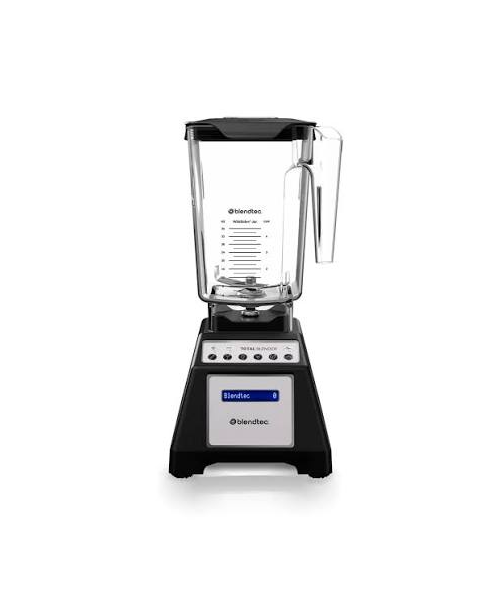
Around $280, sitting between the other two in price and in approach.
The square FourSide jar is the distinguishing feature. Its corners break up the spin and drive ingredients back toward the blades, which means it maintains circulation without a tamper — you set a preset cycle and walk away. For anyone who finds the idea of standing over a blender with a plunger unappealing, that’s the appeal.
Six preset cycles handle smoothies, soups, ice crushing and so on, each running a programmed speed ramp and stopping itself. The blade is blunt two-prong steel carrying a lifetime warranty.
The drawbacks: push-button presets give you less fine control than variable speed, so you’re working within the programs rather than steering. The square jar is slightly harder to scrape out. And at 75 oz with a wide footprint, it takes real counter space.
Buy it if: you want genuinely hands-off blending and don’t want to manage a tamper.
Skip it if: you want manual control over speed, or counter space is tight.
Vitamix 5200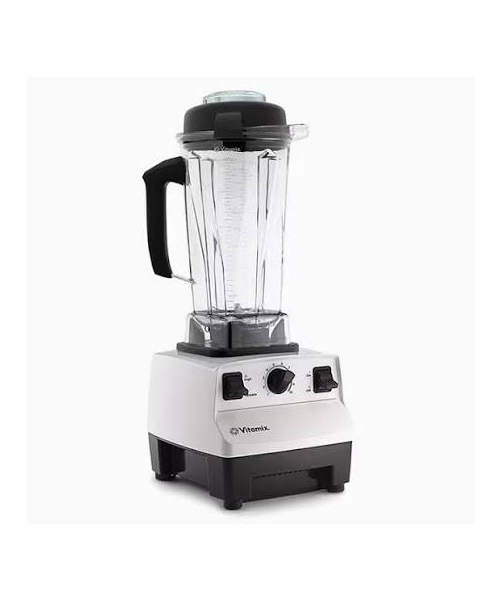
Around $350 to $550 depending on retailer and promotion.
The tall tapered 64 oz jar is the best vortex-maintaining design in the category, and combined with the tamper it handles the mixtures that stop everything else: nut butter, frozen desserts, thick dips, minimal-liquid purées. The motor is rated for continuous duty and will make hot soup from friction in a few minutes.
Variable speed 1 to 10 with no presets means you control the process throughout, which experienced cooks prefer. It’s self-cleaning — a drop of soap, warm water, 30 seconds on high. And the 7-year warranty on a machine that’s known to run for decades is the real argument.
The drawbacks: the tall jar won’t fit under standard kitchen cabinets, which catches people out — if that matters, the Professional Series 750 uses a shorter, wider jar at higher cost. It’s loud. There are no presets, so there’s a small learning curve. And the price is the price.
Buy it if: you blend daily, you make nut butters or thick mixtures, or you want one appliance for twenty years.
Skip it if: you make a smoothie twice a week. The Ninja will do that.
One more worth knowing: the NutriBullet Pro 900 at around $80 is a single-serve personal blender rather than a countertop machine — blend directly in the cup, screw on a lid, take it with you. For one person making one smoothie, it’s a different and often better answer than a full-size blender.
Mistakes worth avoiding
Comparing wattage across brands. Peak and continuous ratings aren’t the same measurement. The numbers are not comparable.
Buying a wide jar for thick mixtures. The vortex collapses and you’ll spend the time scraping.
Not checking the height against your cabinets. Vitamix’s tall jar is the classic case — measure before you buy.
Paying for presets. They add cost and don’t improve results. Variable speed does more.
Ignoring the warranty gap. One year versus seven is the clearest signal about expected lifespan in this category.
Overfilling. Every blender has a max fill line and hot liquids expand. Blend hot soup in batches with the lid vented.
Running it dry or without enough liquid. This is what burns out motors. Add liquid or use the tamper.
Putting the jar in the dishwasher unless it’s specified as safe. Many aren’t, and self-cleaning takes 30 seconds anyway.
Frequently asked questions
Does higher wattage mean a better blender?
No. Brands quote peak and continuous wattage interchangeably, so the figures aren’t comparable, and jar shape and blade design matter as much as motor power.
Why does my blender leave chunks at the top?
The vortex has collapsed — usually a jar too wide for the mixture, or not enough liquid. A tapered jar or a tamper solves it.
Is a Vitamix worth it over a Ninja?
If you make nut butters, thick mixtures or green smoothies with fibrous ingredients, yes. For ordinary fruit smoothies and frozen drinks, the Ninja does the job for a fraction of the price.
What’s the tamper for?
Pushing ingredients into the blades while running, which is what makes thick, low-liquid mixtures possible.
Why are Vitamix blades blunt?
They pulverise by speed rather than cutting, which means they don’t dull and don’t need replacing.
Can blenders make hot soup?
High-performance models can, generating heat through friction over several minutes. Cheaper blenders will overheat trying.
Are preset programs worth paying for?
Not really. They’re convenient but don’t improve results over variable speed used properly.
The recommendation
For most households, buy the Ninja Professional Plus BN701 or BN801 at around $100. It handles smoothies, ice and frozen drinks genuinely well, and the money saved against a Vitamix buys a lot of other kitchen equipment.
Buy the Vitamix 5200 if you blend daily, make nut butters or thick mixtures, or put fibrous greens and small seeds in your smoothies — and measure your cabinet clearance first.
Buy the Blendtec Total Classic if you want preset, walk-away blending without managing a tamper.
And stop reading the wattage on the box. It’s the number manufacturers chose to put in large type precisely because it’s the one that’s easiest to make look impressive.
Leave a comment