The standard advice is simple: buy eau de parfum if you want your fragrance to last, eau de toilette if you don’t.
It’s roughly true within a single fragrance — the EDP version of a scent almost always outlasts the EDT version of the same scent. Across different fragrances, it falls apart.
A musk-and-amber EDT will easily outlast a citrus-dominant EDP. Concentration tells you how much aromatic material is dissolved in the alcohol. It tells you nothing about which aromatic materials, and that’s what actually determines how long a fragrance stays on your skin.
Citrus molecules are volatile — they evaporate within the hour whatever the concentration. Sandalwood, oud, musk, amber, patchouli and vetiver cling for a day at low doses.
So the label on the bottle is one input, not the answer. Here’s how to read the whole picture, and three fragrances across three concentration tiers.
The short version
Notes determine longevity more than concentration does. Check what the base notes are before you check what’s on the label.
Longevity, projection and sillage are three different things, and the strongest concentration doesn’t win all three — parfum often lasts longest while projecting least.
Lattafa Khamrah (~$30) — proof that price doesn’t determine performance.
Dior Sauvage EDP (~$89–165) — the versatile workhorse, and the safest first serious bottle.
MFK Baccarat Rouge 540 Extrait (~$179–410) — the extrait tier, and the most-complimented fragrance of recent years.
And test on skin for a full day before buying. The first fifteen minutes are the part you won’t be wearing.
The concentration ladder
These percentages are industry convention, not regulation. No body enforces them, and brands apply them inconsistently — which is why figures vary between sources.
Type | Fragrance oil | Typical longevity | Character |
Eau Fraîche | 1–3% | 1–2 hours | Body-spray light |
Eau de Cologne (EDC) | 2–4% | A few hours | Citrus splash |
Eau de Toilette (EDT) | 5–15% | 3–5 hours | Fresh, daytime |
Eau de Parfum (EDP) | 15–20% | 6–8 hours | The modern standard |
Parfum / Extrait | 20–30%+ | 8–12+ hours | Rich, close to skin |
EDP is where most of the market sits now. For most designer and niche houses it’s the flagship version — the one reviewers discuss and the one with the most development work behind it. Two or three sprays usually carry a day.
“Elixir,” “Intense,” “Extreme,” “Parfum Intense” are marketing names with no fixed meaning. They usually indicate a richer, higher-concentration version of an existing scent, but the actual percentage is whatever the house decided. Dior’s Sauvage Elixir, for instance, is substantially heavier than the EDP — but you’d know that from reviews, not from the word.
Longevity, projection and sillage are different things
These three get used interchangeably and shouldn’t be.
Longevity — how long you can still smell it on your own skin.
Projection — how far it radiates right now, as you sit there.
Sillage — the trail it leaves behind you as you move through a room.
Here’s the counterintuitive part: parfum often has the highest longevity and the lowest projection. The higher oil load makes it dense and skin-close — it sits on you for twelve hours without filling the room. EDP frequently projects more.
So “strongest” depends which you mean. If you want people to notice you across a table, you want projection, which is often an EDP. If you want to still smell like yourself at midnight, you want longevity, which is often a parfum.
And for an office, you want neither at full volume — which is why Bleu de Chanel gets recommended for work so consistently. It’s close to the skin rather than announcing itself.
Read the base notes, not the concentration
A fragrance unfolds in three stages, and only one of them lasts.
Top notes — the first fifteen to thirty minutes. Citrus, light herbs, aldehydes. Bright, volatile, and gone.
Heart notes — roughly two to four hours. Florals, spices, green notes. The character of the fragrance.
Base notes — the rest of the day. Sandalwood, oud, musk, amber, patchouli, vetiver, tonka, leather. These are what “longevity” actually means.
The practical rule: look at a fragrance’s base notes before you look at the concentration. A fragrance built on amber, musk and woods will last regardless of whether it’s labelled EDT or EDP. One built on bergamot, lemon and marine notes won’t last whatever the label says.
This also explains why the first fifteen minutes mislead you. What you smell on a tester strip in a shop is the top notes — the part you’ll experience for a fraction of the wear. Judging a fragrance on that is like judging a film from the opening credits.
How to actually buy one
Fragrance is the category where testing properly matters most and happens least.
Test on skin, not on paper. Your skin chemistry — pH, oil levels, temperature — meaningfully changes how a fragrance develops. Two people wearing the same scent can smell genuinely different.
Give it at least an hour, ideally a full day. Spray it, leave the shop, and see what it becomes. Several hours in is the version you’ll actually wear.
Test no more than two or three at a time. Olfactory fatigue sets in fast. After the fourth, you can’t distinguish anything.
Don’t rub your wrists together. It crushes the molecules and accelerates the top notes — you skip the opening and distort the development.
Buy a decant or a sample first if you can. Decant services and official travel sprays let you live with a fragrance for a week before committing a hundred dollars. For anything above about $100, this is the sensible route.
Don’t buy blind from an online description. Note lists tell you ingredients, not how they smell together.
A word on where you buy
Fragrance has an unusually large grey market, and the price gaps are substantial — the same bottle can be $89 at a discounter and $140 at a department store.
Those discounters are often legitimate, selling genuine stock through unauthorised channels. But the category also has a real counterfeit problem, and fakes are well made enough to fool a casual look at the box.
Reasonable precautions: buy from authorised retailers for anything expensive, use reputable decant services for testing, be suspicious of prices far below everyone else’s, and check batch codes if you’re spending serious money. If a deal looks impossible, it generally is.
The three picks
Fragrance is personal in a way that cookware isn’t — nobody can tell you which scent suits you. What these three demonstrate is the three concentration tiers and what each gets you.
Lattafa Khamrah | Dior Sauvage EDP | MFK Baccarat Rouge 540 Extrait | |
Price | ~$30 (100ml) | ~$89–165 (100ml) | ~$179–410 (70ml) |
Concentration | EDP | EDP | Extrait |
Profile | Spicy amber, vanilla, dates | Fresh-spicy, bergamot, ambroxan | Jasmine, amber, cedarwood |
Longevity | Long | 8–12 hours | 10–16 hours |
Projection | Strong | Strong | Moderate but lingering |
Best for | Cold weather, value | All-year, all-occasion | Evenings, signature wear |
Lattafa Khamrah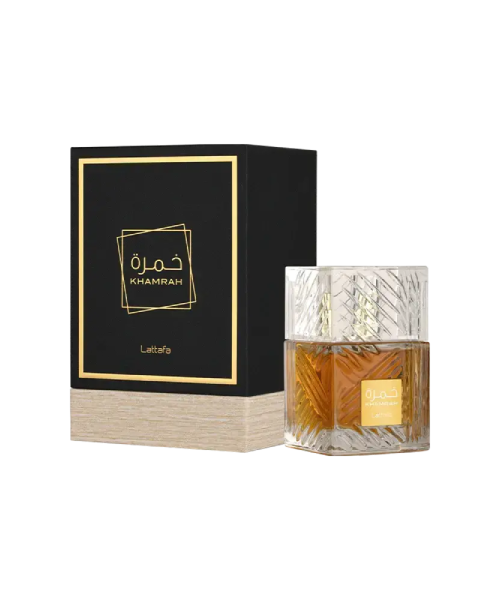
Around $30 for 100ml, and worth including specifically because it undermines the assumption that price determines performance.
It’s an EDP in the spicy-amber family — dates, cinnamon, vanilla, benzoin and tonka over a warm base — and it performs comparably on longevity and projection to designer fragrances at four or five times the price. Reviewers describing budget fragrances regularly note that bottles in this price band now genuinely compete with £100-plus designer EDPs.
The reason is simple: the base notes are the ones that last, and amber, vanilla and tonka are not expensive materials. What you pay for at the designer end is composition, consistency, the quality of individual materials, and the brand.
The drawbacks: it’s a crowded, sweet, gourmand-adjacent profile that isn’t to everyone’s taste and is firmly cold-weather. It projects heavily, which makes it a poor office choice. And the house produces a lot of fragrances quickly, so quality across the range is uneven.
Buy it if: you want to find out whether you like this family before spending real money, or you want a cold-weather bottle you can over-spray without worrying.
Skip it if: you need something office-safe or year-round.
Dior Sauvage EDP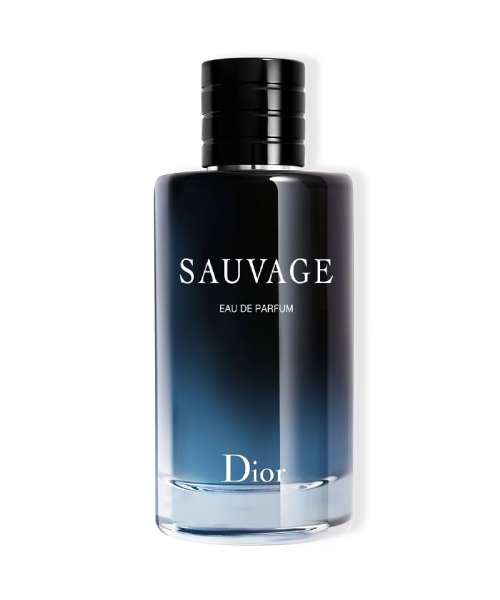
Retail around $140 to $165, commonly available around $89 to $118 through discounters.
It’s the best-selling men’s fragrance in the world, and that ubiquity is both its strength and its weakness. The profile — fresh-spicy bergamot over ambroxan — is engineered to be widely liked, works across seasons, and is appropriate in essentially any setting from an interview to a date.
The EDP is the version to buy, not the EDT. It’s richer and lasts considerably longer, with reported longevity of eight to twelve hours on skin and far longer on fabric. The ambroxan base is the reason — it’s a synthetic amber molecule that clings.
As a first serious fragrance, it’s the lowest-risk purchase available.
The drawbacks: it is everywhere. If you want to smell distinctive, this is the opposite of that. It projects strongly, which means over-spraying is a genuine risk in an office. And the ambroxan-heavy profile reads as slightly generic to anyone who follows fragrance.
Buy it if: you want one bottle that works in every situation, or it’s your first proper fragrance.
Skip it if: you want to smell like yourself rather than like a popular default.
The office alternative: Bleu de Chanel EDP (~$120–155) is the other default in this space and sits closer to the skin — clean and woody rather than projecting. For professional settings it’s the safer of the two.
For women, the equivalent all-rounder is YSL Libre EDP (~$70–120 for 90ml) — lavender and orange blossom, strong projection, office-appropriate.
MFK Baccarat Rouge 540 Extrait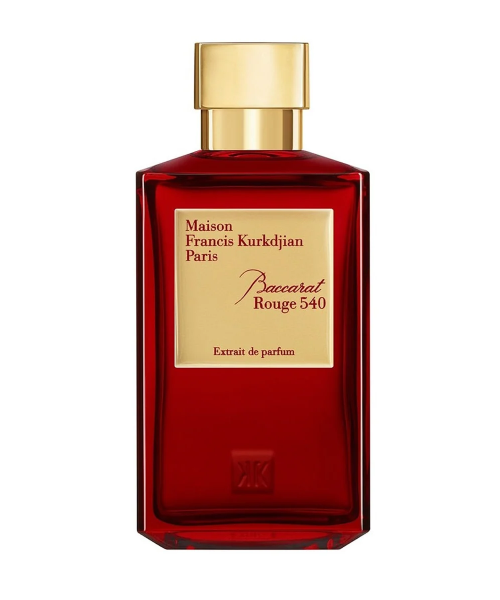
Retail around $350 to $410 for 70ml, with discounted stock appearing around $179 to $199.
This is the fragrance that defined the last decade of the category. Jasmine, saffron, amber and cedarwood in a profile people describe as sweet, airy, warm and slightly woody — distinctive without being difficult, which is why it crossed over from niche to mainstream.
It’s an extrait, and it demonstrates the tier’s characteristics exactly: 10 to 16 hours of longevity with moderate projection that lingers rather than announcing. You spray one or two and it stays with you all day.
It’s also unusually beginner-friendly for a niche fragrance, which is rare — most niche houses make challenging things.
The drawbacks: the price, obviously, even discounted. Its popularity means it’s no longer distinctive — it’s become its own kind of default. And the sweetness divides people sharply; a meaningful minority find it cloying.
Buy it if: you want one signature fragrance and you’ll wear it for years, or you want to understand what the extrait tier actually delivers.
Skip it if: you’re buying blind. At this price, sample it first — this is exactly the fragrance where a $10 decant saves you $200.
How to wear it
On moisturised skin. Dry skin holds fragrance poorly — the oils have nothing to bind to. An unscented moisturiser before spraying meaningfully extends longevity, and it’s the cheapest improvement available.
Pulse points — wrists, neck, behind the ears, inner elbows. Warmth lifts the scent.
One to two sprays for EDP or parfum, more for EDT. Over-spraying is the most common error and you can’t smell it on yourself after twenty minutes, which is exactly why it happens. If someone can smell you from across a room, that’s too much.
Spray, don’t dab, and don’t rub it in.
Hair and clothing extend sillage considerably — fragrance lasts far longer on fabric than skin. Be careful with delicate materials and anything pale, since alcohol and oils can mark.
Match concentration to season. EDT and lighter concentrations in heat — high temperatures amplify projection, so a heavy parfum in summer becomes overwhelming. EDP and parfum in cold weather, where you need the extra lift.
Layering works. Matching body wash or an unscented base, then the fragrance.
Storing it properly
Fragrance degrades, and most people store it in the worst possible place.
Heat, light and air are what destroy it. A bathroom shelf has all three — temperature swings from showers, humidity, and usually a window.
Keep it in the box, in a cool dark cupboard. Bedroom drawer, wardrobe, anywhere stable.
An opened bottle lasts roughly three to five years, less for citrus-dominant scents which turn sour, longer for heavy oriental and woody compositions which can improve.
Signs it’s gone: the colour darkens noticeably, the top notes smell sharp or vinegary, or it simply doesn’t develop the way it used to.
Mistakes worth avoiding
Buying EDP assuming it lasts. If the composition is citrus-dominant, it won’t. Check the base notes.
Judging on the first fifteen minutes. You’re smelling top notes, which you’ll barely wear.
Testing on paper. Skin chemistry changes how a fragrance develops.
Testing five at once. Olfactory fatigue — after three you can’t distinguish anything.
Rubbing your wrists together. It distorts the development.
Over-spraying. You stop smelling it on yourself within twenty minutes. Others don’t.
Storing it in the bathroom. Heat, light and humidity all degrade it.
Buying a full bottle blind above $100. Decants exist. Use them.
Assuming a high price means it suits you. The most expensive fragrance in the world is worthless if it doesn’t work on your skin.
Frequently asked questions
What’s the difference between EDT, EDP and parfum?
Concentration of fragrance oil — roughly 5–15%, 15–20% and 20–30%+ respectively. Higher concentration generally means longer wear, though the notes matter as much.
Does EDP always last longer than EDT?
Within the same fragrance, almost always. Across different fragrances, no — a musky EDT can outlast a citrus-heavy EDP.
What’s the difference between sillage and projection?
Projection is how far it radiates now; sillage is the trail you leave behind you. Longevity is a third thing — how long it stays on your skin.
Why doesn’t my perfume last?
Usually the composition — citrus and marine notes evaporate fast. Also dry skin, which holds fragrance poorly. Moisturise before spraying.
What does “Elixir” or “Intense” mean?
A richer version of an existing fragrance, usually at higher concentration. The terms aren’t standardised.
How many sprays should I use?
One or two for EDP or parfum, three or four for EDT. If people notice from across a room, it’s too much.
How long does an opened bottle last?
Roughly three to five years stored properly. Citrus scents turn sooner; heavy woods and ambers often improve.
Should I buy from discount sites?
Many are legitimate grey-market sellers, but counterfeits exist. For expensive bottles, use authorised retailers or reputable decant services.
The recommendation
Work out which concentration suits your situation first. EDT for heat and office environments where you don’t want to announce yourself. EDP as the versatile default. Parfum or extrait if you want all-day longevity and don’t need to fill a room.
Then check the base notes. Amber, musk, woods and vanilla last. Citrus and marine notes don’t, whatever the concentration.
If you’re starting out, buy Dior Sauvage EDP — versatile, widely liked, works everywhere, and hard to get wrong.
If you want to explore cheaply, buy Lattafa Khamrah at around $30 and find out whether you like warm spicy amber before spending more.
If you want one signature fragrance, sample MFK Baccarat Rouge 540 Extrait before buying — and if it works on you, it’ll last ten to sixteen hours a wear.
Then moisturise first, use two sprays, keep it out of the bathroom, and test everything on skin for a full day before you commit. The bottle matters far less than whether it still smells good on you at six in the evening.

Leave a comment