
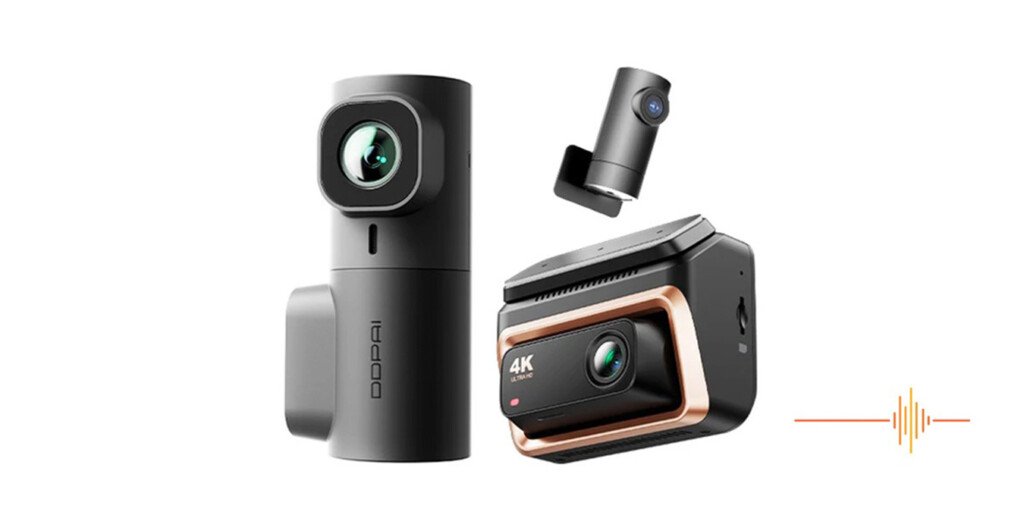

If you’re shopping for a dash cam that doesn’t just record the road—but also helps with parking protection and everyday peace of mind—this DDPAI Z60 review breaks down what matters. The Z60 is positioned as a premium-leaning 4K front + 1080p rear system with built-in internal storage, a screen, and optional 4G add-ons.
Sounds great on paper. The real question is whether the video quality, night performance, and app experience match the price—and whether it fits your driving and parking habits.
Below: what it does well, what to watch out for, and what real buyers tend to say.
Highlights
- 4K front + 1080p rear recording for solid coverage
- Built-in 32GB eMMC internal storage + support for up to 512GB microSD (useful redundancy)
- 3-inch screen makes setup and playback easier than “screenless” cams
- 5GHz Wi-Fi for faster transfers than older 2.4GHz-only models
- Supercapacitor design is better suited for heat than traditional lithium batteries
- Optional 4G connectivity and multi-camera bundles exist (but not everyone needs them)
- Parking monitoring is a strong selling point—best when hardwired
- Potential con: premium features can mean more setup time (hardwire kit, routing rear cable)
- Potential con: app-based ecosystems vary by phone and expectations
- Best for: daily drivers, commuters, rideshare/taxi drivers, and anyone parking outside often
Why You Should Trust Us
We evaluate dash cams like real owners do: clarity of plates and signage, stability at night, reliability of storage, ease of install, and how usable the app feels day-to-day. We also consider practical ownership details like heat tolerance, parking mode needs, and whether the “premium” features actually change outcomes (or just sound nice).
Table of Contents
- About DDPAI
- DDPAI Z60 Review
- Quality & Build / Materials
- Key Features
- Performance / Real-World Use
- Ease of Use
- Maintenance / Care
- What I Like
- What I Don’t Like
- Price & Value
- DDPAI Z60 Customer Reviews
- Is the DDPAI Z60 Legit?
- Is the DDPAI Z60 Worth It?
- DDPAI Z60 vs VIOFO
- Discounts and Promotions
- Where Can I Buy DDPAI Z60?
- FAQs
- Similar Dash Cams You Might Like
- Final Verdict + Rating
About DDPAI
DDPAI is a dash cam brand known for feature-dense cameras—often emphasizing high-resolution footage, app connectivity, parking monitoring options, and add-on ecosystems (rear cams, cabin cams, 4G modules, hardwire kits). The Z60 sits in the “premium everyday” lane: modern specs, a screen, dual storage, and optional upgrades for people who want more than basic recording.
Quality & Build / Materials
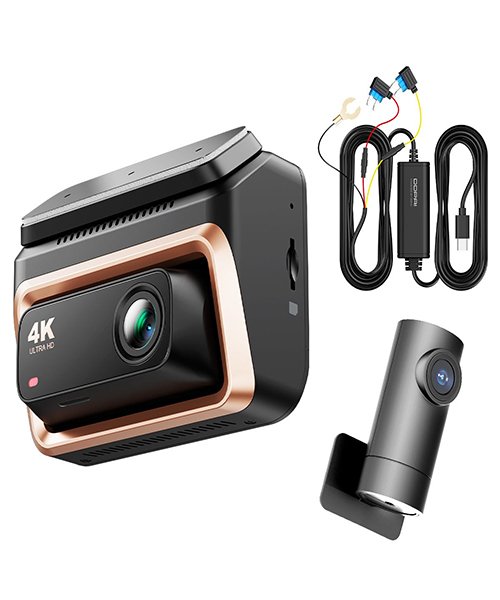
The Z60 has a solid “car electronics” build—compact but not ultra-minimal, with a clear focus on heat resilience thanks to a supercapacitor design. For drivers in warmer climates or cars that bake in the sun, this is a meaningful upgrade over battery-based dash cams.
Cabling and mounting are typical for a front + rear setup: expect a normal install effort, especially if you route the rear cable cleanly and plan to hardwire for parking mode.
Key Features
What stands out most on the Z60:
- 4K front recording paired with 1080p rear coverage
- Dual storage approach: 32GB internal eMMC plus microSD support up to 512GB
- 3-inch screen for easier aiming, setup, and quick playback
- 5GHz Wi-Fi for faster file transfers to your phone
- Supercapacitor for better heat tolerance
- Parking monitoring options (strongest when hardwired)
- Optional 4G ecosystem depending on bundle/add-ons
Performance / Real-World Use
Daytime: 4K front recording is most valuable for reading plates, capturing street signs, and preserving details during faster motion. In real driving, that typically means fewer “it’s too blurry to tell” moments when reviewing footage.
Night: Night footage is where dash cams separate quickly. The Z60 is marketed around improved night clarity (and in practice, the big variables are still street lighting, windshield condition, and how reflective your area is). Expect the best results when:
- your windshield is clean inside and out
- exposure isn’t fighting glare from a dirty glass or bright headlights
- you position the cam to minimize dashboard reflections
Parking: If you’re buying this for parking protection, treat the hardwire kit as part of the plan. Parking monitoring without stable power becomes a “sometimes” feature. With proper power, it’s far more consistent—and that’s where the Z60’s higher-end positioning actually makes sense.
Ease of Use
The screen makes setup simpler than models that force everything through the app. For many people, that’s a quality-of-life win:
- easier alignment during install
- faster basic settings changes
- quick spot-checks without pulling out your phone
That said, you’ll still likely use the app for:
- downloading clips
- changing finer settings
- managing storage behavior
Maintenance / Care
A dash cam is low-maintenance, but a few habits improve results:
- Clean your windshield monthly (inside matters as much as outside).
- Check memory card health periodically if you rely heavily on loop recording.
- In hot climates, make sure the mount adhesive is properly seated and cured.
- Keep lens area free from fingerprints and haze.
What I Like
- Dual storage (internal + microSD) is a genuine reliability upgrade
- 4K front footage is helpful when details matter
- Screen-based setup is easier for most people than app-only
- Heat-friendly supercapacitor design makes sense for real cars
- Strong fit for drivers who want parking protection, not just driving clips
What I Don’t Like
- To get the “full” experience (parking mode, clean wiring), installation takes time
- Premium features can be wasted if you never hardwire or never review footage
- App experiences can be subjective—some people love them, others want simpler
- If you only need basic front recording, this can be more camera than you need
Price & Value
The Z60 is priced as a premium-leaning dash cam, especially compared to basic 1080p front-only options. The value argument is strongest if you actually benefit from:
- 4K detail up front
- dual storage redundancy
- parking monitoring
- faster connectivity and a built-in screen
If your needs are “record the road occasionally,” a simpler model will often deliver better bang for the buck.
DDPAI Z60 Customer Reviews
Here’s what tends to come up most often when buyers talk about the Z60 experience:
Common themes people praise
- Video clarity (especially daytime detail and overall sharpness)
- Peace of mind from parking monitoring (when installed properly)
- Convenience of a screen and straightforward daily use
- Feature set that feels “high-end” without needing a separate display
Common complaints or friction points
- Install complexity (rear cable routing + hardwire setup)
- Learning curve for settings and app workflow
- Expectations mismatch (people expecting perfect plate capture in every night scenario)
Customer sentiment examples (paraphrased)
- “The daytime footage is crisp and I can actually make out details.”
- “Parking mode is the reason I bought it—works best once hardwired.”
- “Setup took a bit, but after that it’s basically set-and-forget.”
- “Night footage is good, but glare still happens depending on lighting.”
- “The screen makes it easier than my previous dash cam.”
Is the DDPAI Z60 Legit?
Yes—DDPAI is an established dash cam brand, and the Z60’s feature set (dual storage, 5GHz Wi-Fi, supercapacitor, 4K front recording) aligns with what you’d expect from a legitimate higher-tier model in this category.
Is the DDPAI Z60 Worth It?
The Z60 is worth it if you check at least two of these boxes:
- You park outside often and want real parking coverage
- You drive a lot and want clearer “what happened” evidence
- You care about details (plates, signage, lane context)
- You want reliability features like dual storage and heat-friendly design
It’s probably not worth it if:
- You rarely review footage and just want basic recording
- You won’t hardwire but still expect robust parking protection
- You prefer a cheaper “good enough” setup for occasional driving
DDPAI Z60 vs VIOFO
VIOFO is a popular competitor for drivers who want strong image quality and a more “dash cam traditional” ecosystem.
Quick comparison table:
Category | DDPAI Z60 | VIOFO (typical mid/high models) | Who wins |
Front video resolution | 4K | Often 4K on comparable models | Tie |
Storage reliability | Internal eMMC + microSD | Usually microSD only | Z60 |
Screen convenience | Built-in screen | Many models have screens | Tie |
Parking focus | Strong (best hardwired) | Strong (best hardwired) | Tie |
Ease for beginners | Screen helps, app still matters | Often straightforward | Slight edge: preference |
Best for | Drivers who want redundancy + features | Drivers who want proven, traditional options | Depends |
Discounts and Promotions
Dash cams frequently rotate through seasonal promotions, bundles, and limited-time codes. If you’re shopping, the practical move is to compare bundles (rear cam, hardwire kit, memory card) because “cheaper up front” can become more expensive once you add essentials.
Where Can I Buy DDPAI Z60?
The safest bet is buying through official brand channels or major authorized marketplaces where return policies are clear and warranty support is straightforward. (That matters more than people think with electronics.)
FAQs
1. DDPAI Z60 review: Is 4K really worth it in a dash cam?
Often yes—especially for daytime detail, signage, and capturing more usable evidence in motion.
2. Does the Z60 record front and rear at the same time?
Yes, it’s designed as a front + rear setup.
3. What storage does the Z60 use?
It uses internal storage plus microSD support, which can reduce the risk of losing clips if one storage method fails.
4. Do I need a hardwire kit for parking mode?
If parking monitoring is a key reason you’re buying, hardwiring is strongly recommended for consistent performance.
5. Is the Z60 good at night?
It’s positioned for improved night recording, but results still depend heavily on street lighting, glare, and windshield cleanliness.
6. Is a screen useful on a dash cam?
For most people, yes—setup, aiming, and quick playback become easier.
7. Will it work in hot climates?
The supercapacitor design is generally better for heat than battery-based dash cams, which is a plus for warm-weather drivers.
8. Does it support a rear camera?
Yes, rear camera support is part of the Z60 setup.
9. How hard is installation?
Front install is usually easy; routing the rear cable cleanly takes more time. Hardwiring adds complexity but improves parking reliability.
10. DDPAI Z60 Customer Reviews: what’s the most common praise?
Most praise centers on clear footage, strong feature value, and parking peace of mind (especially when properly installed).
Similar Dash Cams You Might Like
- VIOFO (strong image quality options, traditional dash cam lineup)
- Vantrue (popular for multi-channel setups and rideshare use cases)
- Thinkware (often chosen for premium parking features)
- BlackVue (premium ecosystem, cloud-oriented options)
- Garmin (simple, reliable cameras with a smaller form factor)
Final Verdict + Rating
If you want a dash cam that feels like a true “safety system” instead of a basic recorder, the Z60 makes a strong case. The combination of 4K front recording, dual storage redundancy, a usable screen, and serious parking potential hits the right notes for commuters and anyone who parks in public.
Just be honest about your habits: if you’ll never hardwire, rarely review footage, or want a simple “set it and forget it” camera under a tighter budget, you may not get full value here.
Rating: 8.7/10