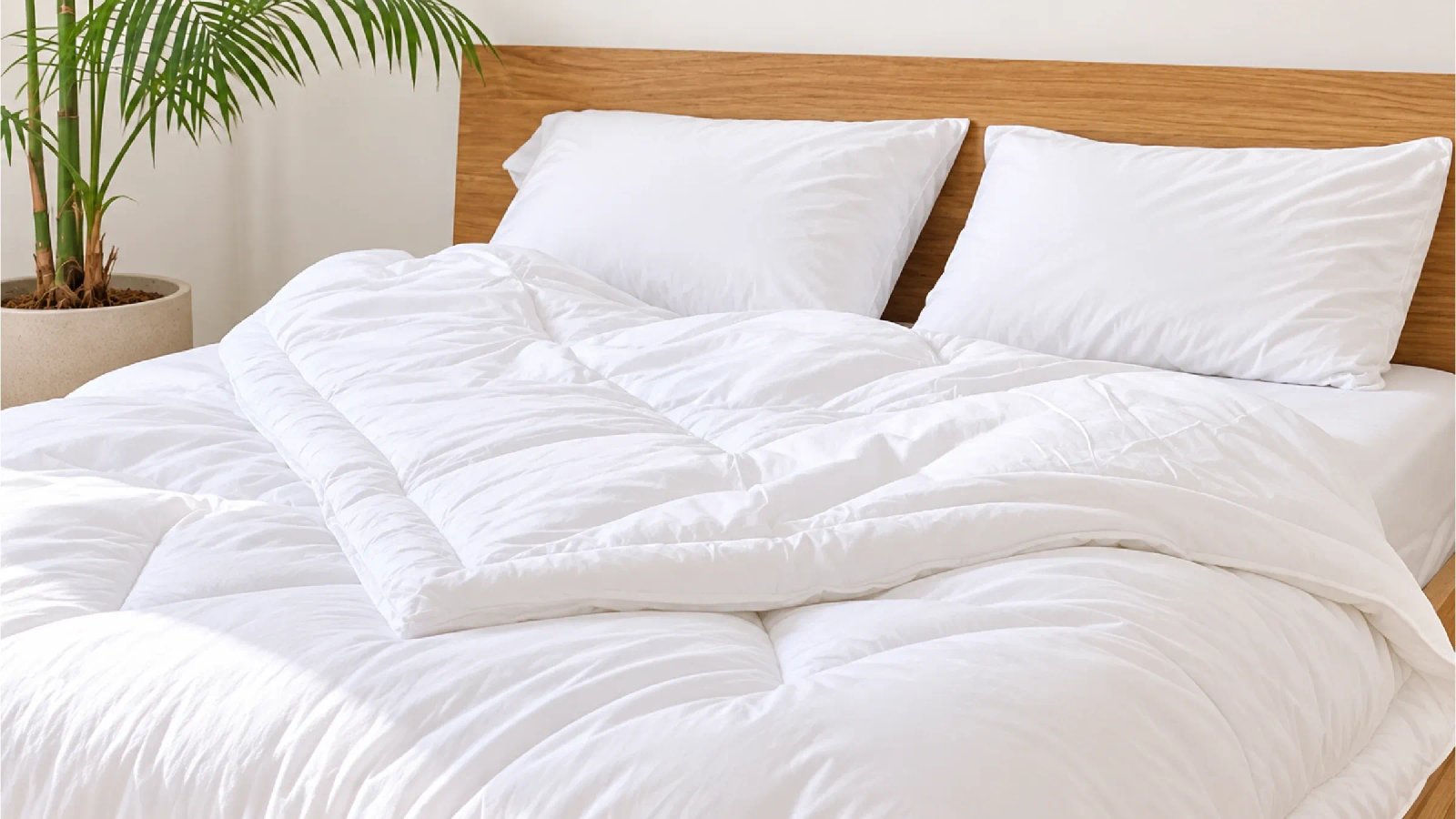
Buffy makes bedding from TENCEL lyocell instead of down or standard cotton, and the argument is temperature. The Cloud Comforter runs $149 for a Twin, $199 for a Full/Queen and $249 for a King, and has been named Good Housekeeping’s Best Overall Comforter. The lighter Breeze, made entirely from lyocell in both fabric and fill, runs $190 to $290 and was named Architectural Digest’s number one cooling comforter. Both come with a home trial. If you sleep hot, or you share a bed with someone who does, this is one of the few bedding brands where the material science is doing real work.
Buy it if / Skip it if
· Buy it if you overheat under a conventional down or down-alternative comforter
· Buy it if you want a down-free comforter that still feels substantial rather than thin
· Buy it if allergies or a down sensitivity have ruled out traditional bedding
· Buy it if you want colour options — ten shades on the Cloud is unusual for comforters
· Buy it if you are pregnant and need genuine full-body support, where the Wiggle is one of the better options
· Skip it if you run cold and want maximum warmth, where a heavier fill serves you better
· Skip it if you want to wash the comforter in a domestic machine, because these are bulky items
· Skip it if the lowest price per item is your only criterion — budget comforters cost a fraction of this
Who Buffy is
Buffy is a New York bedding company built around a single material decision: using TENCEL lyocell, derived from sustainably farmed eucalyptus, where the rest of the category uses down, cotton or polyester.
That decision drives everything. Lyocell handles moisture differently from cotton, which is why Buffy’s comforters are marketed on airflow and thermal conductivity rather than on fill power or thread count — the metrics the traditional bedding industry taught everyone to care about.
The line now covers two comforters, the Cloud and the Breeze, plus pillows, a pregnancy body pillow, a matelassé coverlet made in Santo Tirso in Portugal, organic cotton waffle throws, and the covers and accessories around them.
The customer is a hot sleeper, an allergy sufferer, or someone who has decided down is not for them — and who wants a comforter in a colour other than white.
What Buffy does differently
It publishes testable numbers rather than adjectives. Buffy states 32% higher airflow in lab testing, faster moisture removal than cotton, and up to 10 times higher thermal conductivity. Whether or not you can feel every percentage point, a bedding brand that commits to specific lab figures is behaving differently from one that says “breathable” and hopes.
There are two comforters for two different problems. The Cloud is the fluffy one with a lyocell shell, for people who want cosiness without the heat. The Breeze is lighter, with lyocell in both fabric and fill, for people whose actual complaint is overheating. Most brands sell one comforter in three weights and leave you to guess.
Down-free is the default, not a compromise line. The Cloud Pillow is filled with GRS-certified recycled fibre rather than feathers, and is certified OEKO-TEX CLASS I — the strictest tier, intended to be safe for infant use and meaningfully stricter than the CLASS II certification most bedding carries. For anyone buying on allergy grounds, that distinction matters.
The colour range is genuinely unusual. Ten shades on the Cloud — Almond Milk, Slate Blue, French Clay, Rose Clay, Fossil Grey, Porcelain, Heirloom Silver, Cherry Petal, Strata and White. Comforters are normally white because nobody thought to make them otherwise.
The range, decoded
Product | Price | Best for |
Hypoallergenic Cloud Pillow (Standard) | $50 | Down-free pillow, three firmness levels |
Hypoallergenic Cloud Pillow (King) | $75 | Same, larger |
Matelassé Coverlet (Throw) | $95 | Portuguese-made cotton layering piece |
The Wiggle Pregnancy Pillow | $109 | Full-body support through pregnancy |
The Organic Cotton Waffle Throw | $145 | Lightweight layering, four colours |
Cloud Comforter (Twin/Twin XL) | $149 | The entry size |
Breeze Comforter (Twin/Twin XL) | $190 | The cooling version, entry size |
Cloud Comforter (Full/Queen) | $199 | The volume seller |
Matelassé Coverlet (Full/Queen) | $245 | Layering over a duvet or alone in summer |
Cloud Comforter (King/Cal King) | $249 | Larger beds |
Breeze Comforter (Full/Queen) | $250 | Hot sleepers, standard size |
Breeze Comforter (King/Cal King) | $290 | Hot sleepers, larger beds |
Products worth your money
The Cloud Comforter — $149 Twin / $199 Full/Queen / $249 King
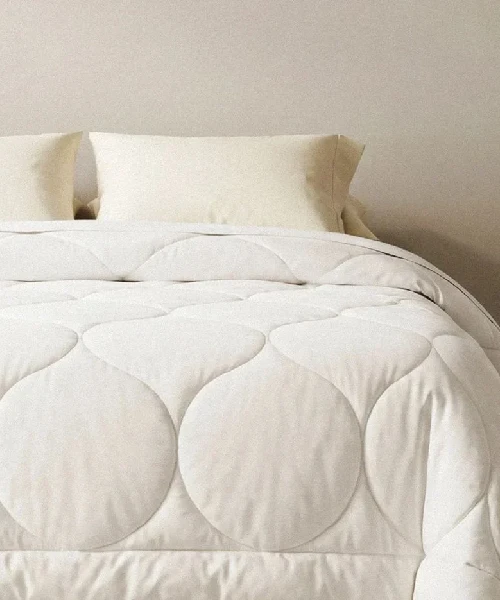
Best for: Most people. This is the default buy and the brand’s signature product.
Why it stands out:
· A TENCEL lyocell shell that fights humidity and heat under the covers while staying genuinely fluffy
· Named Good Housekeeping’s Best Overall Comforter, which is as mainstream a validation as this category offers
· Ten colourways, which means the comforter can be the visible layer rather than something you hide under a duvet cover
One honest limitation: It is a full-size comforter, so laundering means a commercial machine or professional cleaning rather than your home drum.
Bottom line: The right starting point, and at $199 for a Full/Queen it is priced sensibly against down alternatives.
The Breeze Comforter — $190 Twin / $250 Full/Queen / $290 King
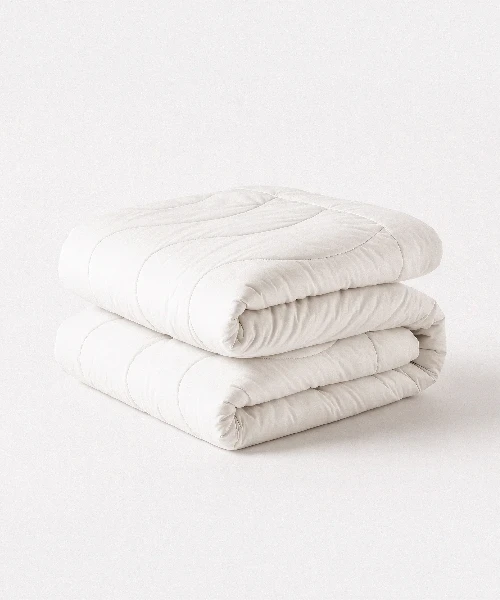
Best for: Genuine hot sleepers, and anyone whose main complaint is waking up overheated.
Why it stands out:
· Both the fabric and the fill are TENCEL lyocell, rather than only the shell — a meaningfully different construction from the Cloud
· Named Architectural Digest’s number one Best Overall Cooling Comforter
· Lightweight by design, with the same lab figures on airflow, moisture removal and thermal conductivity
One honest limitation: Lighter means less insulation — if your bedroom is cold in winter, you will want a layer over it.
Bottom line: The one to buy if heat is the actual problem rather than a general preference for something breathable.
The Hypoallergenic Cloud Pillow — $50 Standard / $75 King
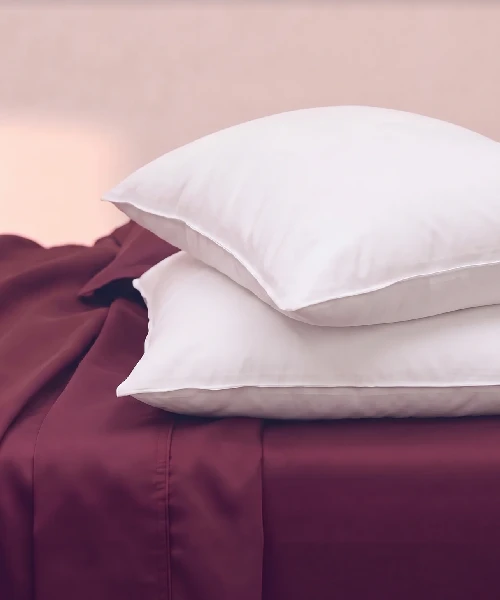
Best for: Anyone replacing a down pillow, and the cheapest way to test whether Buffy’s materials suit you.
Why it stands out:
· Certified OEKO-TEX CLASS I, the strictest tier, designed to be safe enough for infant use
· Filled with GRS-certified recycled fibre instead of down, and cased in hypoallergenic lyocell from Austrian eucalyptus
· Available in Soft, Medium and Firm, and fully machine washable — unlike the comforters
One honest limitation: Down-free pillows compress differently from feather pillows, and side sleepers used to down may need the Firm.
Bottom line: At $50 it is the sensible first purchase, and the washability makes it the most practical item in the range.
The Wiggle Pregnancy Pillow — $109
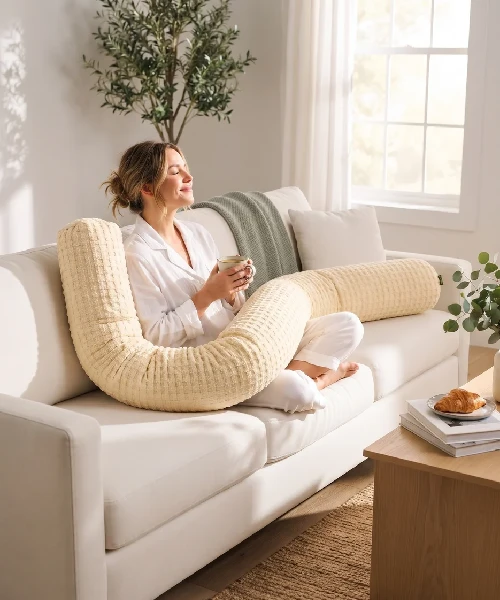
Best for: Pregnancy, and anyone who wants a body pillow that bends to them.
Why it stands out:
· Flexible full-body construction that bends and wraps to support bump, back, hips and knees as the body changes
· Named The Strategist’s Best Extra-Long Body Pillow, which is a competitive category
· Works beyond pregnancy for side sleeping, lounging and nursing, so it does not become redundant
One honest limitation: The cover is sold separately, which adds to the real cost.
Bottom line: A genuinely useful product rather than a brand extension, and well priced for what it is.
What owners actually say
Consistently praised:
· Temperature regulation, which is the most repeated point and the reason most people buy
· The Cloud’s loft — owners describe it as fluffy without the heat they expected to come with it
· Colour options, with buyers noting they stopped needing a duvet cover
· The pillow’s firmness choice, which removes most of the guesswork
Consistently criticised:
· Washing logistics on the comforters, which are too bulky for most home machines
· The lyocell needing gentler care than cotton over time
· Price against basic down-alternative comforters, which cost considerably less
· Some owners wanting more warmth from the Breeze in winter
The money question
A $199 Full/Queen comforter is above supermarket bedding and below the premium end, and the honest framing is what problem you are solving.
If you sleep fine and just need something on the bed, cheaper comforters exist and will work. The value argument here rests entirely on temperature — if you are the person who kicks the duvet off at 2am and pulls it back at 5am, that is a nightly problem, and a $199 fix for a nightly problem is reasonable arithmetic.
Within the range, the Cloud at $199 is the better all-round value. The Breeze at $250 costs $51 more for the same size and is only worth it if you are specifically and consistently too hot. Buy the Cloud unless you know you are a hot sleeper.
The pillow at $50 is the easiest entry point and the item where the certification story is strongest. The coverlet at $245 for a Full/Queen is a nice piece made in Portugal, but it is layering rather than necessity.
Buffy’s products carry a home trial — check the current terms at checkout, since bedding you sleep under for one night tells you very little and a trial period is the only way to judge this properly.
How it compares
Buffy | Brooklinen | Casper | |
Core material | TENCEL lyocell | Cotton and down options | Mixed, performance fabrics |
Cooling focus | The entire proposition | One option among several | Secondary |
Down-free | Default across the range | Down and down-alternative both | Mostly down-alternative |
Comforter colours | Ten on the Cloud | Fewer | Limited |
Entry price (Full/Queen) | $199 | Comparable | Comparable |
Who it suits | Hot sleepers and allergy sufferers | Buyers wanting cotton sheets and down | Buyers already in the Casper ecosystem |
Buying it
Buy from buffy.co, where the full colour range and both comforters live. Pay attention to which comforter you are ordering — the Cloud and the Breeze are genuinely different products and the names are easy to confuse.
Confirm the current trial and returns terms at checkout. Bedding is the category where a trial matters most, because the first night under anything new tells you almost nothing and the third week tells you everything.
For care: the pillow is fully machine washable, the comforters are not practical in a domestic machine. Factor in professional cleaning or a laundromat trip once or twice a year.
On discounts: Buffy runs periodic promotions, with the deepest around Black Friday and at seasonal changeovers. Colourways rotate, so if a specific shade suits your room, buy it rather than waiting.
Questions people ask
What is the difference between the Cloud and the Breeze?
The Cloud has a TENCEL lyocell shell and is the fluffier, cosier option at $199 for a Full/Queen. The Breeze uses lyocell in both the fabric and the fill, is lighter, and is built specifically for hot sleepers at $250 for the same size.
Is it actually cooler, or is that marketing?
Buffy publishes specific figures: 32% higher airflow in lab testing, faster moisture removal than cotton, and up to 10 times higher thermal conductivity. Independent recognition includes Good Housekeeping naming the Cloud Best Overall Comforter and Architectural Digest naming the Breeze its top cooling comforter.
What is TENCEL lyocell?
A fibre derived from sustainably farmed eucalyptus, used across Buffy’s range in place of down or cotton. It handles moisture differently, which is the basis of the brand’s temperature claims.
Can I wash it at home?
The Cloud Pillow is fully machine washable. The comforters are bulky and generally need a commercial machine or professional cleaning — plan for that before buying.
Is it suitable for allergies?
The range is down-free throughout. The Cloud Pillow is certified OEKO-TEX CLASS I, the strictest tier, and filled with GRS-certified recycled fibre rather than feathers. If you have a diagnosed allergy, confirm the specifics with your doctor rather than relying on a product page.
Which pillow firmness should I choose?
Soft for stomach sleepers, Medium for back sleepers, Firm for side sleepers who need more neck support. All three are $50 in Standard and $75 in King.
The verdict
Most bedding is sold on adjectives. Buffy sells on a material decision and then publishes numbers against it, which in a category built on thread-count theatre is refreshing enough to be worth noting on its own.
The product reasoning holds up too. Splitting the range into the Cloud for people who want cosiness without overheating and the Breeze for people whose actual problem is heat is a genuinely useful distinction, and it is the kind of thing a brand only does if it is paying attention to what customers actually complain about. The ten-colour Cloud range is the other quiet good decision — comforters are white by default because nobody questioned it, and Buffy did.
The caveats are practical rather than philosophical. These are bulky items that are awkward to launder at home, the lyocell asks for gentler care than cotton, and if you run cold the Breeze will leave you reaching for a blanket. None of that is hidden; it is just what you are buying.
Buy the Cloud at $199 unless you know you sleep hot, in which case buy the Breeze. Start with the $50 pillow if you want to test the materials first. And use the trial period properly — three weeks of real nights is the only honest way to judge a comforter.
Leave a comment