
Merino Wool Base Layers: How to Choose the Right Weight
Most people buying their first merino base layer buy one that’s too warm. It’s an easy mistake, because almost every buying guide online points at the same heavyweight top as “best overall,” and because heavier fabric sounds like better value when you’re paying over $100 for a long-sleeved shirt.
But a base layer that’s too warm doesn’t just make you hot. It makes you damp, and damp is the thing merino is supposed to prevent. Get the weight wrong and you’ve bought an expensive garment that performs worse than a cheap synthetic one.
The good news is that merino is one of the easier technical fabrics to shop for, because the two specifications that matter are both published as plain numbers. The problem is that they’re frequently confused with each other, and the brands have recently made it harder by changing how they label things.
GSM is warmth. Micron is softness. They’re not the same number.
GSM means grams per square meter. It’s the density of the knit, and it is the number that determines how warm a garment is. More grams per square meter, more fabric, more trapped air, more warmth.
Micron measures the diameter of the individual wool fibre. It determines how the fabric feels against your skin, and it has nothing to do with warmth. Finer fibres — lower micron numbers — feel softer and less prickly. This is the difference between merino and the scratchy wool jumper you remember from childhood. Icebreaker publishes it plainly: the smaller the micron, the finer the fibre, the softer it feels. Typical base layer merino runs around 17 to 19 micron.
These get conflated constantly. One widely-read guide describes a top’s “naturally high micron count” as the reason it feels soft against skin, which is backwards — high micron means coarse. If a guide can’t keep these two straight, be cautious about the rest of what it tells you.
What this means for you: choose GSM for your climate and activity. Treat micron as a comfort check — anything at or below about 18.5 micron will feel fine next to skin for most people.
The weight bands, and why heavier is usually wrong
Here’s the rough mapping most of the industry works to:
Weight | GSM | Suits |
Lightweight | 150–175 | High-output activity, mild cold, travel, layering |
Midweight | 200–250 | General winter wear, skiing, cold walks |
Heavyweight | 260–400 | Sitting still in deep cold — camping, ice fishing, stationary work |
The standard advice is that midweight is the all-rounder, and for everyday winter wear that’s correct. But the band is wide, and the difference between 200 and 250 GSM is more significant than the small gap in numbers suggests.
The key variable is how hard you’re working. A base layer’s job is to move moisture away from your skin. If you’re generating heat — hiking uphill, skiing hard, walking briskly — a heavy layer traps that heat, you sweat into it, and because merino dries slowly, you then sit in a damp shirt. Reviewers consistently report that 250 GSM merino becomes uncomfortable once you start working, and that it dries slowly when it gets wet.
If you’re mostly stationary in the cold — sitting at a campsite, standing on a sideline, sleeping in a cold room — the heavier fabric earns its weight.
The practical rule: pick your weight based on output, not temperature. Active in cold weather, go 150–200. Static in cold weather, go 250 and up. If you’re buying one layer to do everything, 200 GSM is the most forgiving choice.
The labelling has got worse, not better
This is worth knowing before you shop, because it affects how you compare products.
Icebreaker uses a straightforward system: the number in the product name is the GSM. A Merino 200 Oasis is 200 g/m². A 175 Everyday is 175 g/m². The bigger the number, the warmer the garment. You can compare across their whole range at a glance.
Smartwool used to do the same — the Merino 150, Merino 250 and so on. They’ve since renamed the lines to Classic All-Season (150 g/m²) and Classic Thermal (250 g/m²), which removes the number from the product name entirely. The fabric hasn’t changed; the label has. If you’re comparing a Smartwool product against an Icebreaker one, you now have to look the GSM up rather than read it off the name.
This also means a lot of online content is out of date, still referring to the Merino 250 as a current product name. It’s the same garment, now called Classic Thermal.
A related warning: because this category attracts a huge volume of automatically-generated affiliate content, specification errors are widespread. Several currently-ranking guides describe the Icebreaker Oasis as a 260 GSM corespun fabric. Icebreaker’s own product page lists the Merino 200 Oasis as 200 g/m² and 100% merino wool. Check the manufacturer’s site before trusting a number you read in a roundup — including this one.
100% merino or a nylon blend? This decides how long it lasts
This is the specification that most affects whether you’re happy with the purchase in two years, and it’s rarely discussed.
Pure merino is soft, warm for its weight, and excellent at resisting odour. It is also fragile. Merino fibres abrade, and base layers abrade in predictable places — under pack straps, at the elbows, at the seat and inner thigh on bottoms. Pure merino base layers develop thin patches and holes faster than synthetics do.
The solution the industry uses is corespun yarn: merino fibres spun around a nylon filament core. You keep most of the softness and odour resistance, and you gain substantial durability.
The two big brands have taken different positions. Smartwool blends nylon into a number of its lines, which is why it has a reputation for lasting longer. Icebreaker has committed to natural fibres across much of its range, which means softer fabric and shorter life.
Neither is wrong. It’s a trade-off, and which side you want depends on use.
Choose pure merino if: comfort matters most, you wear it under loose clothing, you’re not carrying a pack, and you’ll treat it carefully.
Choose a nylon blend if: you wear a backpack, you’re hard on clothes, or you want this to last several seasons.
The three picks
Icebreaker Merino 200 Oasis | Smartwool Classic Thermal | Budget merino (Minus33, Meriwool) | |
GSM | 200 | 250 | 230–250 |
Fibre | 100% merino | 100% merino | 100% merino |
Knit | Jersey | Interlock | Varies |
Price | Around $105 | Around $125 MSRP | Around $50–70 |
Best for | One layer for most things | Static cold, sleeping, deep winter | Second set, occasional use |
Watch for | Durability — no synthetic core | Too warm for active use, dries slowly | Inconsistent sizing |
Icebreaker Merino 200 Oasis — the one to buy first
If you’re buying a single merino base layer and you don’t yet know how you’ll use it, this is the sensible choice. At 200 g/m² it sits in the middle of the midweight band — warm enough for a cold day standing around, light enough that you won’t cook on a hike.
The fabric is genuinely good. It’s 100% merino, soft against the skin with no scratchy tags, flatlock seams that don’t chafe, and the odour resistance merino is known for, which makes it well suited to travel and multi-day trips where you can’t wash things.
The compromise is durability. Because Icebreaker doesn’t blend in nylon here, this will wear faster than a corespun equivalent, particularly under a pack. It also dries slowly, which is a characteristic of all heavier merino rather than a fault specific to this garment, but worth planning around if you’re wearing it on consecutive days.
Buy it if: you want one layer that handles most cold-weather situations and you value next-to-skin comfort.
Skip it if: you’ll be carrying a pack regularly or you’re hard on clothing.
Smartwool Classic Thermal
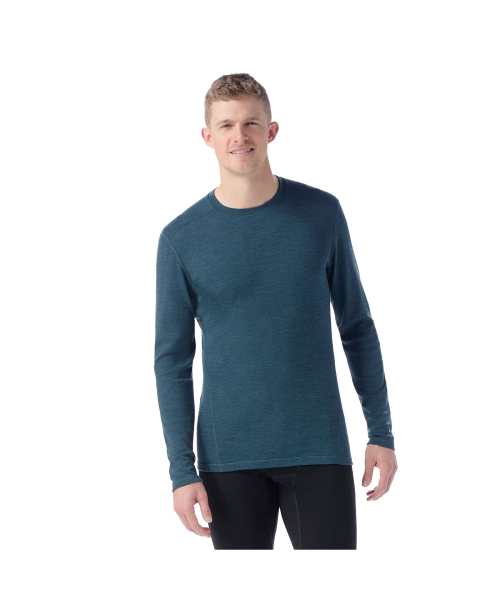
Formerly sold as the Merino 250, this is Smartwool’s warmest 100% merino top. At 250 g/m² in an interlock knit — denser than the jersey knit used in lighter layers — it traps noticeably more air than a 200-weight garment.
That makes it excellent at one specific job: keeping you warm when you aren’t moving much. Cold camps, winter sleeping, sitting outside, low-output work in genuinely cold conditions. Reviewers rate it among the warmest and softest base layers available.
The same density works against it everywhere else. It is too warm for hard hiking or active skiing, where you’ll overheat and sweat into it, and it dries slowly once damp. At $125 MSRP it’s also expensive for a garment that, being pure merino, wears out faster than a synthetic would. It discounts regularly — it has been seen at REI around the $80 mark — so there’s rarely a good reason to pay full price.
Buy it if: you’re cold when stationary and want maximum warmth from a base layer.
Skip it if: you’re active in it. Buy the 200-weight instead.
Budget merino
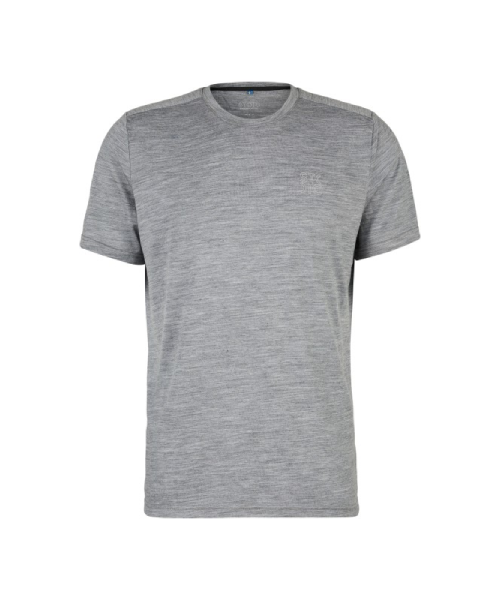
Brands like Minus33, Meriwool and Merino.tech sell 100% merino base layers at roughly half the price of the established names, typically in the 230–250 GSM range and often at around 18.5 micron.
The fabric in this bracket is generally decent. Where these differ from the premium brands is in consistency — sizing varies more, seam finishing is less refined, and long-term durability reports are mixed, with thinning at high-friction points being the common complaint on bottoms.
For a second set, for occasional winter use, or for finding out whether you actually like merino before committing $125 to it, these make complete sense. For a layer you’ll wear four days a week all winter, the premium brands tend to justify themselves over a few seasons.
One caveat: check the GSM is actually stated. Listings in this bracket sometimes advertise “midweight” or “heavyweight” without a number, which tells you nothing. If a seller won’t state GSM, they may not know it.
How to look after it
Merino lasts far longer with modest care, and most of the damage people do to it is avoidable.
Wash it less. This is the whole point of merino. It resists odour well enough that you can wear it several days between washes. Every wash cycle is wear.
Wash cold, gentle. Hot water felts wool — the fibres mat together and the garment shrinks and stiffens permanently. This is not recoverable.
Skip the fabric softener. It coats the fibres and destroys the moisture-wicking behaviour you paid for.
Don’t tumble dry unless the label specifically permits it. Lay it flat. Hanging a wet wool garment stretches it out of shape.
Turn it inside out before washing to reduce pilling on the outer face.
Frequently asked questions
What GSM should I get if I’m only buying one?
200. It’s the most versatile point in the range — warm enough for most winter days, not so warm that you overheat when active.
Does higher micron mean warmer?
No. Micron is fibre thickness and affects softness only. GSM determines warmth. Lower micron feels softer.
Is merino better than synthetic?
For odour resistance and comfort, yes, clearly. For durability and drying speed, synthetics win. Many people end up using merino for multi-day trips and travel, and synthetics for high-sweat activity.
How many days can you wear merino without washing?
Several. The odour resistance is real and is one of merino’s genuine advantages. There’s no fixed number — it depends on how hard you’ve worked in it.
Why do merino base layers get holes?
Abrasion. Merino fibres are not very abrasion-resistant, and base layers rub under pack straps and at the seat. Corespun fabric with a nylon core substantially reduces this.
Is 250 GSM too warm for skiing?
For most resort skiing, yes — you generate a lot of heat. 200 GSM is the better choice unless conditions are genuinely severe or you spend a lot of time stationary on lifts in deep cold.
The recommendation
Buy the Icebreaker Merino 200 Oasis if you’re buying one layer. It’s the weight that handles the widest range of conditions, and the fabric quality is excellent.
Buy the Smartwool Classic Thermal as a second, warmer layer for sitting still in the cold — and wait for it to discount, which it does reliably.
Buy budget merino if you want to find out whether merino suits you before spending premium money, or if you need several sets. Just check the GSM is stated on the listing.
And if you carry a pack regularly, prioritise a corespun or nylon-blended fabric over a pure merino one, whatever the brand. Durability is the thing most people wish they’d weighted more heavily the second time they buy.
Leave a comment