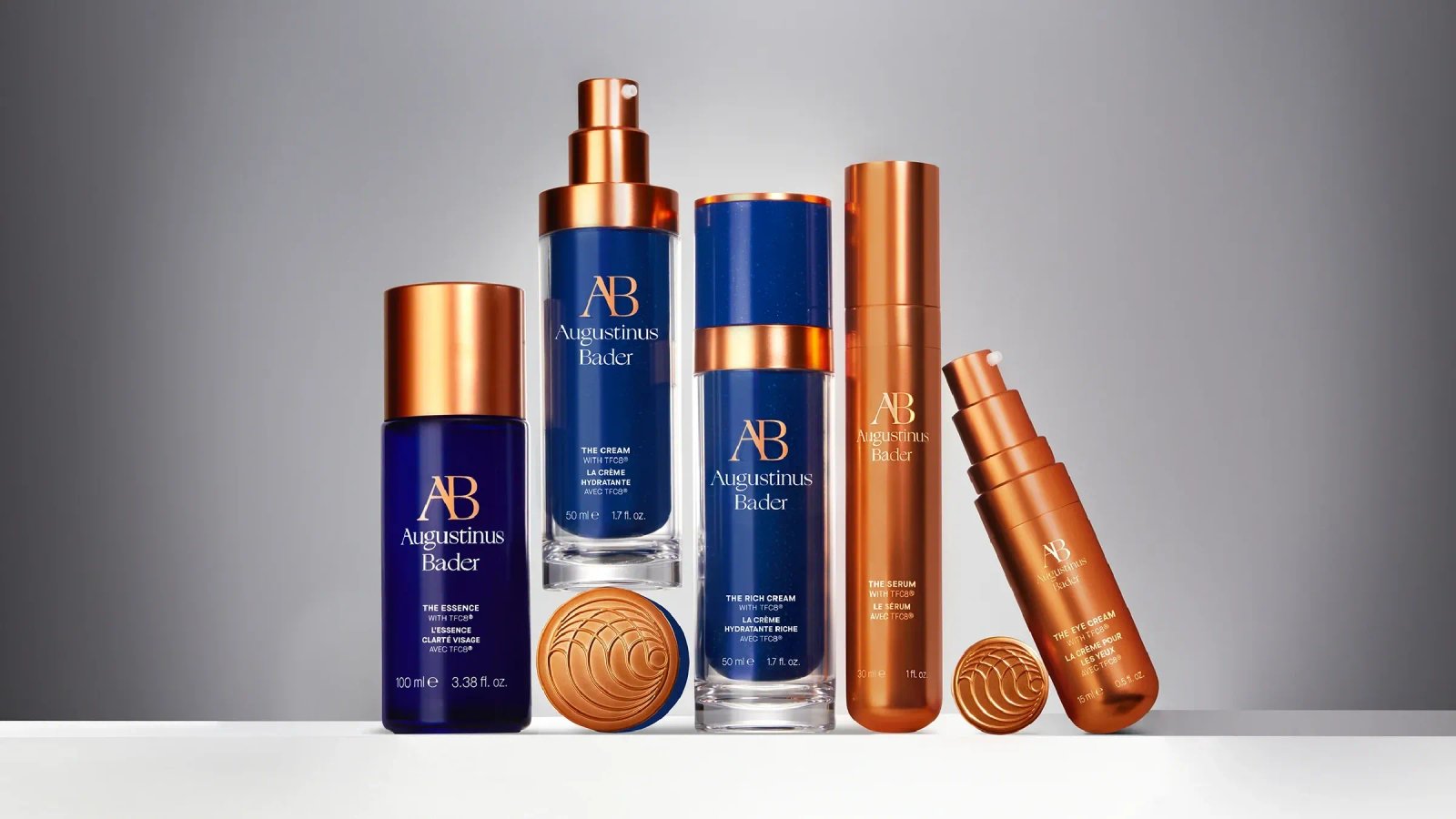
Augustinus Bader is luxury skincare built around a named scientist and a proprietary ingredient complex called TFC8. The Cream, the product that launched the brand, runs $99 for 15ml, $195 for 30ml, $315 for 50ml and $565 for 100ml. A cleansing gel starts at $26. The brand has grown into body care, a Victoria Beckham Beauty joint venture and limited-edition accessories. Whether this is worth the money depends almost entirely on what you think you are paying for — and it is worth being precise about that before spending $315.
Buy it if / Skip it if
· Buy it if you have tried mid-market moisturisers for years and want to see whether the top of the market behaves differently
· Buy it if you want one high-performing moisturiser rather than a seven-step routine
· Buy it if the texture and sensory experience of skincare matter to you as much as the ingredient list
· Buy it if you are buying a gift at the luxury end and want something with a reputation behind it
· Buy it if you want to start small — the $26 cleansing gel and $99 travel Cream exist for exactly this
· Skip it if you evaluate skincare purely on published clinical evidence for the finished formula
· Skip it if your routine is already working, because nothing here will outperform consistent basics by $300 worth
· Skip it if you have reactive skin and have not patch-tested — spend less until you know
Who Augustinus Bader is
The brand carries the name of Professor Augustinus Bader, a German biomedical scientist based at the University of Leipzig whose research career has centred on regenerative medicine and wound healing, including work on treating severe burns. The skincare line launched in 2018, built around a proprietary ingredient complex the brand calls TFC8, or Trigger Factor Complex, with a newer Advanced TFC8 in some products.
The range has expanded considerably. Face care spans The Cream and its richer sibling, cleansers, serums and eye products. Body care covers cream, oil and cleanser. There is a joint venture with Victoria Beckham Beauty producing colour products including a concealer pen and an illuminator, and limited-edition accessory collaborations with the French maker L/UNIFORM.
The customer is at the top of the skincare market, cross-shopping La Mer and Dr. Barbara Sturm rather than drugstore brands, and buying partly on the strength of the name on the jar.
What Augustinus Bader does differently
The brand is built on a scientist, not a founder story. Most luxury skincare is named after a person who commissioned a formula. This is named after a researcher with a published academic career in regenerative medicine, and that distinction is the whole reason the brand got the attention it did at launch. It is a genuinely unusual position in beauty.
The proposition is simplicity rather than layering. Augustinus Bader’s pitch has always been that you need fewer products, not more — a cleanser and a cream, applied consistently. In a category that keeps adding steps, telling customers to buy less is unusual and commercially brave.
The range is tiered so you can test it cheaply. The Cream at 15ml for $99 and the Cream Cleansing Gel at 30ml for $26 mean the entry point is not $315. Plenty of luxury brands make trial sizes hard to find; here they are part of the structure.
The collaborations are substantive rather than cosmetic. The Victoria Beckham Beauty joint venture produces actual products — a concealer pen in 19 shades at $68, an illuminator at $80 for 20ml — formulated with the brand’s own technology rather than a logo licensing deal.
The range, decoded
Product | Price | Best for |
The Cream Cleansing Gel (30ml) | $26 | The cheapest way to try the brand |
The Body Cleanser (200ml) | $58 | Body care entry point |
The Concealer Pen (AB x Victoria Beckham) | $68 | 19 shades, skincare-led coverage |
The Cream Cleansing Gel (100ml) | $76 | The full-size daily cleanser |
The Cell Rejuvenating Illuminator (20ml) | $80 | Primer and complexion enhancer |
The Cleansing Balm (90g) | $84 | Makeup removal without stripping |
The Cream (15ml) | $99 | Travel size, and the sensible trial |
The Body Cream (100ml / 200ml) | $115 / $200 | Body, with firming and smoothing claims |
The Cream (30ml / 50ml / 100ml) | $195 / $315 / $565 | The hero product at full size |
Products worth your money
The Cream — $99 (15ml) to $565 (100ml)
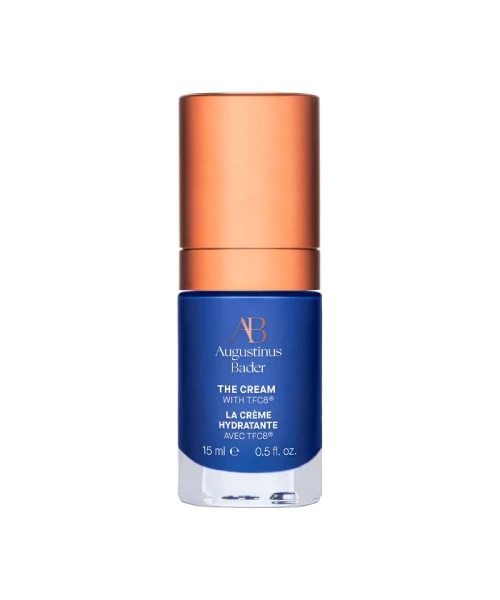
Best for: The product everything else in the brand orbits, and the only real reason to come here.
Why it stands out:
· The brand’s lighter daily moisturiser, which it says brightens, visibly reduces the appearance of dark spots and wrinkles, and supports skin cell renewal
· Powered by TFC8, the proprietary complex that is the entire technological claim of the brand
· Four sizes, which means you can test it at $99 rather than committing $315 to find out
One honest limitation: $315 for 50ml is among the highest prices in mainstream skincare, and no moisturiser can be objectively worth that — only subjectively.
Bottom line: Buy the 15ml first. If after six weeks you can see the difference, buy the 50ml. If you cannot, you have saved $216.
The Cream Cleansing Gel — $26 (30ml) / $76 (100ml)
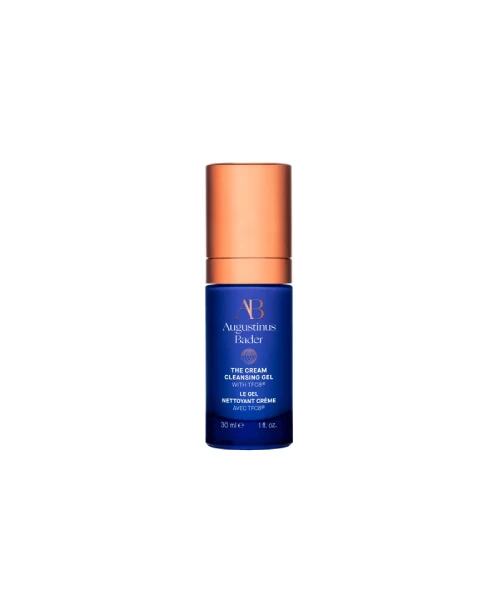
Best for: The genuine value pick, and the best way into the brand.
Why it stands out:
· A daily gel cleanser with soothing botanicals, formulated with TFC8 like the rest of the range
· At $26 for the travel size, it is the only Augustinus Bader product priced like normal skincare
· Pairs with the brand’s simplicity argument — cleanser plus cream is the whole routine they recommend
One honest limitation: $76 for 100ml of cleanser is still well above what effective cleansers cost, and cleanser is the step where spending less matters least.
Bottom line: Start here. It tells you whether the textures suit your skin for a fraction of the risk.
The Cleansing Balm — $84 (90g)
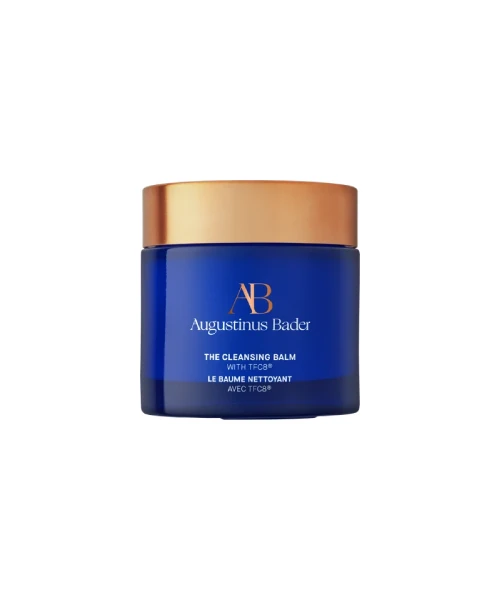
Best for: Anyone who wears makeup daily and dislikes the tight feeling after removing it.
Why it stands out:
· A balm-to-oil formula that dissolves makeup and impurities without stripping, which is the main complaint about most makeup removers
· Conditioning rather than drying, which matters most for anyone with dry or mature skin
· 90g is a substantial size that lasts considerably longer than the price suggests per use
One honest limitation: Excellent cleansing balms exist at a third of this price, and the difference is subtler than in moisturisers.
Bottom line: A good product that is hard to justify unless you are already invested in the range.
The Body Cream — $115 (100ml) / $200 (200ml)
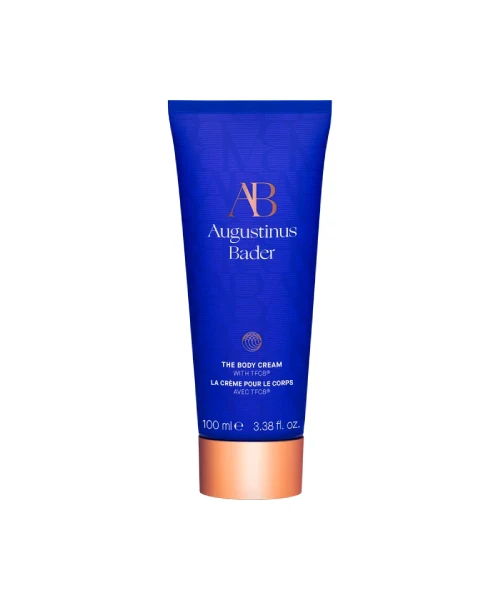
Best for: Extending the routine below the jaw, or gifting.
Why it stands out:
· A rich body moisturiser the brand says firms and smooths, and reduces the appearance of cellulite and stretch marks
· The same TFC8 technology as the face products, rather than a watered-down body version
· The 200ml jar at $200 is better value per ml than the 100ml tube at $115
One honest limitation: Body skin is less responsive to active skincare than facial skin, which makes this the hardest product in the range to justify.
Bottom line: A luxury gift rather than a necessity, and the 200ml is the size to buy if you buy it.
What owners actually say
Consistently praised:
· Texture, which comes up more than any other point — owners describe it as absorbing differently from other high-end creams
· Visible improvement in skin texture and radiance over several weeks of consistent use
· Simplicity, with owners reporting they cut their routine down after switching
· The travel sizes making the brand testable
Consistently criticised:
· Price, which is the overwhelming objection and not a surprising one
· Scepticism about whether the results justify the premium over cheaper actives
· Fragrance sensitivity for a minority of users
· The gap between the scientific framing and the specific evidence available for the cosmetic formula
The money question
Here is the part worth being precise about, because the brand’s positioning invites confusion.
Professor Bader’s academic reputation rests on published research in regenerative medicine and wound healing. That work is real and it is the reason the brand exists. What it does not automatically establish is a clinical evidence base for the cosmetic formula in the jar — those are different claims, tested to different standards, and the brand’s product claims are cosmetic ones about appearance, not medical ones. Anyone buying on the assumption that the science behind the burns research transfers directly to the moisturiser is buying something that has not been demonstrated.
What you are actually paying for is a very well-formulated luxury moisturiser with an unusual texture, made by a company with a serious scientific identity, in a category where $315 creams are not unusual. If that is a reasonable use of your money, nothing here is a con. If you expected peer-reviewed proof that it outperforms a $40 cream, that proof is not what is on offer.
The sensible approach: start at $26 for the cleansing gel or $99 for the 15ml Cream, use it consistently for six to eight weeks, and decide with your own skin rather than the marketing. If you do commit, the larger sizes are substantially better value per ml.
How it compares
Augustinus Bader | La Mer | Dr. Barbara Sturm | |
Founding story | Regenerative medicine researcher | Aerospace physicist, Miracle Broth | Aesthetics doctor |
Signature claim | TFC8 complex | Miracle Broth | Anti-inflammatory approach |
Entry price | $26 (cleansing gel) | Higher | Comparable |
Hero price | $315 (50ml Cream) | Comparable or higher | Comparable |
Who it suits | Buyers wanting simplicity and a science identity | Buyers wanting heritage luxury | Buyers focused on inflammation and sensitivity |
Buying it
Buy from augustinusbader.com, which runs separate US, UK and EU stores — check you are on the right one, as pricing and some product variants differ by region. The brand is also stocked by major luxury retailers.
Start with a small size. The 15ml Cream at $99 and the 30ml cleansing gel at $26 exist precisely so you can test before committing, and there is no sensible reason to buy a $315 jar of anything before you know how your skin responds.
As with any new skincare, patch-test before applying broadly, particularly if your skin is reactive. If you have a specific skin condition, that is a conversation for a dermatologist rather than a product page.
On discounts: luxury skincare rarely discounts directly. The gift sets are where the value sits — the seasonal collections bundle multiple products below the sum of their parts, and the advent-style sets appear each autumn.
Questions people ask
What is TFC8?
TFC8, or Trigger Factor Complex, is the brand’s proprietary ingredient complex and the technological claim at the heart of every product. A newer Advanced TFC8 appears in some formulations.
Is there real science behind it?
Professor Bader has a published academic career in regenerative medicine and wound healing. The cosmetic products make appearance-based claims, which is a different category of claim from medical research. Both things are true at once, and it is worth holding them separately.
Which size of The Cream should I buy?
Start with the 15ml at $99. The 50ml at $315 is the standard size and better value per ml, but only buy it once you know the product works for you.
What is the difference between The Cream and The Rich Cream?
The Cream is the lighter daily moisturiser. The Rich Cream is the heavier formulation, generally suited to drier skin or colder months. Both sit on the same technology.
Is the Victoria Beckham line the same brand?
It is a joint venture between Augustinus Bader and Victoria Beckham Beauty, producing colour products such as the Concealer Pen at $68 and the Cell Rejuvenating Illuminator from $80, formulated with the brand’s own technology.
How long until I see anything?
Give any skincare six to eight weeks of consistent use before judging it. Anything that appears in three days is hydration, not change.
The verdict
Augustinus Bader arrived in 2018 with the most credible founding story in luxury skincare — an actual research scientist with an actual academic record, in a category where founders usually have a publicist instead. That credibility is why the brand went from launch to cultural fixture faster than almost anything in beauty, and it remains the main reason people reach for a $315 jar.
The products themselves are good. The textures are distinctive, the cleansers are pleasant, and the brand’s insistence that you need fewer products rather than more is both unusual and sensible advice. For a brand that could easily sell you an eleven-step routine, telling customers to use two things is worth some credit.
The honest reservation is about what the science establishes. Research into wound healing and regenerative medicine is not the same thing as clinical proof that a cosmetic moisturiser outperforms its competitors, and the brand’s positioning encourages a conflation that the evidence has not closed. That does not make the products bad. It makes them expensive luxury skincare with an unusually serious identity, which is a fair description and a fair thing to buy.
Start at $26. Give it two months. Let your own skin decide, and buy the big jar only after it has.

Leave a comment