

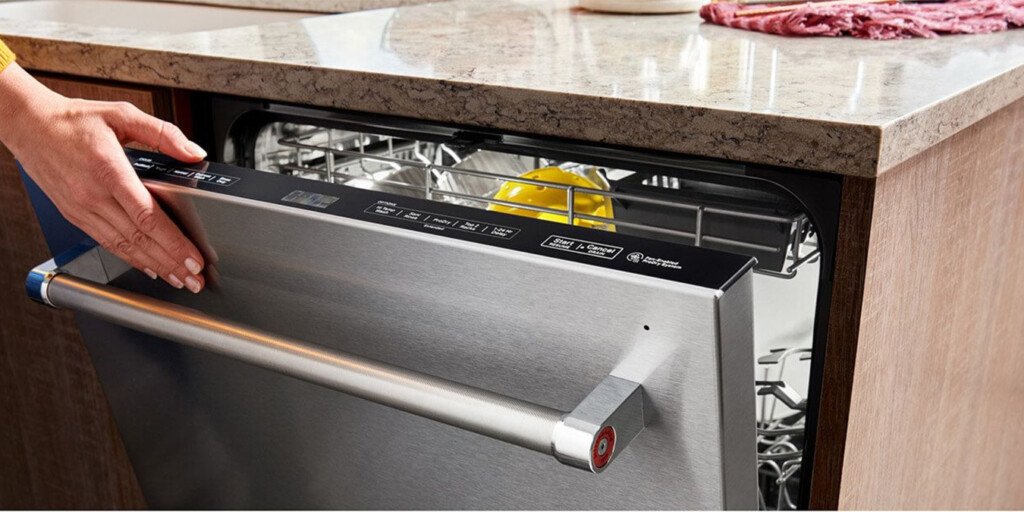

KitchenAid dishwashers tend to attract the same kind of shopper: someone who’s tired of re-washing “clean” dishes, wants a quieter kitchen, and doesn’t mind paying more for a machine that feels like a real upgrade—not just a basic box that sprays water.
In this KitchenAid Dishwashers review, I’m breaking down what KitchenAid usually does best (cleaning and rack design), where expectations should be realistic (drying performance depends on your preferences), and how to pick the right tier for your household—because not every kitchen needs the most premium model.
If you’ve been combing through KitchenAid Dishwashers Reviews and can’t tell whether the higher price is hype or substance, this will help you decide with fewer regrets.
Highlights
- Best for: households that prioritize strong wash performance and smart rack design
- Quiet kitchens: many KitchenAid models are designed to run without dominating your living space
- Cleaning strength: great for baked-on messes and heavy loads—especially when you use the right cycle
- Rack advantage: strong reputation for third-rack and adjustable rack layouts (easy to love day-to-day)
- Drying: typically good, but “bone-dry plastic” can still be hit-or-miss depending on settings and load style
- Design feel: premium interior/exterior fit-and-finish compared to many budget brands
- Not ideal for: shoppers who want the lowest price or don’t care about features
- Learning curve: performance improves when you load correctly and choose cycles intentionally
- Best value move: pay for the rack system you’ll use daily, not for features you’ll never touch
Why You Should Trust Us
We evaluate dishwashers using consistent criteria: cleaning power on mixed loads, drying results on glass/ceramic/plastics, rack usability and flexibility, filtration and maintenance needs, noise comfort, and long-term value for a typical household.
Table of Contents
- About KitchenAid
- KitchenAid Dishwashers review
- KitchenAid Dishwashers Reviews: What Do Customers Think?
- Is KitchenAid Legit?
- Are KitchenAid Dishwashers Worth It?
- KitchenAid vs Bosch
- Discounts and Promotions
- Where Can I Buy KitchenAid Dishwashers?
- FAQs
- Similar Brands You Might Like
- Final Verdict + Rating
About KitchenAid
KitchenAid is a well-known kitchen appliance brand recognized for premium-leaning home products. In dishwashers specifically, the brand’s identity is usually built around three things: robust cleaning systems, thoughtful rack layouts, and a quieter, more “built-in” feel that fits modern open kitchens.
Brand background
KitchenAid sits in the “step-up” category—more premium than entry-level brands, often competing with other quiet, feature-rich dishwasher lines.
What they’re known for
- Flexible rack systems (including third-rack designs on many models)
- Strong wash performance for challenging, baked-on messes
- Premium look/feel that matches higher-end kitchens
Who they’re for
KitchenAid dishwashers are for people who:
- run the dishwasher often (daily or near-daily)
- cook at home and deal with heavier mess
- want a quieter machine and better organization inside the tub
- value convenience features that reduce hand-prep and re-washing
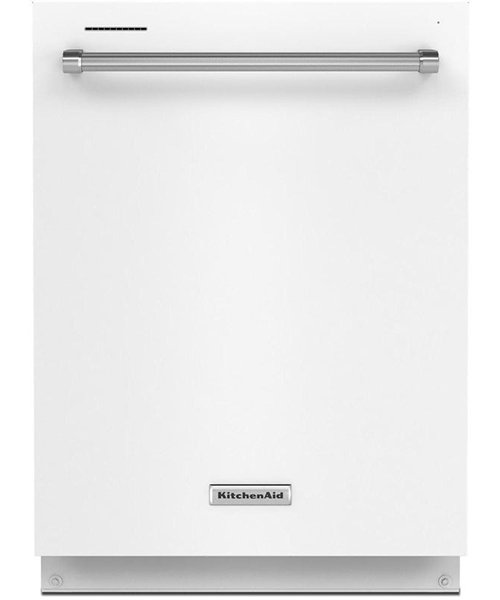
Quality & Build / Materials
KitchenAid dishwashers typically feel more “premium” inside than bargain machines. What that usually means in real life:
- sturdier racks that glide smoothly even when loaded
- a tub that holds heat well for washing and drying
- better fit-and-finish around controls, handles, and door action
The biggest build-quality differentiator, though, is rack design. If you’ve only used basic dishwashers, a well-designed third rack and adjustable middle rack can feel like an instant lifestyle upgrade—especially for utensils, lids, baby items, and awkward tools.
Key Features
KitchenAid’s feature mix varies by model, but these are the capabilities shoppers often buy the brand for:
- Third rack (on many models): extra space for utensils, ladles, small cups, and lids
- Adjustable middle rack: helps fit tall glasses or bulky cookware
- Targeted wash zones / stronger spray action: better results on heavy loads when used correctly
- Quieter run profiles: important in open kitchens and apartments
- Heated drying options: improves drying outcomes for dishes and some plastics (still depends on loading)
Performance / Real-World Use
Let’s be honest: most people judge dishwashers on two moments:
- Opening the door and seeing whether anything needs re-washing
- Unloading and discovering whether plastics are still wet
Cleaning performance (usually a strength):
KitchenAid tends to do well with mixed family loads—plates, pots, greasy bowls, and baked-on cookware—especially when you use heavier cycles for heavy mess.
Drying performance (more nuanced):
Drying is where expectations vary. Glass and ceramics usually do well. Plastics depend on:
- which drying setting you use
- where you place plastics (top rack helps)
- whether you crack the door after the cycle
- whether your home has softer/harder water (spotting can impact perceived dryness)
If you want “everything dry, including plastics, every time,” you’ll want to pay close attention to the drying system and be realistic about the fact that plastics are hard for almost any dishwasher.
Ease of Use
KitchenAid’s day-to-day experience is usually strong because of:
- smooth rack movement
- logical interior spacing
- third rack convenience (you stop playing “utensil Jenga”)
To get the best results:
- don’t block spray arms with tall pans
- place bowls/plates so water can hit surfaces directly
- avoid overloading the middle rack (it’s the easiest way to get “grit left behind”)
- run heavy mess loads on appropriate cycles (not a quick cycle)
Maintenance / Care
All dishwashers need some maintenance. KitchenAid is no exception. Plan for:
- cleaning the filter periodically (frequency depends on how messy your loads are)
- checking spray arms if you notice poorer performance
- wiping seals and edges occasionally to prevent buildup and odors
If you’re upgrading from a basic model, the biggest maintenance shift is simply remembering the filter exists.
What I Like
- Consistently strong cleaning on real-life loads
- Great rack systems—especially third rack convenience
- Premium, sturdy feel that’s nicer to live with daily
- Quiet operation that suits open kitchens
- Good choice for households that run a lot of dishes
What I Don’t Like
- Premium pricing can feel steep if you only run a few loads per week
- Plastics can still come out damp without the right settings/loading habits
- Extra features are only “worth it” if they match your routine (easy to overspend)
- Like any dishwasher, best results depend on water conditions and detergent choice
Price & Value
KitchenAid usually lives in the “mid-to-premium” range. Value is strongest if you:
- cook at home often
- run the dishwasher frequently
- care about a quieter machine
- want better interior organization and less unloading frustration
It may be less worth it if:
- you run the dishwasher rarely
- you’re fine with basic cleaning and don’t care about racks
- you’re shopping purely by price
KitchenAid Dishwashers Reviews: What Do Customers Think?
Across common KitchenAid Dishwashers Reviews, you’ll see recurring themes. People tend to be happiest when the machine fits their cooking habits and they understand the drying trade-offs.
Common themes
- Cleaning strength: many owners praise performance on tough messes
- Quiet operation: frequently mentioned as a major quality-of-life improvement
- Rack layout love: third rack and adjustable racks often get consistent praise
- Drying debates: some love it, some want drier plastics without extra steps
- Reliability + service experiences: mixed, often dependent on local service availability and warranty situations
Customer sentiment examples (paraphrased)
- “Dishes come out noticeably cleaner than my old unit.”
- “Quiet enough that I forget it’s running.”
- “The third rack changed how I load everything.”
- “Plastics still need a quick shake or top-rack placement.”
- “Great machine, but installation/service matters—choose a good installer.”
Is KitchenAid Legit?
Yes—KitchenAid is an established appliance brand with broad availability and a long history in kitchen products. “Legit” isn’t the question. The real question is whether the price premium matches what you care about: quieter operation, better racks, and strong wash results.
Are KitchenAid Dishwashers Worth It?
KitchenAid dishwashers are worth it if you:
- want fewer “rewash by hand” moments
- care about quiet performance
- love smart interior organization (third rack especially)
- cook at home often and wash heavier loads
They may not be worth it if you:
- only need a basic dishwasher for light loads
- are extremely price-sensitive
- want perfect plastic drying without any learning curve
KitchenAid vs Bosch
Feature | KitchenAid | Bosch | Who wins |
Cleaning power | Strong, especially on heavier messes | Strong, often very consistent | Tie |
Drying approach | Often heated drying options | Many models lean condensation-based | Depends on preference |
Rack design | Excellent, often very flexible | Excellent, often very refined | Tie |
Noise comfort | Generally quiet | Often extremely quiet | Bosch (often) |
Value feel | Best when you use features daily | Strong across many tiers | Depends |
My take: If you want a great rack system and strong cleaning with a premium feel, KitchenAid is a great choice. If your top priority is ultra-quiet operation and you like Bosch’s drying philosophy, Bosch is a strong alternative.
Discounts and Promotions
Dishwashers frequently rotate through seasonal promotions and bundle deals (especially if you’re buying multiple kitchen appliances). The smart strategy:
- pick the features you truly need first (third rack, adjustable rack, quiet tier)
- then time the purchase around a sale window
Don’t buy “the fanciest one” just because it’s discounted—buy the one you’ll use fully.
Where Can I Buy KitchenAid Dishwashers?
KitchenAid dishwashers are widely available through major US appliance retailers and kitchen showrooms, as well as direct-from-brand channels in many cases. If installation matters to you (it should), prioritize a retailer with strong delivery + install support and clear return/warranty handling.
FAQs
1. Are KitchenAid dishwashers quiet?
Many models are designed to be quiet enough for open kitchens, but exact noise comfort varies by model tier.
2. Do KitchenAid dishwashers dry plastics well?
Plastics are tough for most dishwashers. Using heated drying, top-rack placement, and good loading habits improves results.
3. Is a third rack worth it?
If you use a lot of utensils, lids, baby items, or small cups, yes—third racks can genuinely improve loading efficiency.
4. Do KitchenAid dishwashers need filter cleaning?
Yes. Like most modern dishwashers, periodic filter cleaning helps performance and prevents odors.
5. What’s the best KitchenAid dishwasher for families?
Look for a model with a third rack, adjustable middle rack, and a quieter tier if your kitchen is open-plan.
6. Are KitchenAid Dishwashers Reviews mostly positive?
Many KitchenAid Dishwashers Reviews praise cleaning, rack design, and noise; the most common negatives involve drying expectations and service experiences.
7. Is KitchenAid a reliable brand?
It’s an established brand, but reliability can vary by model and usage. Installation quality and routine maintenance also matter.
8. Should I choose stainless interior?
Many buyers prefer stainless interior tubs for heat retention and durability feel, though value depends on price difference.
9. What detergent works best?
High-quality detergent and rinse aid often make a noticeable difference, especially if you have hard water.
10. When is the best time to buy?
Major sale periods and bundle promotions (when remodeling a kitchen) often offer the strongest value.
Similar Brands You Might Like
- Bosch (quiet, refined performance)
- Whirlpool (often strong value and broad availability)
- GE Profile (feature-forward options)
- LG (modern features, varies by lineup)
- Miele (premium, top-tier build and price)
Final Verdict + Rating (1–10)
This KitchenAid Dishwashers review comes down to one thing: if you want a quiet, premium-feeling dishwasher with strong cleaning performance and genuinely useful racks, KitchenAid is a very solid buy.
Just be realistic about drying—especially plastics—and don’t overpay for features you won’t use. Choose the right tier for your household, load it smart, maintain the filter, and it can feel like a meaningful upgrade rather than just another appliance.
Rating: 8.5 / 10